OSCAR GONZALEZ FUENTES // Shutterstoc
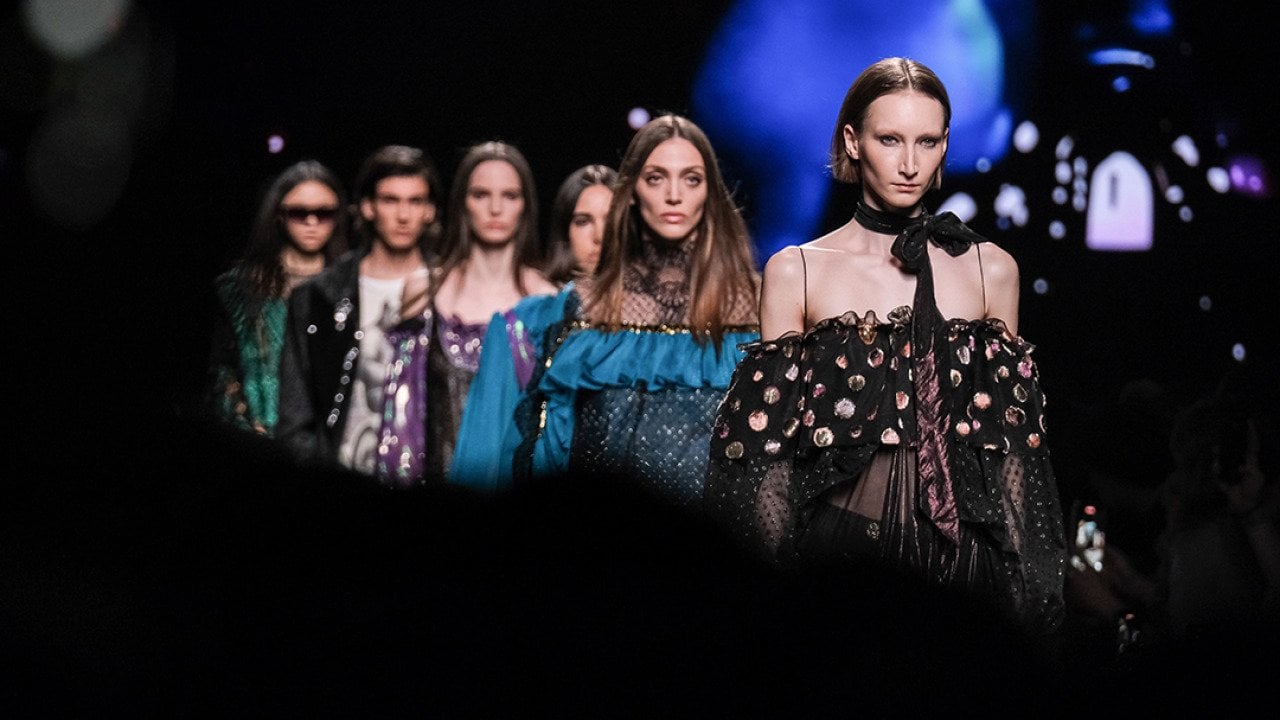
Who hasn’t heard the iconic phrase, “The world is your runway”? Its widespread popularity is no accident. It perfectly embodies the daring and expressive essence of the fashion industry. But beyond the glitz and glamour, have you ever considered how fashion affects the global economy?
In this article, Plus500 examines Fashion Week, one of the most prestigious and influential events in the fashion industry. This story will focus on the upcoming 2026 Fashion Week and explore how this iconic event shapes trends and impacts the economy.
TL;DR
- Fashion Week refers to an event where designers unveil their latest seasonal designs to the public and industry professionals.
- These events generate billions in global sales and boost local economies.
- The 2026 Fashion Weeks are expected to drive major growth in tourism, retail, and jobs.
What Is Fashion Week?
Fashion Week is a major event in the fashion industry, typically lasting several days. During this time, designers, brands, and fashion houses present their latest collections. These showcases, usually catwalk shows, are aimed at buyers, members of the press, and other industry professionals. They are crucial in influencing fashion trends for the current and upcoming seasons.
The most prestigious Fashion Weeks are in the world’s leading style capitals: New York, London, Milan, and Paris, collectively known as the “Big Four.” Each city hosts two main Fashion Weeks annually: one in February or March to unveil Autumn/Winter collections, and another in September or October for Spring/Summer lines. Paris also holds Haute Couture Week twice yearly, featuring exclusive, made-to-measure creations.
These events attract a diverse crowd, including buyers, editors, journalists, photographers, stylists, models, make-up artists, hairdressers, investors, celebrities, and influencers. While traditionally by invitation only and reserved for industry insiders, some designers now offer limited tickets to the public, and many shows are livestreamed on social media platforms to reach a wider audience.
The History of Fashion Week
Fashion Week originated in mid-19th-century Paris, where Charles Frederick Worth began inviting clients to private salon shows to preview his latest designs, marking the early roots of organised fashion presentations. By the early 1900s, American department stores hosted their own shows, but it wasn’t until 1943 that Fashion Week took its modern form. With Paris inaccessible during World War II, publicist Eleanor Lambert launched “Press Week” in New York to promote American designers, gaining the attention of major fashion publications.
Though New York hosted the first official Fashion Week, Paris’s long-standing couture traditions remained central, especially after the iconic 1973 “Battle of Versailles” show. Today, Fashion Weeks in New York, London, Milan, and Paris, held twice yearly, set global fashion trends and attract designers, media, celebrities, and industry insiders alike.
How Fashion Week Affects the Economy
- Economic Output

Oura
As this year comes to a close, Oura’s data science team has synthesized deidentified data from millions of members around the world to get a snapshot of what global wellness looked like in 2025.
Below, explore global wellness trends including where members slept the best, who had the highest step count, who was most stressed, and more.
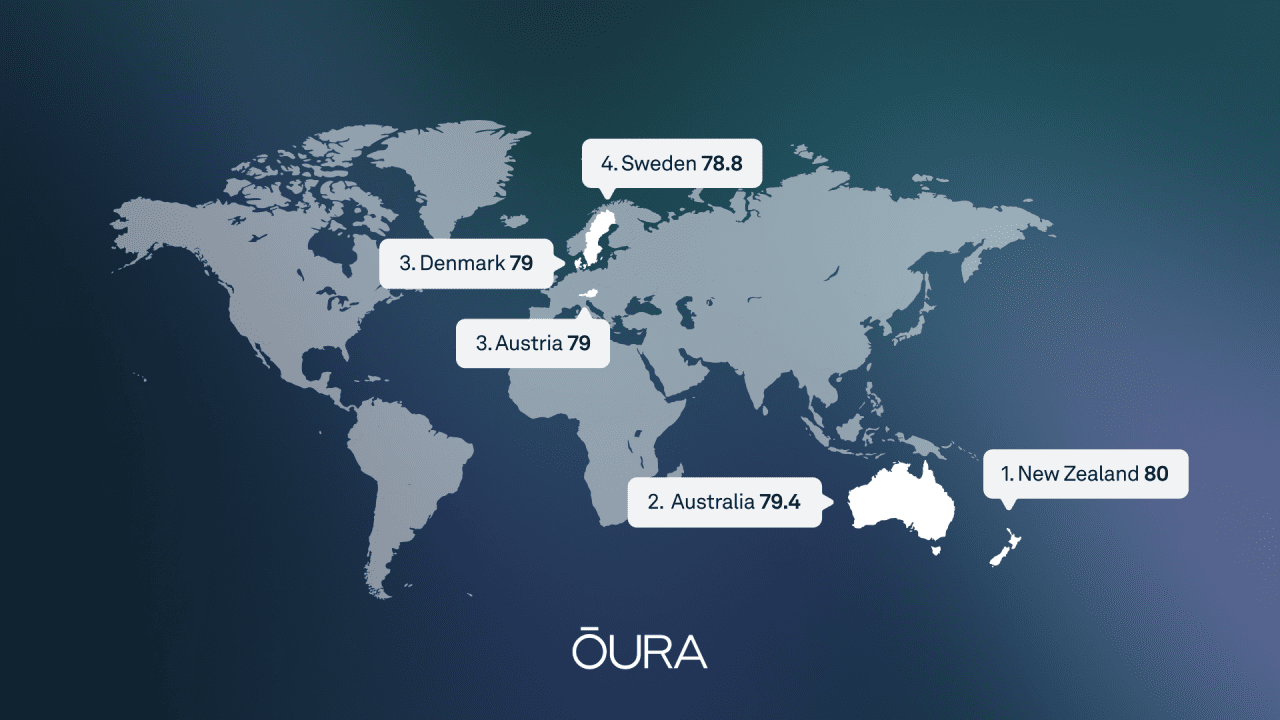
Top Global Sleep Scores
OURA
Turns out, the secret to a great night’s sleep may be a combination of fresh ocean air and a killer coffee culture. In 2025, Oura members in New Zealand and Australia slept the best, with an average Sleep Score of 80 and 79.4, respectively.
Proving that quality shut-eye is a global pursuit, members in Europe (particularly Austria, Denmark, and Sweden) kept it competitive with Sleep Scores in the high 70s.
Male vs. Female Members
OURA
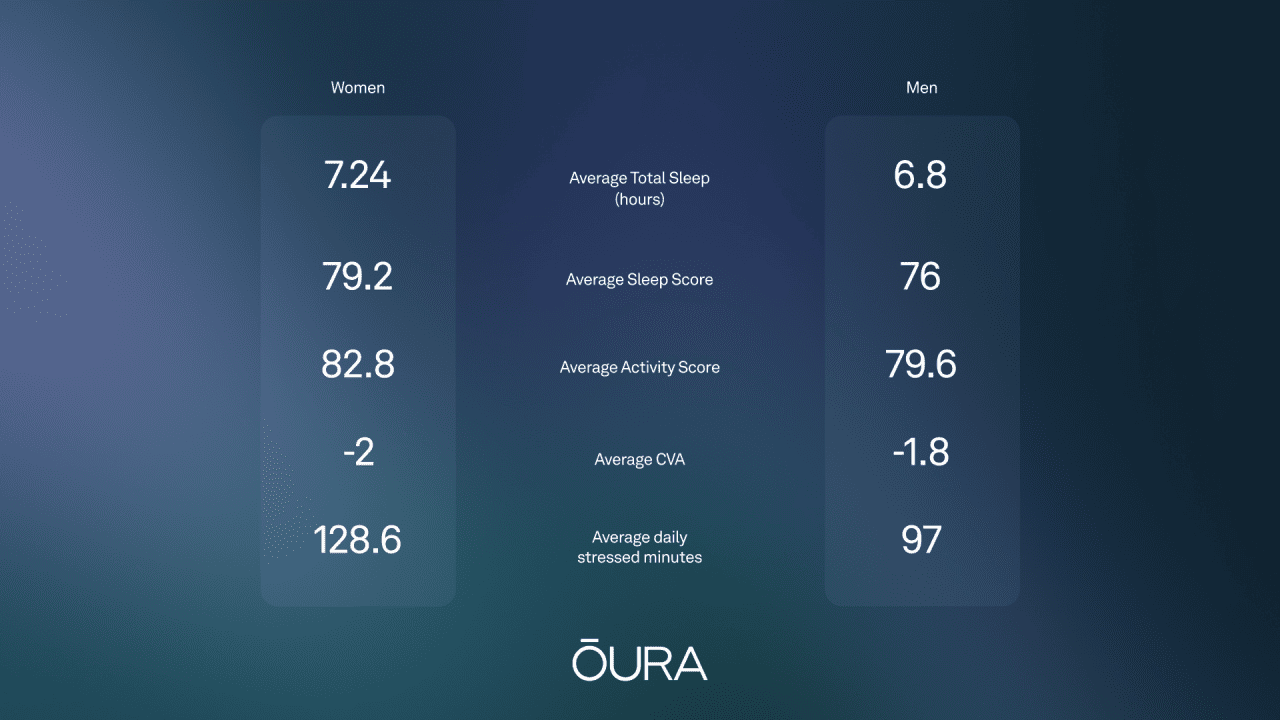
In a battle of the sexes, women nabbed first place across almost all metrics. Oura’s female members logged significantly more sleep (7.24 hours vs. 6.8 hours) and had higher average Sleep and Activity Scores. They also had a better average Cardiovascular Age (CVA) at -2, suggesting a key advantage in long-term health.
However, the guys have one victory: Men logged nearly 30 fewer stressed minutes per day. The takeaway? Women are prioritizing rest and movement, but seem to carry a heavier stress load.
OURA
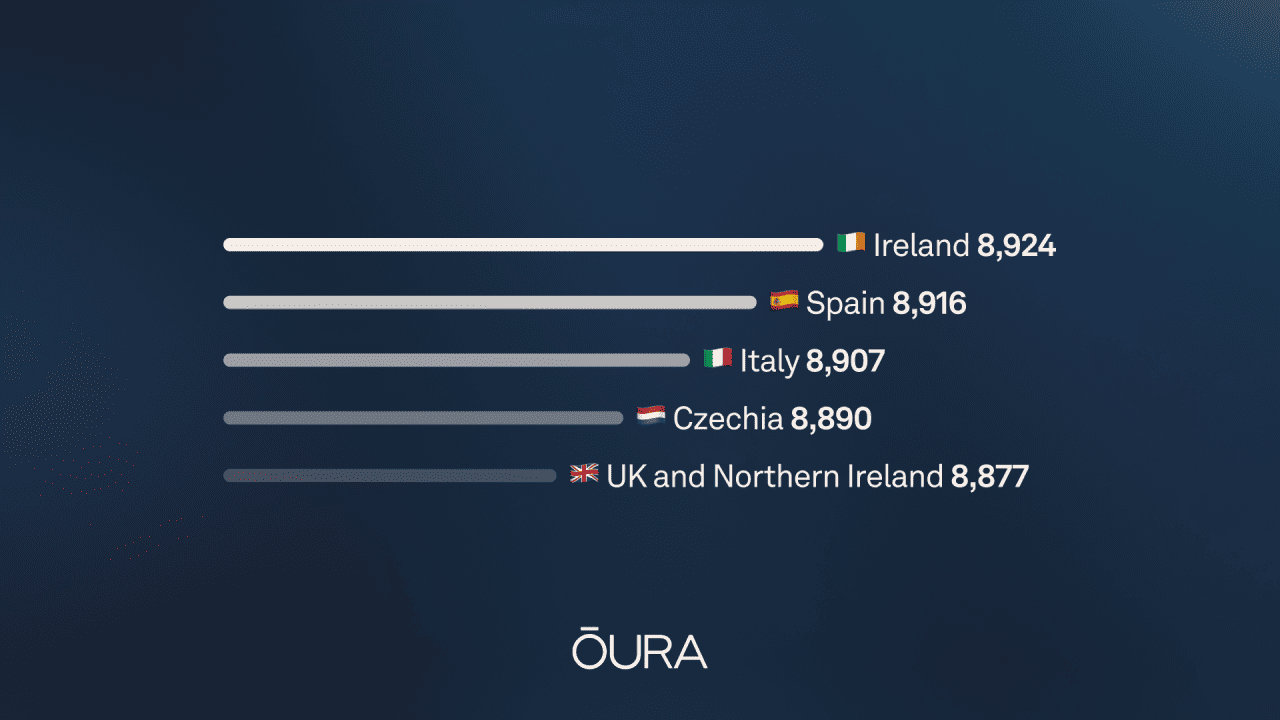
Topping the step-count leaderboard is Ireland, where Oura members averaged a whopping 8,924 steps per day. They were closely followed by Spain and Italy, showing that Europe dominates when it comes to ditching the car and hitting the str