Click on the Manage Content for adding and managing content.
Click on the Rotator Settings and choose what and how it will be displayed.

How employers can combat the $190B burnout crisis

Kraig Pakulski 0 21 Article rating: No rating

Sticky notes mess on top of a laptop on a working desk.

New Africa // Shutterstock


Employee burnout can’t be treated simply as a “nice-to-have” wellbeing topic. It’s a financial issue hiding in plain sight, one that shows up in rising claims, leaves of absence, turnover, and stalled performance.

In fact, research has linked workplace stress to up to $190 billion in healthcare costs each year in the U.S. That number should change how we think about wellness programs. If the cost of burnout is already embedded in an organization’s medical spend and workforce instability, then surface-level fixes won’t be enough.

The state of employee burnout in the workplace

Employee burnout has become an ongoing crisis in workplaces globally. The constant, day-to-day stress that often leads to burnout is now considered an unfortunate, almost expected part of the job.

What’s driving it? It’s not just long hours. According to new research from Spring Health and Forrester, employees are grappling with financial stress, unmanageable workloads, and a lack of work-life balance—factors that compound daily strain.

Burnout is affecting every corner of the workforce:

  • HR teams are stretched thin, with 57% working beyond capacity
  • Managers are overwhelmed, often lacking training to support their teams—41% of employees lack confidence in their manager’s ability to address mental health concerns
  • Mid-level employees are especially vulnerable—54% reported experiencing burnout last year

Despite all this, 78% of employees feel only moderately supported—at best—by their company’s mental health offerings.

The takeaway? Employees are mentally depleted, managers are barely staying afloat, and HR leaders are being asked to solve a system-wide issue with inadequate tools and resources.

Burnout isn’t just a people problem—it’s a business problem

Many organizations still view burnout as a personal issue or something HR alone should manage. But burnout is systemic, and it has measurable consequences:

  • $1 trillion in lost productivity annually
  • $550 million in lost workdays each year
  • $15,000 per employee in turnover costs
  • Increased medical spend due to the link between mental and physical comorbidities (e.g., depression and cardiovascular disease)

When left unchecked, burnout leads to absenteeism, presenteeism, disengagem

What happens when you make minimum payments

Kraig Pakulski 0 14 Article rating: No rating

A close up view on the minimum payment terms in a credit card bill.

ImagineerInc // Shutterstock


Every credit card bill includes a minimum payment warning — required by law — that shows how long it will take and how much it will cost to pay off your balance if you only make the minimum payment. Most people barely notice it.

More than one in nine credit card holders at the nation’s largest banks made only the minimum payment on their balances, according to the Federal Reserve Bank of Philadelphia. For millions of households facing rising costs, minimum payments can quietly keep debt around for years.

The financial experts at Accredited Debt Relief explain what really happens when you only pay the minimum — and why it’s important to understand the long-term impact.

What are minimum payments?

Minimum payments are the least amount you can pay monthly on your debt without incurring penalties. Every creditor calculates minimum payments differently. Most minimum payments are calculated as a percentage of the principal balance owed.

Typical minimum payments are two to four percent of your principal balance or a fixed floor rate, whichever is greater.

For example, a typical fixed floor amount is around $25 to $35. To remain in good standing, you must pay at least this amount until your principal is less than the floor. Most creditors will ask you to pay off the balance in full when this occurs.

Is making minimum payments a good idea?

Making minimum payments keeps your account in good standing, but it is the slowest and most expensive way to pay back your debt.

Making minimum payments does:

  • Prevent late fees
  • Prevent derogatory marks on your credit score
  • Keep you in good standing with your creditor

Making minimum payments does not:

  • Save money on your debt
  • Pay off debt faster
  • Lower your DTI quickly to improve creditworthiness

Minimum payments are not consumer friendly

At first, minimum payments seem like a good deal. You can borrow large amounts of money or use credit without having to pay a lot up front. Unfortunately, paying a little now means you’ll end up paying much more over time.

Minimum payments can extend your debt repayment timeline to 30 years or more, which benefits the creditor!

What happens if you pay more than the minimum payments?

When you pay more than the minimum payment on your debt, you pay down your principal balance faster.

The principal is the total amount you borrowed.

Interest is what you pay the creditor as a fee for borrowing the money.

With most debts, each payment is applied to interest and fees first. Only what’s left goes toward reducing the principal. When balances and interest rates are high, minimum payments often cover mostly interest, making it slow to shrink what you actually owe.

You can estimate how much of a payment goes t

The new age of air safety: How real-time weather, terrain, and turbulence tech makes jets safer than ever

Kraig Pakulski 0 20 Article rating: No rating

A look at an aircraft cockpit.

Dushlik // Shutterstock


Commercial aviation has never been safer from a technological standpoint. Yet, many passengers are likely to disagree, especially after news reports last year put the spotlight on various mishaps in the air and individual experiences with severe turbulence.

If you are one of these passengers, your intuition isn’t necessarily wrong. Paramount Business Jets has looked into how airlines, avionics manufacturers, and regulators are all beginning to push towards using systems that allow pilots to see farther, decide faster, and avoid hazards.

Research is beginning to show that climate change is modifying the jet stream and increasing atmospheric instability around the world. This can lead to more frequent and severe turbulence, as outlined by the research publisher Climate Adaptation Platform, in addition to broader issues like extreme heat. The changing environment has led to a surge in aviation technology that’s focused on real-time situational awareness, predictive modeling, and weather-integrated decision-making.

Leading companies, including Honeywell, Garmin, and Collins Aerospace, in conjunction with Federal Aviation Administration NextGen modernization programs, are reshaping pilot awareness, reducing risk, and improving operational efficiency across the industry with various technologies.

1. Predictive turbulence detection systems

Turbulence has long been one of the most stubborn hazards in aviation, as it is difficult to predict, often impossible to avoid with traditional radar, and increasingly common due to climate-driven atmospheric change. Recent incidents, such as a Delta event that left 25 injured last year, have highlighted that severe turbulence remains a top operational risk going into 2026. Luckily, modern weather radars are finally catching up with the problem. The following three, in particular, are a cut above the rest.

Honeywell IntuVue RDR-7000 Weather Radar

Honeywell’s IntuVue RDR-7000 radar is a generational leap forward compared to other models. Instead of scanning only for precipitation, it uses advanced technology to identify turbulence, wind shear, and storm cells in 3D. Some of the key capabilities of this radar include:

  • Predictive turbulence detection
  • Automatic threat assessment
  • Vertical weather profiling
  • Full-time coverage up to 320 nautical miles

This system has been rapidly gaining global certifications, including recently in Brazil, and has been selected for installation on next-generation air taxis.

Garmin GWX 8000 StormOptix Weather Radar

The Read more

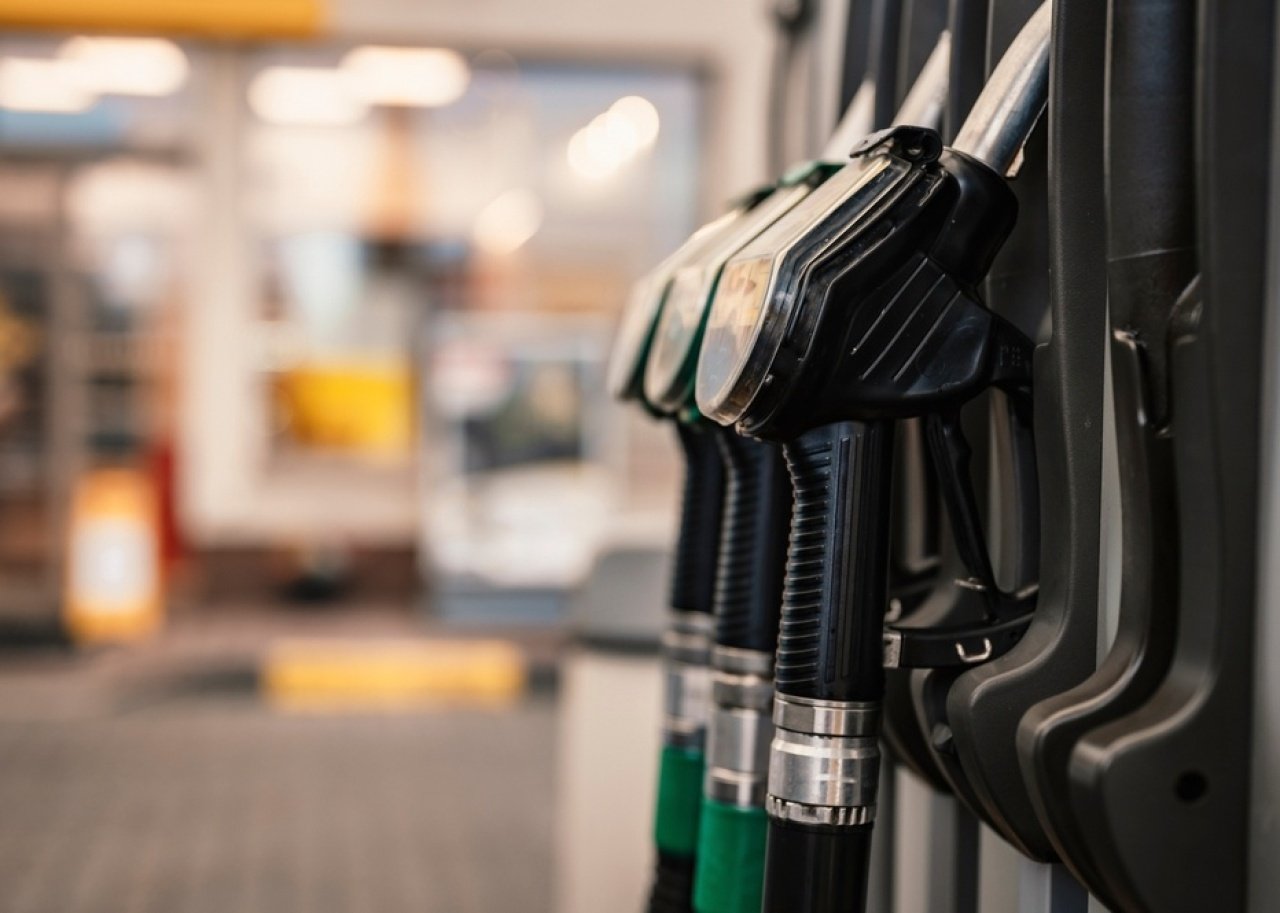
Cheapest gas stations in every state Jan. 29, 2026

Kraig Pakulski 0 22 Article rating: No rating

zedspider // Shutterstock


Anyone who drives a car understands the sting of having to fill up their tank and pulling into the gas station, only to discover that gas prices have skyrocketed. Paying extra for gas means you have less to spend on other things, which, over time, can really put a crimp in your budget.

Cheap Insurance explored some of the reasons behind major changes in gas prices, and compiled a list of the cheapest gas stations in every state using data from Gas Buddy.

Gas prices fluctuate based on several factors, including the cost of the key ingredient, crude oil, as well as the available supply and demand for gasoline. If the price of oil rises, a major refinery goes offline, or more drivers are hitting the road, for example, then the cost will increase.

In the first half of 2022, a unique confluence of events led to a surge in gas prices. The increased demand stemming from the COVID-19 pandemic, Russia’s invasion of Ukraine, and a slowdown in oil production all contributed to a national all-time high of $4.93 per gallon on average in June 2022.

Seasons also affect gas prices. Demand tends to drop in winter, but the cost also falls because gas stations switch to a different blend of gasoline that’s optimal for lower temperatures—and has cheaper ingredients.

Location also matters. The South and Midwest tend to have the lowest gas prices, while the West, including Hawai’i, has the highest. Californians, in particular, pay more for gas on average than any other state. That’s because of its high state excise taxes; its isolation from the country’s major pipelines, which causes supply issues; and its requirements that mandate a more environmentally friendly blend of gas that costs more to produce and adds to the price per gallon.

No matter where you live, read on to see if you can get a deal on gas near you.

Alabama
#1. Love’s Travel Stop (8400 County Farm Rd, Irvington): $2.19
#1. Gas N Go (521 Saraland Blvd S, Saraland): $2.19
#1. Chevron (101 Saraland Blvd N, Saraland): $2.19

Alaska
#1. Speedway Express (3569 S Cushman St, Fairbanks): $2.95
#2. Costco (48 College Rd, Fairbanks): $2.99
#2. Speedway (2110 Peger Rd, Fairbanks): $2.99

Arizona
#1. ARCO (802 W Speedway Blvd, Tucson): $2.23
#2. Sam’s Club ( 4701 N Stone Ave, Tucson): $2.28
#3. Shell (405 W Speedway Blvd, Tucson): $2.29

Arkansas
#1. VP Racing Fuels (311 S Reynolds Rd, Bryant): $1.99
#2. Sam’s Club (7700 Rogers Ave, Fort Smith): $2.08
#3. The Hydration Station (2500 S Zero St, Fort Smith): $2.16

Read more

It’s Financial Wellness Month: Are you prepared?

Kraig Pakulski 0 34 Article rating: No rating

Stack of coins growing a small plant as a concept of financial growth.

Dan76 // Shutterstock


January is financial wellness month. That makes it the perfect time to work on improving financial habits, including saving more money, paying down bills, saving for retirement and life goals, and ensuring you and your family are protected from risks.

The Zebra takes a closer look at what financial wellness means and how having sufficient insurance coverage can safeguard it.

What Financial Wellness Means for You

When most people think of “wellness,” they likely focus on good physical and mental health. But finances can have a wellness component, too, that is just as important to take stock of. Alarmingly, a 2024 Guardian Life report reveals that only 30% of adults currently report good financial health, the lowest level in 14 years.

“Financial wellness is really about having enough stability and breathing room so that a single unexpected event does not unravel years of hard work. Revisiting your financial wellness from time to time can help you catch gaps before they show up at the worst possible moment,” explains Taylor Kovar, a Certified Financial Professional.

Ask Paul Ferrara, senior wealth counselor at Avenue Investment Management, and he’ll tell you that financial wellness implies having a liquid reserve of three to six months of expenses and trying to grow your total wealth faster than the rising cost of living.

With the turn of a calendar year and a focus on New Year’s resolutions, January is an ideal time to scrutinize your financial wellness, set goals, and strive for improvement in how you manage your dollars.

“People should reassess their financial position in January since cost increases and lifestyle modifications can change the trajectory of their long-term plans,” says Ferrara.

According to a recent national survey by The Zebra, 69% of policyholders are at least somewhat likely to conduct an “insurance checkup” in January to look for savings and improve coverage.

A donut chart showing likelihood of policyholders to conduct an insurance checkup.

TheZebra

Financial wellness planning involves more than just budgeting or saving. It’s about being prepared for life’s uncertainties and protecting your financial security.

“It also means making sure that insurance risks are properly managed so that unexpected events don’t wreak havoc on your household,” Loretta Worter

RSS
First34203421342234233425342734283429Last