Por Anabella González, Fernando Ramos y Pau Mosquera, CNN en Español
Sol dejó Venezuela hace más de 11 años. Regresar a su casa para Navidad este año era un plan que había coordinado minuciosamente. Un objetivo que llevaba meses de organización, pero, sobre todo, de mucha ilusión. Un deseo que ahora deberá postergar, con incertidumbre y sin fecha prevista, debido a la suspensión de numerosos vuelos a Venezuela en medio de las tensiones crecientes con Estados Unidos.
A fines de noviembre, la Administración Federal de Aviación de EE.UU. (FAA) instó a las aerolíneas comerciales a “extremar precauciones” al sobrevolar Venezuela y el sur del Caribe. Días después, una frase del presidente de Estados Unidos, Donald Trump, desató las consecuencias que hoy enfrentan muchos venezolanos como Sol, que planeaban pasar las fiestas de fin de año en familia: “Consideren el espacio aéreo sobre y alrededor de Venezuela cerrado en su totalidad”.
Desde entonces, varias aerolíneas han cancelado sus vuelos a Venezuela hasta fines de diciembre y han dado a sus pasajeros la posibilidad de cambiar sus pasajes por nuevas rutas o recibir el reembolso de su dinero. Y si bien algunos optaron por otras vías de transporte, para muchos hacer ese trayecto en avión hasta Caracas era la única alternativa.
Sol, que vive en la ciudad de Buenos Aires y prefiere no dar su apellido por temor a represalias, tenía pasajes para viajar el 16 de diciembre junto a su esposo y sus dos hijas menores. El 12, apenas cuatro días antes, llegó la confirmación que temían: la agencia de viajes por la que gestionaron sus boletos les comunicó que Boliviana de Aviación había cancelado sus vuelos.
“Lo más difícil fue para la mayor, porque tenía mucha ilusión y estaba contando los días”, dice sobre la conversación que tuvo con su hija de 7 años, nacida en Argentina, que esperaba reencontrarse con su abuela.
En Caracas, cuenta Sol, esa reunión era muy esperada. Su mamá había armado el árbol de Navidad pensando en recibir a sus nietas, después de años sin armarlo por una pérdida familiar, dice.
Un hombre venezolano que prefirió no dar su nombre por temor a represalias contó a CNN que tenía pasajes para viajar con la aerolínea Gol, haciendo conexión en Sao Paulo. Este ingeniero electrónico vive en Campana, provincia de Buenos Aires, y este era un fin de año especial: era la primera vez que regresaba a su país desde que emigró en 2019.
“Era un plan familiar: los que estamos afuera íbamos a viajar, juntarnos en Caracas con quienes están allá y hacer un reencuentro familiar. En junio compré mi boleto”, cuenta a CNN.
Gol fue una de las primeras aerolíneas internacionales en suspender sus vuelos, y luego el Instituto Nacional de Aeronáutica Civil (INAC) de Venezuela le revocó la concesión de vuelos, junto con otras cinco aerolíneas que se habían sumado a las medidas de la FAA.
No es la primera vez que la actualidad política de Venezuela irrumpe en los planes de Sol, quien trabaja como empleada administrativa en una empresa de la capital argentina. A fines de 2024, también pensó en viajar con su familia, pero decidieron posponerlo debido a la inestabilidad política y a las protestas durante los meses posteriores a la elección presidencial.
Tampoco es la primera oportunidad en la que los vuelos en Venezuela se ven afectados por la coyuntura política. Desde 2014 se ha reducido la conexión aérea con el país, que antes de la tensión con EE.UU. tenía 105 vuelos semanales a 16 destinos, operados por 12 aerolíneas internacionales,
SANTA BARBARA COUNTY, Calif. - The atmospheric river will hit our region Tuesday night through Christmas Eve morning with a second pulse on Christmas Day.
Rainfall forecast: 2-7 inches near coast, 4-14 inches inland possible by Friday.
Rain rates: near or over 1 inch per hour, stronger rates expected on the south coast.
Thunderstorms, damaging winds, flooding, mudslides, downed trees, power outages and weak tornadoes are possible during this storm especially on Christmas Day when the air is colder and more unstable. Flood Watches, High Wind Warnings and High Surf Advisories are in effect.
Snow levels: drop to 5500 ft on Christmas Day.
Winds: 60-80mph gusts possible from the southeast.
Light showers may linger into Friday and Saturday, we will be mostly dry by Sunday.
The post California winter storm hits Tuesday night through Christmas: up to 7 inches possible near coast appeared first on News Channel 3-12.

Celia Ong // Shutterstock
Scammers love to prey on hope, and with a 4.3 percent unemployment rate in the U.S. as of August 2025, they’ve got a lot of hopeful job seekers to pounce on. No matter the economic environment, though, job offer scams are a perennial favorite of sketchy grifters — the latest model just so happens to come in the form of a fake job text message, and it can seem rather convincing, too.
Got a text out of the blue about a potential job at your dream company? If it’s an opportunity that sounds too good to be true, that’s because it probably is. Spokeo explains how to know for sure.
Key Takeaways:
- Text-based job offer scams are on the rise.
- The latest job offer scams pose as recruiters or dream companies offering cushy jobs.
- They’re actually phishing scams out to get your valuable private information.
Job Text Scams: How They Work
The latest string of job offer scams has gotten so prevalent that the Federal Trade Commission issued a warning to help keep job hunters from getting their hearts broken and their bank accounts drained. The most recent popular iteration of the scam is a fake job text message from a phony “recruiter” or a dream job-worthy company. Here’s how it works:
- Victims get an unsolicited text, seemingly out of the blue.
- Said text claims to be from a job recruiting service, such as Indeed or ZipRecruiter, or from a popular company with dream job vibes (think Netflix or Apple) and often describes a cushy-sounding gig with a nice pay rate.
- The job description will be vague and suspiciously easy to fulfill. Slate describes a common example seeking “remote product testers” who only need to work for an hour or two a day to earn up to $400 daily by “reviewing new products or services online.” NPR, meanwhile, came across one that offered pay just for listening to songs on Spotify. Both are bogus.
- Once you apply, the scammers will let you know you’ve been “hired” (spoiler: everyone gets the “hired”), at which point they will ask for all sorts of sensitive private information (bank info, social security number, etc.).
- Alternatively, the link is just a phishing link, aimed at gathering your private information or installing malware onto your device.
What Do They Want?
Crooks aren’t sending out fake job text messages for fun. By and large, job offer scams are designed to obtain your valuable private information as a form of phishing. If you get lured in and respond to a job text scam, the scam
Courtesy of the Native American Health Center
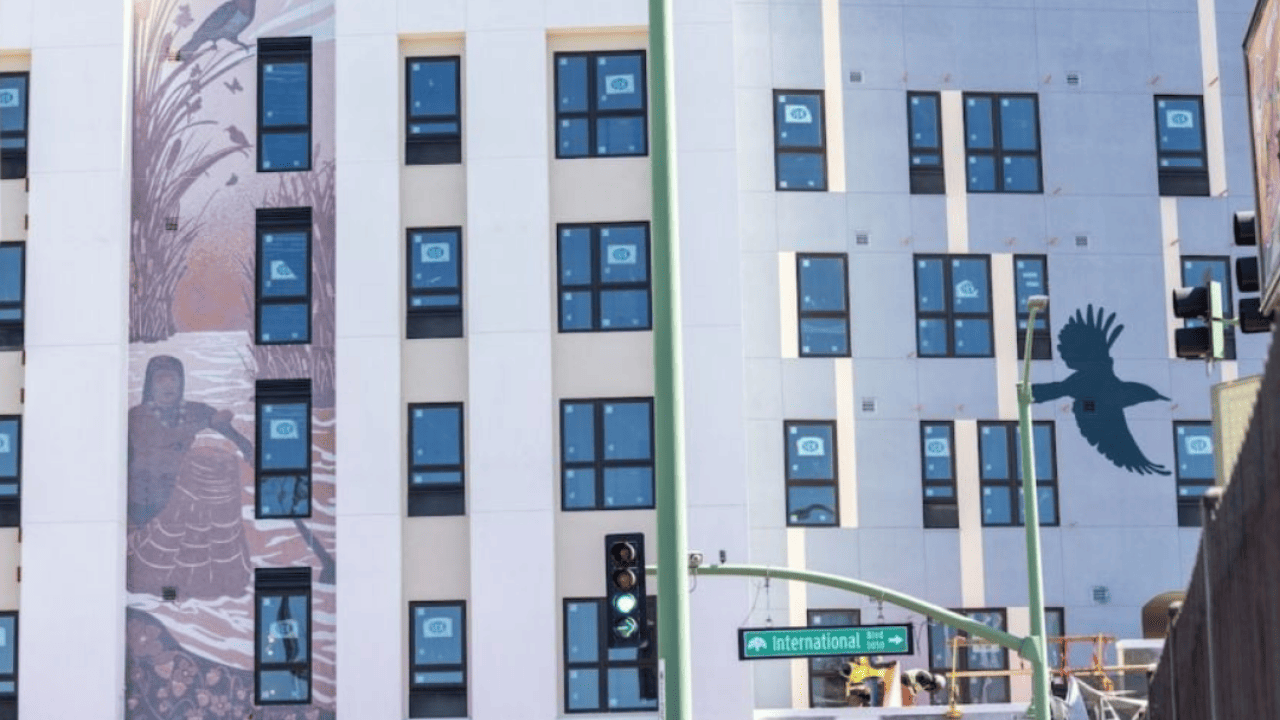
Along International Boulevard in Oakland, California, a metal fence surrounds a sealed-off block. There are the typical signs of ongoing construction: skeleton frames, workers and trucks full of supplies rolling in and out of the area. Come next year, however, the dilapidated site will transform into affordable housing units and a dental clinic.
The future five-story building, named Flicker, will have 32,500 square feet of space. The ground floor will feature a cultural community center and a dental clinic with 20 patient rooms. Above, 76 brand new apartments will be built for local families in need. The completed project is expected to bring more than 50 long-term jobs to the community.
It’s an initiative spearheaded by the Native American Health Center (NAHC) in collaboration with Satellite Affordable Housing Associates, a Berkeley-based affordable housing developer. Housing advocates say Flicker’s arrival provides much-needed relief to Oaklanders as the city, and wider Bay Area, grapples with rising income inequality among residents and skyrocketing housing prices.
Chirag Patel, NAHC’s director of planning and development, says many of NAHC’s members who need affordable health care also struggle to find a stable place to live. Oakland is especially in need of more affordable housing options, he told Next City.
“As an Oakland resident, you see tent cities, and all these [housing concerns] happening in the community,” he says. “I see the need out there growing and compounding year after year.”

Courtesy of the Native American Health Center
The NAHC is a nonprofit that serves the Bay Area’s Native population and other underserved communities. The region’s population of Indigenous people native to the Bay Area is currently around 18,500, and is projected to grow over the next few decades, according to U.S Census data. The center provides a mix of health, vision, behavioral and dental care for 15,000 members annually across its 17 facilities in Alameda, San Francisco and Contra Costa counties.
In the past few years, the Bay Area has seen real estate prices rise due to high market demand but limited housing options. Residents say they are struggling to afford even the simplest apartments and rental spaces. In Oakland, for instance, city data reveals almost half of all rental households are rent-burdened, meaning they spend more than 30%
Genesis
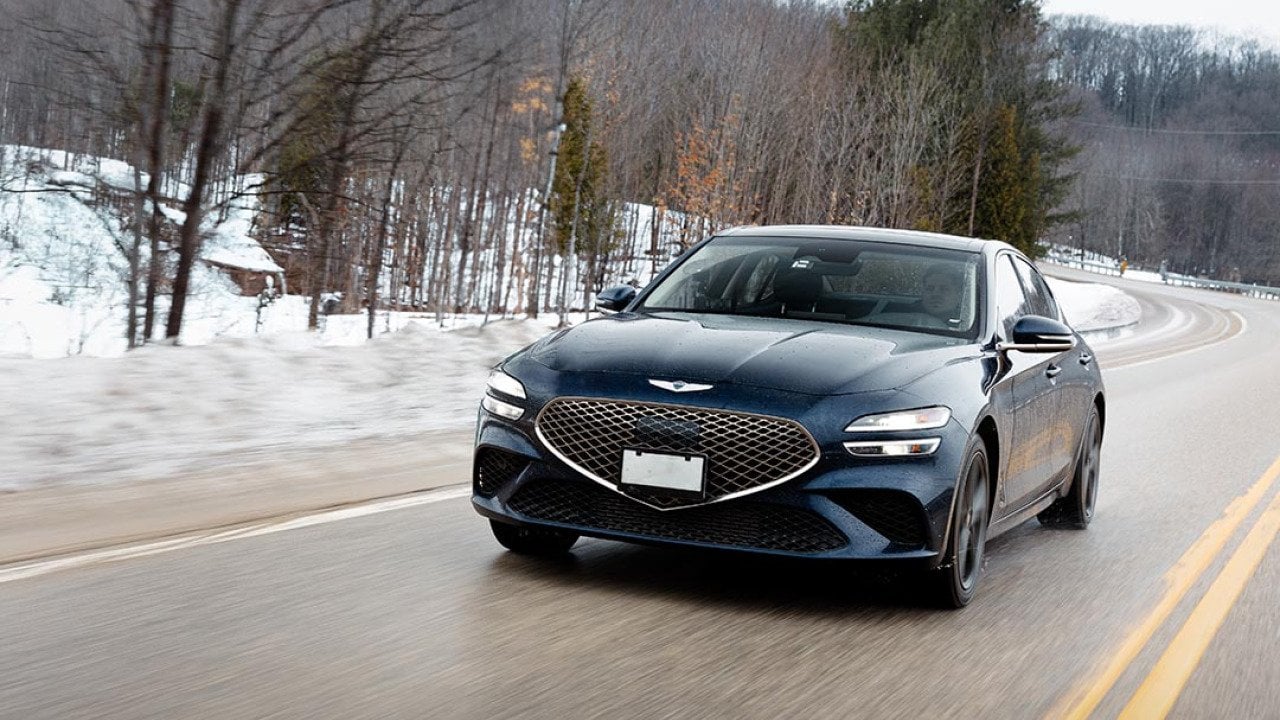
Although “affordable luxury car” may seem like an oxymoron, the reality is that there are several appealing vehicles from prestige brands that come in under the average cost of a new vehicle. These are eight of Edmunds’ highly rated affordable cars from luxury brands, each with a starting price of less than $45,000 and each offering a blend of comfort, technology and performance to suit the badges on their hoods.
Affordable luxury cars can be found in a variety of vehicle sizes and body styles, ranging from subcompact sedans to sporty two-door coupes, with at least one hatchback and one midsize four-door providing some added space and practicality, if that’s a priority.
There are also several affordable luxury SUVs, which are covered in this article, if a higher stance and all-weather capability are important to you.
2026 Acura Integra
Although it shares most of its mechanical bits with the Honda Civic hatchback, the Acura Integra sets itself apart from its more plebeian corporate sibling with distinctive styling, impressive cabin materials, and a long list of standard equipment. It’s also the most affordable luxury car on the market today, with a starting price of $34,595 including destination for the base model, which still includes heated seats, keyless entry and push-button start. There’s also an A-Spec with Technology trim level that offers a six-speed manual transmission and a limited-slip differential, all for less than $41,000, which turns the five-door Integra into a worthy athletic follow-up to the sport-compact nameplate.
Starting price: $34,595
2026 Cadillac CT4
Cadillac’s cheapest offering is the CT4, a sporty four-door sedan that splits the difference, size-wise, between the subcompact Audi A3 and BMW 2 Series Gran Coupe and the compact Audi A4 and BMW 3 Series. And yet it’s less expensive than any of them, with a starting price of just over $37,000 with destination and handling. For that cash, the CT4 comes with a reasonably powerful 237-horsepower 2.0-liter turbo-four, and rear-wheel drive and a stiff chassis give it dynamic, enjoyable handling. Just remember that some of its rivals have more interior space despite smaller exterior dimensions, and the Caddy does have some lackluster interior materials.
Starting price: $37,095
2026 BMW 2 Series Gran Coupe
BMW’s entry-level m