Click on the Manage Content for adding and managing content.
Click on the Rotator Settings and choose what and how it will be displayed.

Retail supply chains brace for a redefined 2026 as tariffs, technology gaps, and nearshoring upend old models

Kraig Pakulski 0 102 Article rating: No rating

A vector illustration of shipment systems coordinated for global logistics and distribution.

Sabura // Shutterstock


A new survey of 250 retail supply chain leaders reveals a sector undergoing one of the fastest strategic shifts in decades. Between rising tariffs, geopolitical pressures, and surging consumer expectations, organizations are being forced to rebuild their logistics networks for resilience rather than speed. The study, commissioned by WSI | Kase and conducted by TrendCandy, highlights an industry rethinking everything from supplier geography to warehouse placement heading into 2026.

According to the report, Retail Supply Chain Moves That Will Define 2026, many retailers are accelerating their nearshoring and regionalization efforts. The motivation is not just cost pressure, but a heightened need for control, stability, and agility.

To mitigate risk, 77% of supply chain leaders have already shifted sourcing away from China toward tariff-neutral countries, and 87% are increasing buffer inventory to hedge against volatility. These moves signal a decisive break from pre-COVID-19 pandemic supply chain models built around global consolidation and just-in-time fulfillment.

While global trade volatility continues to reshape strategies, the survey shows that internal challenges, such as capital constraints, technology misalignment, and organizational inertia, may prove equally disruptive in the year ahead.

“Retail supply chains are being reshaped in real time,” the report’s authors note. “Leaders are no longer treating nearshoring or diversification as experimental; they’re becoming strategic imperatives.”

A sector under pressure: Tariffs accelerate change

Three-quarters of retail supply chain leaders say tariff turbulence is redefining their 2026 strategies, prompting a widespread pivot toward regionalization and supplier diversification. Ninety-three percent are now prioritizing diversification within Asia to reduce tariff exposure, and many are replacing single-country dependency with layered sourcing networks that blend domestic, nearshore, and diversified sourcing models.

A data graphic showing what supply chain leaders say about tariffs on accelerating change.

Kase

Read more

Private aviation market hits $26.6B as shared ownership models disrupt luxury travel

Kraig Pakulski 0 94 Article rating: No rating

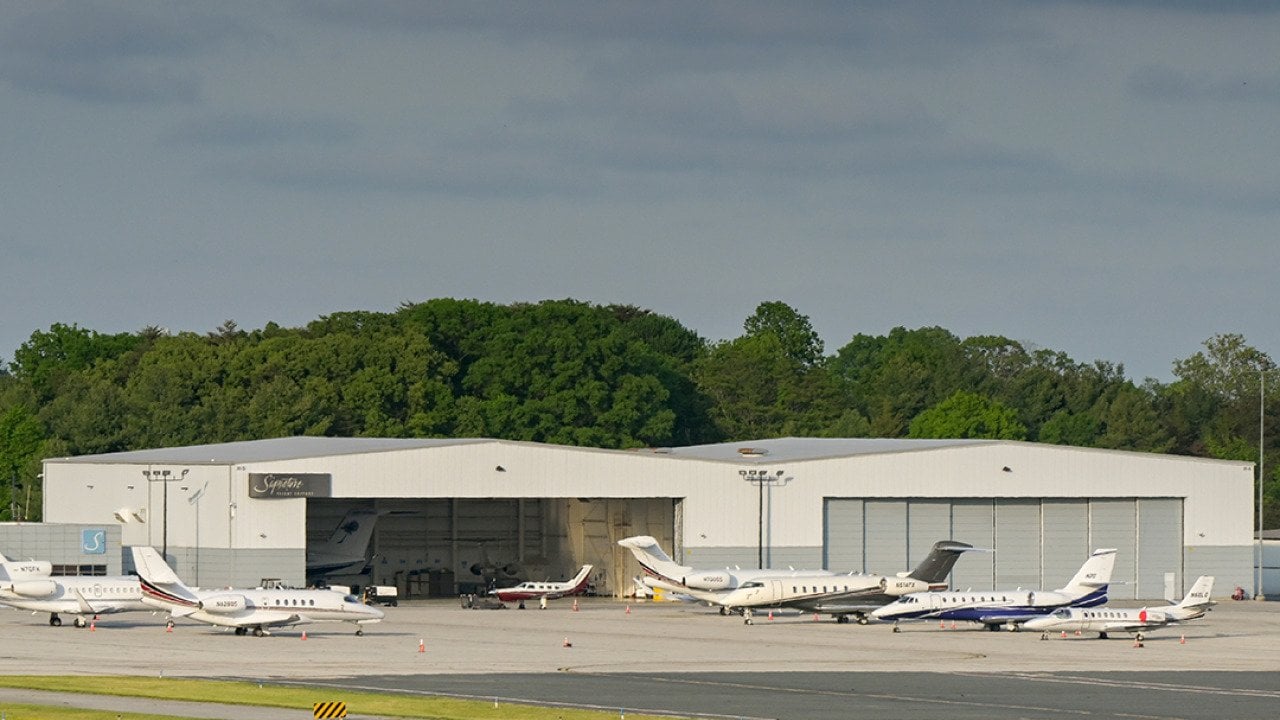
Private jets lined up outside at an airport terminal in Baltimore.

Ceri Breeze // Shutterstock


The private jet market, valued at $26.6 billion in 2024, is projected to grow to nearly $50.8 billion by 2034. Suddenly, private aviation is less “secret society of the absurdly rich” and more a service for executives, entrepreneurs, and anyone allergic to airport chaos.

This is possible due to shared ownership models, particularly fractional ownership.

In this article, Fractional Jet Ownership examines growth trends in the private aviation market.

Fractional Ownership on the Rise

Having your own jet parked in the hangar and ready to go is still mostly a lifestyle for the billionaires. Besides the initial investment (ranging from $2 million to $110+ million), a plane comes with a series of ongoing expenses, including maintenance, hangar rental (if you don’t own one), crew salaries, insurance, repairs, and so on.

Now, what’s this about having access to a private plane without paying all the costs?

But the market has grown with the rise of fractional jet ownership. In this model, specialized platforms enable multiple owners to buy a fraction of a private jet and enjoy all the benefits of owning one.

For instance, owning 1/16th of a jet gives a buer access to 50 hours of flight per year. This entails two main costs: the cost of the share (a one-time payment) and a monthly management fee of $5,000 to $10,000+.

Some private companies manage the planes and ensure a plane that’s similar to the one the buyer co-owns will always be ready to take them where they need to go. Such management companies also handle crew hiring, maintenance jobs, scheduling, and more.

Compared to the costs of full ownership, fractional ownership reduces the initial investment. For under $1 million, buyers can have a plane that’s ready to go (with some planning in advance).

The lower entry price point has attracted corporations, government organizations, and high-net-worth individuals who are not part of the ultra-rich.

As a result, the global aircraft fractional ownership market size was valued at $11.2 billion in 2024. Forecasts indicate it will grow rapidly, reaching $23.7 billion by 2033.

Private Aviation Has Benefits Beyond Flying

One reason private aviation is on an upward trend is the degradation of commercial aviation services.

In an interview with Fortune, Janine K. Iannarelli, the founder and president of aviation consultancy Par Avion, affirmed that commercial airlines are losing first-class passengers due to lower-quality service, flight delays, and cancellations. In her opinion, those who no longer enjoy the first-class experience have switched to private aviation.

So it’s not just about flying in style. It’s also about saving time (both in the air and on the ground), reducing stress, and

The 'Sick Building' Syndrome: Indoor air quality services and employee productivity

Kraig Pakulski 0 73 Article rating: No rating

A sick businesswoman blowing her nose at work.

Friends Stock // Shutterstock


While remote work might have been in the spotlight in recent years, many businesses are now actively encouraging, or even mandating, a return-to-work strategy that brings employees back into the office.

In theory, this is designed to improve productivity and strengthen team bonds, which is difficult or impossible when everyone is based in different locations.

However, one overlooked impact of return-to-work policies is that they do not account for air quality issues in commercial buildings, The Way Commercial Cleaning notes.

This trend, dubbed sick building syndrome, can be detrimental to employees’ effectiveness once they get back into the swing of sharing office space. Once understood, it explains why indoor air quality services are increasingly in demand. Here’s an overview of the data behind it, and the options available to organizations that want to amplify productivity in a return to work scenario.

An infographic about indoor air quality and employee productivity.

The Way Commercial Cleaning

What is Sick Building Syndrome?

The explosion of remote working in the wake of the 2020 pandemic was impressive. U.S. Bureau of Labor Statistics data shows that in 2019, 11.4% of workers in the information sector were based primarily at home. In 2021, this rose to 44.8%.

However, by 2022, there was a sharp decline in remote working, if not a complete reversal. Since then, it has continued to drop at a slow and steady rate. Return-to-work policies have precipitated this, although not without unforeseen sticking points.

Sick building syndrome is one such obstacle. It reflects the fact that while office buildings went unoccupied or under-occupied, they effectively sat stagnant. HVAC systems were not used as intended, and internal air quality declined significantly.

It’s the equivalent of leaving a vehicle to sit on a driveway for a year and expecting it to fire up the first time. In reality, flat tires, a dead battery, and the potential for rodent infestation in vital mechanical components are all more likely.

Simply turning on HVAC equipment and expecting it to resolve sick building syndrome is not sufficient. Instead, intervention from specialists becomes necessary to avoid the worst effects of deteriorated office air quality.

Considering EPA Guidance

The Environmental Protection Agency (EPA) offers extensive guidance on indoor air quality for office buildings, as well as commercial residences. From a business perspective, the importance of indoor air quality services lies in their impact on productivity.

8 American cities you're probably pronouncing wrong: A celebration of local quirks

Kraig Pakulski 0 83 Article rating: No rating

A foggy city view of  the Ohio River in Louisville, Kentucky.

Wirestock Creators // Shutterstock


Across the United States, the unique pronunciation of local cities and towns is more than just a quirk of regional dialects — it is a cultural touchstone shared with new arrivals, tourists, and even other residents themselves. Both regional accents and linguistic history play a role in this fun aspect of American life.

While there are a myriad of cities across the U.S. with complicated names that are frequently mispronounced, there are eight famous cities in particular that stand out. PeopleWin put together a list of these commonly mispronounced American cities, along with the entertaining origins of the mistake.

1. Louisville, Kentucky

The largest city in Kentucky, and located on the Ohio River, Louisville is the first city on the list.

Correct pronunciation: LOO-uh-vul

Common mispronunciation: LOO-e-Ville or LOO-is-ville

Origin story: Louisville was founded back in 1779 and was named in honor of King Louis XVI of France. While the French origin would imply that ‘LOO-is-ville’ would be more accurate, regional dialectics and local usage ultimately compressed parts of the name.

2. Boise, Idaho

Boise is the largest and capital city of Idaho, sitting right along the Boise River in the southwestern part of the state. Now home to a variety of diversified industries, this city has troubled some with its pronunciation.

Correct pronunciation: BOY-see

Common mispronunciation: BOY-zee or BOY-say

Origin story: The name Boise, as outlined in an excerpt from the Idaho State Historical Society, originally came from French-speaking fur trappers who named the Boise River. Both mispronunciations are commonly reported, but “BOY-see” is the long-favored option by residents.

3. Puyallup, Washington

Perhaps one of the lesser-known cities on the list, Puyallup is located in an agricultural valley in Washington state. With a name meaning “generous people” in the original Puyallup language, its pronunciation has long been debated.

Correct pronunciation: Pyu-yal-up

Common mispronunciation: Pew-yall-up or Pew-YELL-up

Origin story: Because the spelling of the name starts with “Pu,” many newcomers accidentally overemphasize the letters or treat the “yallup” as a second syllable with an extended drawl.

4. Des Moines, Iowa

Serving as the capital of Iowa, Des Moines is a city marked by manufacturing. Whether it be tires, machinery, or tools, factories in Des Moines produce goods used all across the country. Despite this, many people often get the name wrong.

Correct pronunciation: duh-MOYN

Common mispronunciation: Dez Moyne-ees or Dez Mon-eez

E-commerce returns management: Tips for transforming reverse logistics from cost center to customer loyalty driver

Kraig Pakulski 0 81 Article rating: No rating

A man looking at a shopping app on his phone displaying options to replace or return a product.

Linaimages // Shutterstock


The post-peak returns surge is inevitable. Every year, retailers and e-commerce brands brace for the January reckoning—when holiday returns flood warehouses, margins shrink, and balance sheets take a hit. But what if e-commerce returns management didn’t have to be a necessary evil? ShipStation examines whether reverse logistics could actually strengthen customer relationships and improve your bottom line.

In a recent webinar hosted by Supply Chain Dive, Rick Watson (CEO and founder, RMW Commerce), Jeff Kaiden (CEO, Capacity LLC), and Matt Salmon (senior product manager, ShipStation) explored how modern e-commerce returns management technology and strategic thinking can help businesses of all sizes turn the returns challenge into a competitive advantage.

The true cost of returns: More than just refunds

Returns aren’t simply about issuing refunds. The financial impact extends far beyond the initial transaction, creating a cascade of costs that can seriously damage profitability.

“As soon as you get into this sort of problem, you’re talking about losing the cost of goods,” Watson explained. “And the only thing you can do in return is to sell more products on the front end. How many products does it take to make up for losing the entire cost of goods in one purchase? Probably four or five, maybe more than that.”

The hidden expenses, adding up

When a customer returns a product, businesses face multiple cost layers:

  • Lost revenue from the original sale.
  • Shipping expenses for both outbound and return delivery.
  • Labor costs for processing and inspecting returned items.
  • Inventory depreciation occurs as returned products lose value.
  • Warehouse space dedicated to returns processing.
  • Customer service time in managing return requests and inquiries.

The fraud factor: Bad actors exploiting returns policies

Beyond operational challenges, returns fraud represents a growing threat that can devastate margins. According to the 2024 Consumer Returns in the Retail Industry Report by Appriss Retail and Deloitte, fraudulent returns and claims resulted in $103 billion in losses last year, representing more than 15 % of all returns—showcasing how return fraud can severely impact retailer margins. Some customers have learned to exploit the system, taking advantage of generous return policies for personal gain.

“There comes a point in time where they [businesses] are just staring down a balance sheet that no longer makes any sense, because they’ve lost a ton of inventory that month,” Salmon noted.

Businesses often don’t realize the extent of the problem until financial statements reveal significant losses.

Common types of returns fraud

<
RSS
First42364237423842394241424342444245Last