Santa Barbara County News and Events

How to manage mental load in 2026: Checklists and tools that really work

Kraig Pakulski 0 68 Article rating: No rating

A person checking a to do list on refrigerator door.

New Africa // Shutterstock


Many people experience the invisible weight of remembering everything that needs to get done to keep life running smoothly. It’s called the mental load, and it can include juggling work deadlines, everyday chores, making appointments, remembering birthdays and everything in between. It’s a lot, and it can take a serious toll on your well-being.

The good news is there’s a simple system that can help clear some headspace and lighten that load. Inspired by productivity expert David Allen’s Getting Things Done method, this system offers a practical way to stay organized, focus on what matters and keep your mind calm and clear. LifeStance Health shares how to create your own.

What is mental load?

Mental load is the invisible labor of keeping track of everything that needs to happen in your life and your household. It’s the constant mental juggling act of remembering who needs what, when things are due, what’s running low and what’s coming next.

Anyone can experience mental load, but research shows it often falls heavily on women and caregivers. Over time, that constant background stress may lead to exhaustion, irritability and even burnout. Understanding what mental load is—and acknowledging it—is often the first step toward managing it.

What is a mental load checklist?

A mental load checklist is a simple tool that may help you get everything out of your head and into a reliable system. Instead of trying to remember every little thing, you capture, sort and prioritize your responsibilities in one place.

This process turns that invisible list in your mind into something tangible you may manage and track.

Sample mental load checklist

Here’s an example of what your mental load checklist might look like. You may create your own digital or printable mental load checklist using these categories or personalize it to your needs.

Daily tasks

  • Respond to work emails
  • Prep meals or snacks
  • Check calendar for appointments

Household tasks

  • Grocery run
  • Laundry
  • Schedule car maintenance

Family and relationships

  • Plan family dinner
  • Send birthday card
  • Coordinate school drop-offs

Self-care

  • Meditation or a workout
  • Journal
  • Set bedtime reminder

How to deal with mental load?

Step 1: Create an inbox system

If a task or idea isn’t written down, it’s likely you’ll forget about it, and it won’t get done. That’s why having an inbox system to jot down every task, thought, idea or reminder as you go about your day is absolutely essential for keeping your mental load light.

Your inbox can be anything. Digital task management apps that sync across devices, notebooks, or even a physical bo

1 in 4 business owners say AI is costing them clients: Here’s what that means for 2026

Kraig Pakulski 0 56 Article rating: No rating

A vector illustration showing a female professional talking to an AI robot in an office.

Edge Creative // Shutterstock


In a new survey conducted by UPrinting, a U.S.-based online custom printing service, business owners revealed a complex relationship with artificial intelligence. While many see opportunity in AI’s potential, others are grappling with the challenges it creates, from lost revenue and eroded trust to hard questions about authenticity and accountability.

As AI reshapes the small business landscape, entrepreneurs are learning to adapt, stay competitive, and use automation without losing the human touch that defines their work.

Key Findings:

  • 25% of business owners have lost business in the last year because customers used AI tools instead of paying for their service.
  • 65.5% of business owners worry that AI will make their business feel less personal or authentic to customers.
  • 54% of small business owners making $150,000+ say AI could help most right now in customer support.
  • 20% of Gen Z business owners are very worried about AI-driven misinformation affecting their customers or their brand.
  • 50% of senior managers refuse to hand over hiring or performance decisions to AI.
  • 46% of small business owners said AI could help their business most right now in marketing content.

When AI Becomes the Competition: 1 in 4 Business Owners Report Losing Clients to DIY Tech

An infographic showing that 1 in 4 business owners lost business in the last year because customers used AI tools instead of their service.

UPrinting

According to a UPrinting study, 25% of business owners reported that they had lost business over the past year as customers turned to AI tools instead of paying for their services.

The same DIY mindset that once fueled YouTube tutorials is now powered by AI. Instead of searching for how to design a logo, consumers are typing “generate me a logo” into an AI prompt box. These tools deliver near-instant results, and that convenience often outweighs the value of expertise.

Rather than seeing AI as a threat, many entrepreneurs are responding with creativity and resilience. They’re emphasizing the expertise, judgment, and human connection that machines can’t replicate and, in many cases, integrating AI into their own processes to stay competitive.

This disruption is also an opportunity for innovation, as business owners learn how to coexist with the same technology that’s reshaping their industries.

Balancing Tech and Trust: Business Owners Aim to Keep AI Human

An infographic showing that 65.5% of business owners worry that AI will make their business feel less personal or au</div>
	<div class=Read more

What's in store for our money in 2026?

Kraig Pakulski 0 66 Article rating: No rating

A vector illustration showing a crystal ball of data modeling with tiny figures of business people around it as a concept of predictive analytics.

VectorMine // Shutterstock


As the new year approaches, think about 2026 like one big game of chess.

In any chess match, you’re not just looking at where the pieces on the board are currently. You are trying to envision where they will be a few moves from now, to help you make better decisions.

The same goes for your finances. If you know what the chessboard is going to look like next year — whether we’re talking about inflation, or credit scores, or interest rates, or housing prices — then you can be more thoughtful about plotting your next move.

“By 2026, the U.S. economy is expected to look more stable and predictable,” says Constantine Tsantes, a planner with VLP Financial Advisors in Vienna, Va. “Overall growth is expected to be steady, not booming. For consumers, that means focusing on stronger credit, planning major borrowing carefully, and taking advantage of a more balanced financial environment.”

To be honest, macroeconomic data tends to make anyone’s eyes glaze over. But the reality is that the data impacts us all at a deeply personal level: what interest we’ll be getting on our savings, how much inflation will be driving up our costs, or whether the housing market is favoring buyers or sellers.

That in mind, Current shares insights about what the economic landscape may look like in 2026.

Inflation: This is a figure that’s top-of-mind for most consumers, since we encounter it frequently at the grocery store. Current inflation projections for 2026’s first quarter are 3.0%, according to the Survey of Professional Forecasters compiled by the Federal Reserve Bank of Philadelphia. That’s up significantly from the previous estimate of 2.6%, indicating that higher prices are proving pretty stubborn.

The good news is that inflation is expected to moderate by the end of 2026, down to 2.6%. One way to cope with this trend is to ensure that your cash savings are, at the very least, outpacing these inflation numbers. You’ll want to look for a savings account that offers a high-yield, such as 4% APY or above.

Credit scores: Recent data shows that FICO scores dropped to an average of 715 in 2025, down a couple of points from the previous year. That’s the second year in a row of declines, after many years of credit scores ticking up.

One reason for that is student loans, since payments are now being reported again to agencies after years of pandemic-related pauses. With household budgets squeezed, credit scores could continue to face pressures in 2026. In fact, the American consumer is looking pretty “fragile,” according to recent comments from JPMorgan Chase’s head of consumer banking, M

Cheapest gas stations in every state Dec. 30, 2025

Kraig Pakulski 0 77 Article rating: No rating

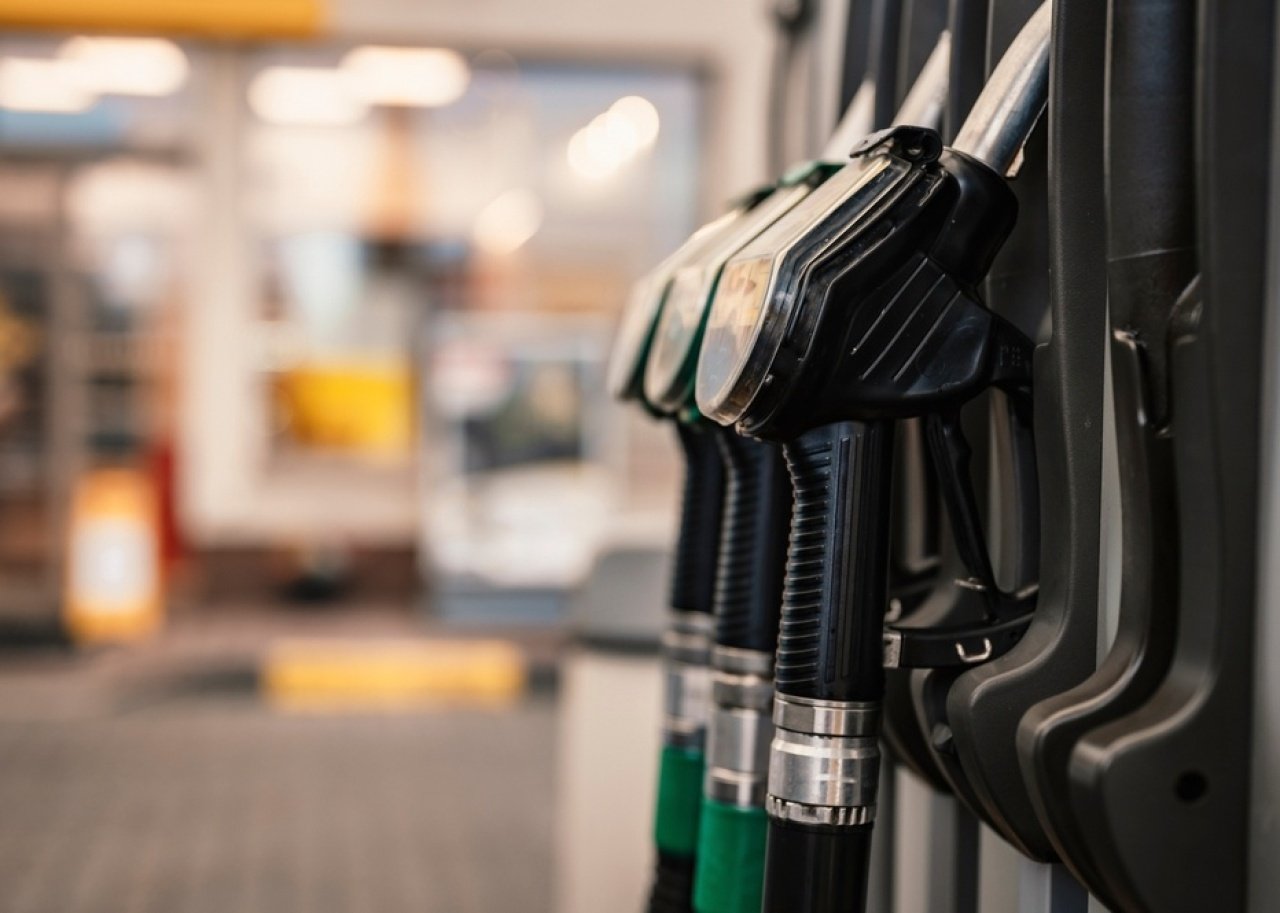
zedspider // Shutterstock


Anyone who drives a car understands the sting of having to fill up their tank and pulling into the gas station, only to discover that gas prices have skyrocketed. Paying extra for gas means you have less to spend on other things, which, over time, can really put a crimp in your budget.

Cheap Insurance explored some of the reasons behind major changes in gas prices, and compiled a list of the cheapest gas stations in every state using data from Gas Buddy.

Gas prices fluctuate based on several factors, including the cost of the key ingredient, crude oil, as well as the available supply and demand for gasoline. If the price of oil rises, a major refinery goes offline, or more drivers are hitting the road, for example, then the cost will increase.

In the first half of 2022, a unique confluence of events led to a surge in gas prices. The increased demand stemming from the COVID-19 pandemic, Russia’s invasion of Ukraine, and a slowdown in oil production all contributed to a national all-time high of $4.93 per gallon on average in June 2022.

Seasons also affect gas prices. Demand tends to drop in winter, but the cost also falls because gas stations switch to a different blend of gasoline that’s optimal for lower temperatures—and has cheaper ingredients.

Location also matters. The South and Midwest tend to have the lowest gas prices, while the West, including Hawai’i, has the highest. Californians, in particular, pay more for gas on average than any other state. That’s because of its high state excise taxes; its isolation from the country’s major pipelines, which causes supply issues; and its requirements that mandate a more environmentally friendly blend of gas that costs more to produce and adds to the price per gallon.

No matter where you live, read on to see if you can get a deal on gas near you.

Alabama
#1. Chevron (4426 Higgins Rd, Mobile): $2.09
#2. Buc-ee’s (6900 Buc-ee’s Blvd (along Coosa Ave), Leeds): $2.16
#2. Speedway (1617 Finley Blvd, Birmingham): $2.16

Alaska
#1. Airport Gas & Oil (4480 Dale Rd, Fairbanks): $2.98
#2. Costco (48 College Rd, Fairbanks): $3.09
#3. Turner’s Corner (8238 E Turner Rd, Palmer): $3.24

Arizona
#1. ARCO (802 W Speedway Blvd, Tucson): $2.13
#2. Costco (1650 E Tucson Marketplace Blvd, Tucson): $2.15
#3. Shell (405 W Speedway Blvd, Tucson): $2.19

Arkansas
#1. Brookshire’s (1310 Constitution Ave, Ashdown): $2.06
#1. Sam’s Club (1250 S Amity Rd, Conway): $2.06
#1. Sam’s Club (7700 Rogers Ave, Fort Smith): $2.06

California
#1. Fast Stop (11113 Black Marble Way, Redding): $2.99
#2. Maverik (2590 North St, Anderson): $3.09
#3. Fastrip (13710 Calimesa Blvd, Yucaipa): $3.15

Colorado
#1. Shell (7273 E Evans Ave, Denver): $1.65
#2. Murphy Express (4990 E Evans Ave, De

Inside Air Force One: The history of America’s most famous non-commercial jet

Kraig Pakulski 0 71 Article rating: No rating

US Air Force's Air Force One Boeing 747-200B (VC-25A) leaving Seattle-Tacoma International Airport.

Joe A. Kunzler // Shutterstock


The U.S. leads the world in private aviation, with the largest and fastest-growing market, projected to reach $40.05 billion by 2029. With that in mind, it’s no surprise that Air Force One, America’s most famous non-commercial jet, ranks among the most advanced and secure non-combat aircraft ever built.

While one might assume that America’s fascination with private aviation began with the presidential plane, history tells a different story. Long before Air Force One became a symbol of power in the sky, oil tycoons and major news organizations were already embracing private aircraft as a practical way to cross the country faster than trains.

So how did Air Force One evolve into a three-story, nuclear-hardened flying fortress? And how much did the private aviation industry shape what the president flies today? In this article, jet rental platform Jettly examines the history of Air Force One.

A Brief History of Private Aviation in the U.S.

By the late 1930s, business executives were crisscrossing the nation in the Twin Beech (the first American airplane designed specifically for business travel) while the President was still relying on trains and ships to get around.

Unlike today, those early private aviation customers weren’t chasing luxury or status. They were corporations and industrial titans looking for a competitive edge. Before Air Force One, with all its bells and whistles, was a concept, airplanes were practical business tools that moved people and information faster than any steam engine ever could.

The landscape began to change between 1945 and 1960, when the U.S. government found itself with a massive surplus of military transport aircraft (such as the C-47). This helped start the first air charter companies. For the first time, a group of people could pool their money to rent a plane for a specific trip, rather than owning the entire aircraft and hangar.

Air Force One: Not Just a Plane

Technically, “Air Force One” isn’t a single plane; it is the radio call sign for any U.S. Air Force aircraft carrying the president. However, the lineage of the “Flying White House” spans over 80 years of aviation history, evolving from basic military transports to today’s airborne command centers reportedly “hardened” to withstand the electromagnetic pulse from a nuclear detonation.

The first sitting president to fly privately was Franklin D. Roosevelt, who took a Boeing 314 Clipper flying boat (the Dixie Clipper) to the Casablanca Conference in 1943.

Several planes later, the presidential flight got the Air Force One moniker during Dwight D. Eisenhower’s term. The reason? A simple confusion: His plane (Columbine II) and a commercial Eastern Airlines flight had the same tail number (8610), and they needed a way to tell them apa

RSS
First40034004400540064008401040114012Last