Gregor Fischer // picture alliance via Getty Images
Hanukkah is not the Jewish Christmas. Articles and op-eds in newspapers remind readers of that fact every year, lamenting that the Jewish Festival of Lights has almost become an imitation of the Christian holiday.
These pieces exist for a reason. Hanukkah is a minor festival in the Jewish liturgical year, which is marked by major holidays in the fall and spring — the High Holidays and Passover, respectively. Because of its proximity to Christmas, however, Hanukkah has been culturally elevated into a major celebration, Samira Mehta, a professor of women and gender studies and Jewish studies at the University of Colorado Boulder, writes for The Conversation.
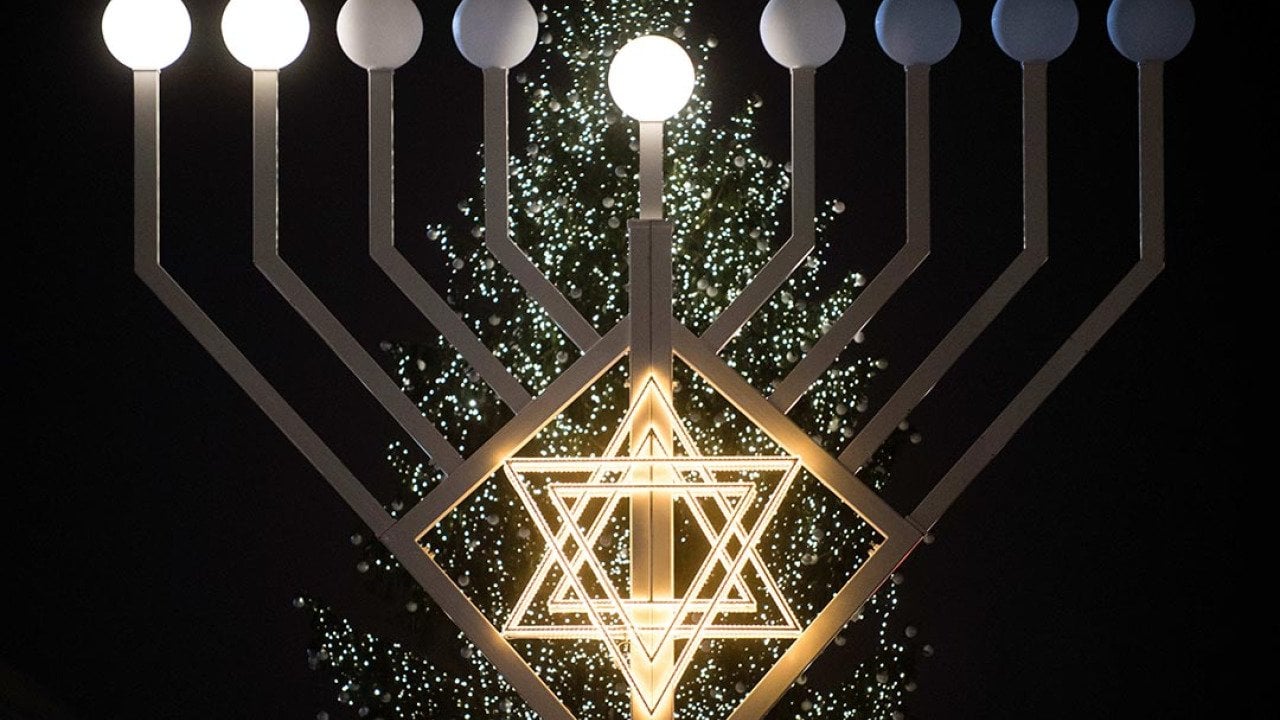
American shops and schools nod to diversity by putting up menorahs next to Christmas trees or including the dreidel song in the “holiday concert” alongside Santa, Rudolph or the Christ child. Even Chabad, an Orthodox Jewish movement, holds public menorah lightings that look remarkably like public Christmas tree lightings.
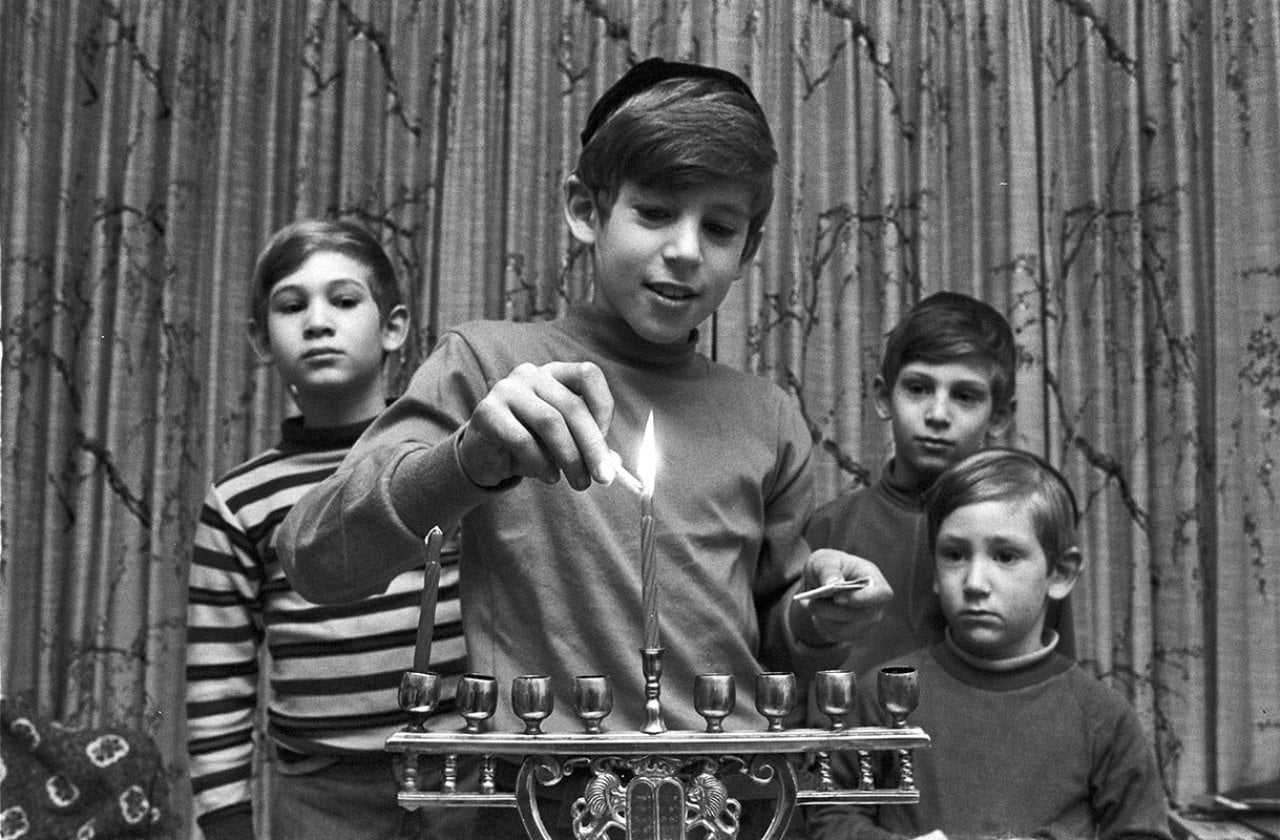
Store windows, doctors’ offices and college dining halls display Christmas trees and menorahs side by side, though the latter is a ritual object, not merely a decoration. A menorah, or “hanukkiah,” is lit in a specific way, on specific days, with accompanying prayers — more akin to a Christian Advent wreath than to the holly decking the halls.
These issues can be especially tricky for interfaith families. Jewish Americans are worried about Hanukkah growing too similar to Christmas — but the history of both holidays is more complicated than these comparisons let on.