Gecko Studio // Shutterstock
GLP-1 medications have rapidly become some of the most influential treatments for Type 2 diabetes and weight loss. As more people look into these prescriptions, there is growing curiosity about how the medications compare, which ones work best, and how much they cost. Since most GLP-1 drugs are expensive, people often look for savings resources.
In this guide, SaveHealth, a prescription discount/savings card website, breaks down the most commonly used GLP-1 medications, including Ozempic and Trulicity, to help you understand their differences, benefits, and what to consider before starting a prescription.
How GLP-1 Medications Work
GLP-1 receptor agonists mimic the body’s natural GLP-1 hormone, which helps signal the body to release more insulin when blood sugar is high. This will slow the stomach to empty, which acts on the brain to reduce appetite and increase fullness. This hormone plays a key role in regulating appetite, digestion, and insulin response. As a result, GLP-1 medications can improve blood sugar control and encourage weight loss.
Key effects of GLP-1 medications
- Encourage insulin release when blood sugar rises
- Slow stomach emptying to improve digestion and increase fullness
- Reduce appetite
- Lower post-meal glucose spikes
- Support sustainable weight loss efforts
Because many GLP-1 drugs come with high monthly costs, people often use price comparison resources to get a sense of price ranges before deciding which option to pursue.
Most Common GLP-1 Medications
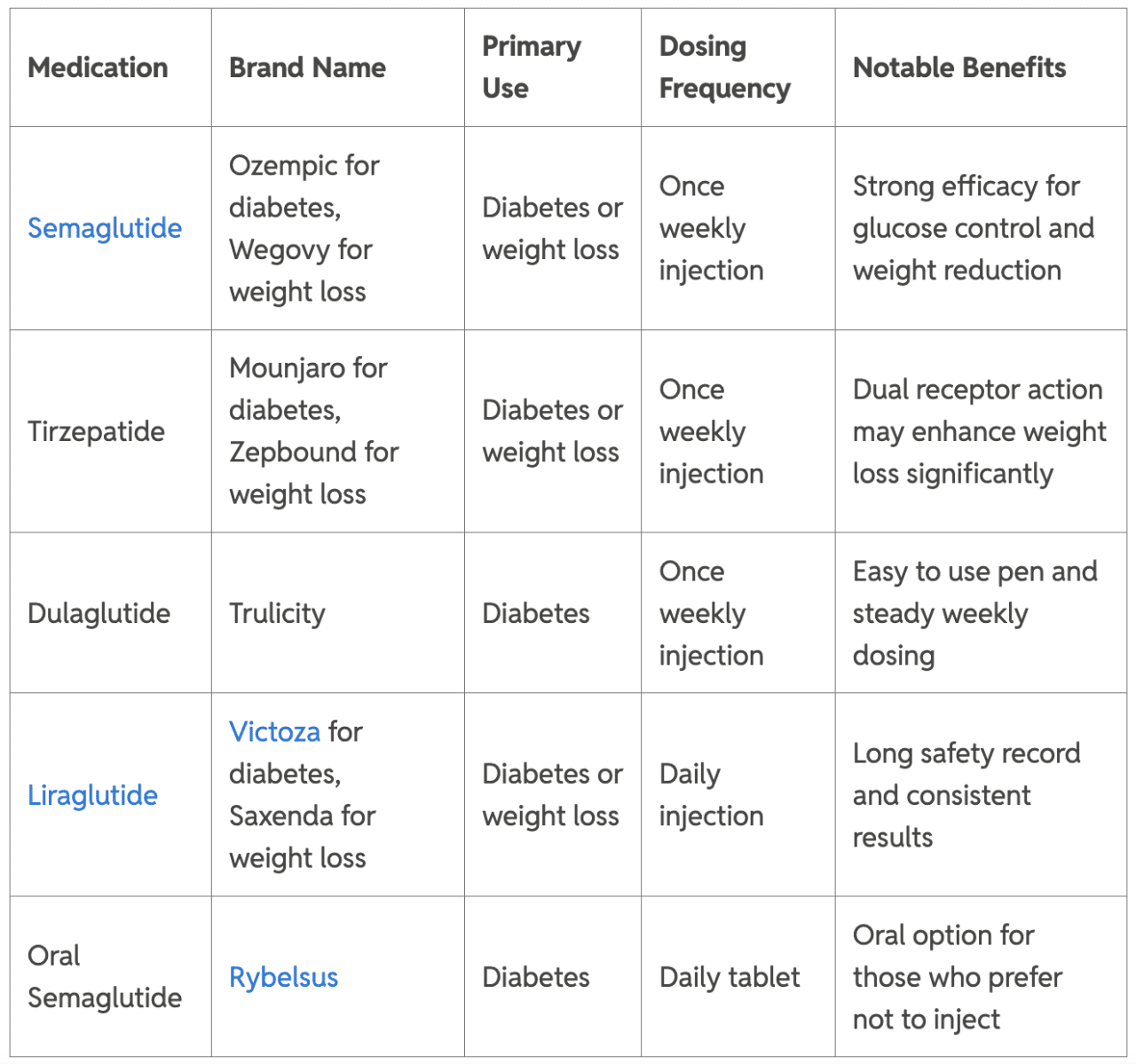
Below is a comparison of today’s most prescribed GLP-1 medications, including Ozempic and Trulicity, both widely used for Type 2 diabetes and increasingly discussed for weight support.
GLP-1 Medications
SaveHealth
Patients choosing between these medications often look at factors such as cost, insurance coverage, dosing preference, and weight loss expectations.
Ozempic GLP-1 Overview
Ozempic contains semaglutide and is one of the most well-known GLP-1 medications. It is FDA-approved for Type 2 diabetes but is sometimes prescribed off-label for weight loss.
Benefits
- Significant A1C reduction
- Reliable weekly dosing
- Strong weight loss results in many patients
- Heart health benefits for individuals with cardiovascular risk
Considerations

Pisit.Sj // Shutterstock
Investors who sell an investment at a profit in a taxable account incur a capital gain that they must report on their tax returns. For investments held longer than one year, the long-term capital gains tax applies. In both the 2025 and 2026 tax years, federal tax laws impose three different rates on long-term capital gains based on income. The major tax changes enacted through the One Big Beautiful Bill Act earlier in 2025 had no impact on long-term capital gains taxes, and the changes to the income thresholds for long-term capital gains tax rates are the result of inflation-related adjustments, The Motley Fool reports.
Note: Tax rates are always subject to change. There have been numerous occasions when the U.S. Congress and state lawmaking bodies have made changes to tax laws in the middle of a year or even retroactively to a previous year. Be sure to check the latest sources at the IRS and your state tax department for the most up-to-date information.
What is a capital gain?
A capital gain is the increase in value between what you paid for a capital asset and what you received when you sold it, subject to adjustments in certain cases. Most of the things you own count as capital assets, including investments, real estate, and personal property.
What is capital gains tax?
The federal government imposes taxes on capital gains for assets held in taxable accounts, like a brokerage account. Sales of assets inside tax-deferred accounts, such as IRAs and employer-sponsored retirement plans like 401(k)s, don’t generate capital gains tax.
Capital gains tax: Short-term vs. long-term
Federal tax laws break down capital gains into two categories based on how long the owner held the asset. Short-term capital gains tax applies to sales of assets held for one year or less. For assets held longer than a year before sale, the federal government imposes long-term capital gains tax.
What is the long-term capital gains tax rate?
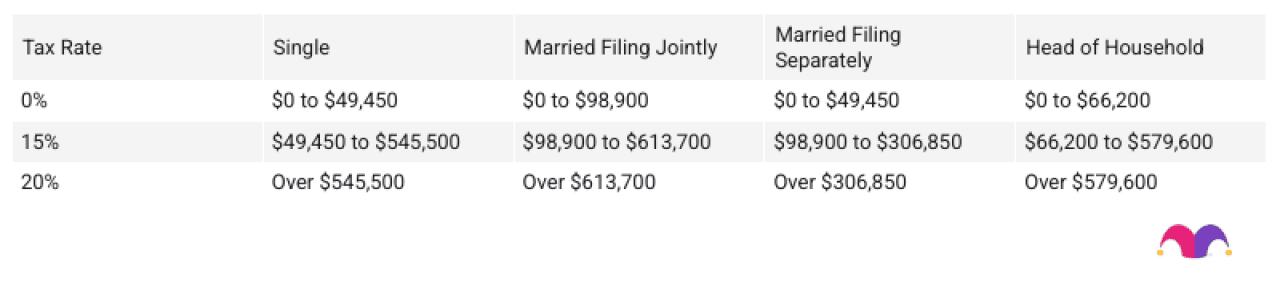
Long-term capital gains tax at the federal level is taxed at three different rates: 0%, 15%, and 20%. The tax rate applied to each taxpayer depends on the amount of long-term capital gains and other gross income, as well as the taxpayer’s filing status.
Long-term capital gains tax rates for 2026
These are the rates and income brackets governing federal taxes on long-term capital gains for assets sold during the 2026 tax year and reported on the 2026 tax returns due in April 2027.