IM_VISUALS // Shutterstock
From impulse DoorDash orders to forgotten streaming subscriptions, wasteful spending is a habit for many Americans, and younger generations are leading the charge.
Nearly one in 10 millennials (8%) waste money every day, while 32% of Gen Z say boredom drives unnecessary purchases, according to a Motley Fool Money survey.
To reduce the impact of impulse buys on your budget, small behavioral changes, like tracking spending through budgeting tools, setting spending limits, and pausing before purchase, can make a difference. Automating transfers from a checking account to a high-yield savings account (HYSA) also helps by putting money that would otherwise be spent impulsively into a separate account.
A high-yield savings account is a type of savings account that pays a higher interest rate than a traditional bank savings account, while still offering easy access to funds. These accounts are typically offered by online banks, are FDIC-insured, and are designed for money you want to keep safe but not locked away. High-yield savings accounts are commonly used for emergency funds, short-term goals, and cash people want to protect from impulse spending while still keeping it accessible.
The most common wasteful spending habits, ranked
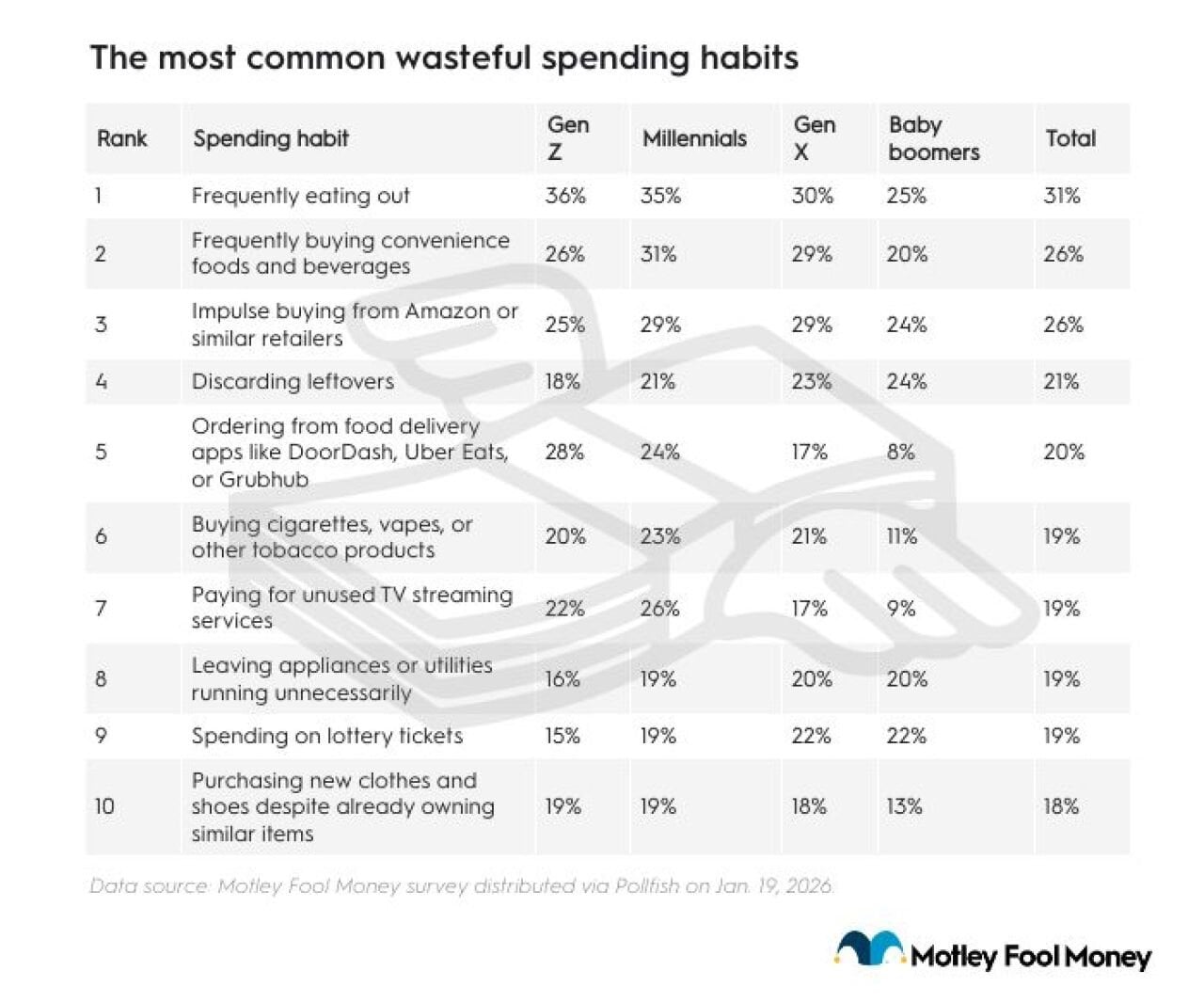
Most Americans (83%) say they engage in wasteful spending at least occasionally, with frequent dining out topping the list at 31%. Buying food and beverages from the convenience store is the second-most common source of wasteful spending (26%), while online impulse buys, like those on Amazon, account for another 26%.
Motley Fool Money
Wasteful food spending dominates the top five behaviors. One in five respondents reports unnecessary orders from delivery apps like DoorDash and Uber Eats. Usage skews young: 28% of Gen Z and 24% of millennials report regular food delivery spending, versus 8% of baby boomers. 21% regularly discard leftovers or let food go to waste, with baby boomers slightly more likely to do so.
Paying for unused streaming subscriptions is another common form of wasteful spending: 26% of millennials, 22% of Gen X, and 9% of baby boomers admit to paying for streaming services they don’t use.
Budgeting tools can provide instant clarity into what categories and retailers are responsible for more spending than individuals might think. Uncovering invisible spending and understanding how much is going towards unnecessary purchases is an important first step in tackling wasteful spending.
Millennials and