Click on the Manage Content for adding and managing content.
Click on the Rotator Settings and choose what and how it will be displayed.

Trump’s vow to arrest immigrants lifted private prison stocks. Then why did they tank?

Kraig Pakulski 0 19 Article rating: No rating

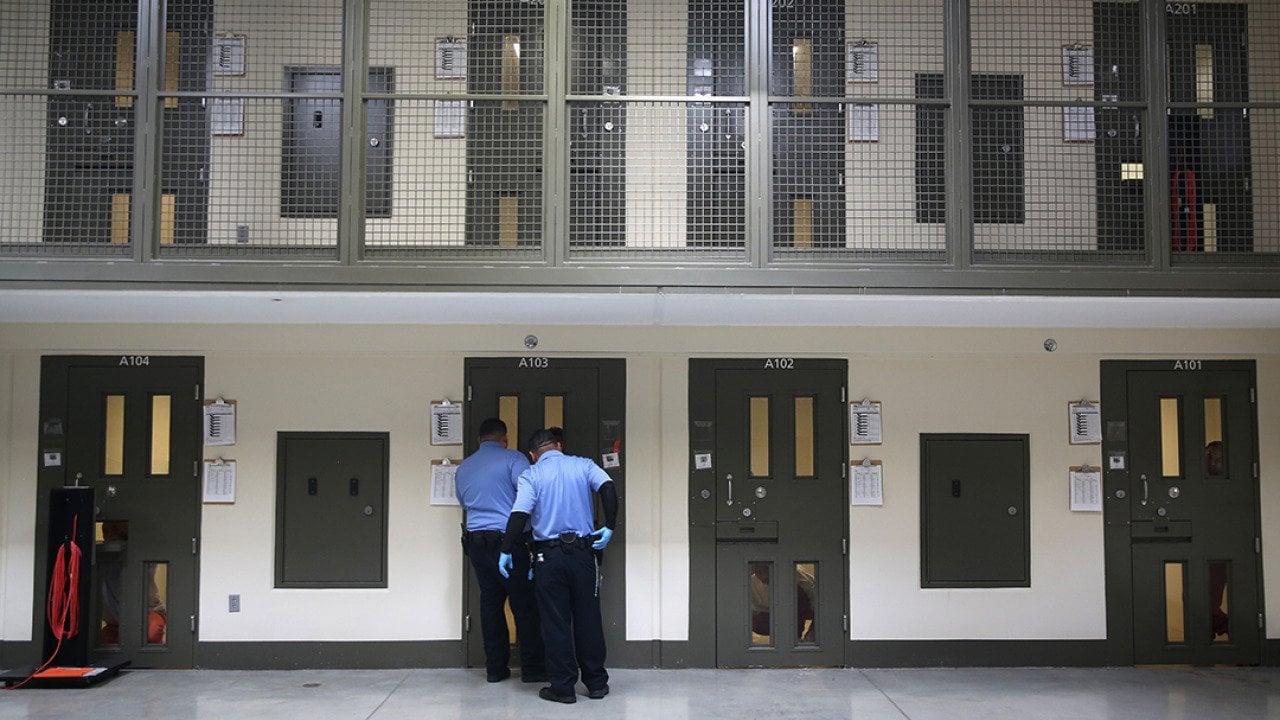
Guards prepare to escort an immigrant detainee from his 'segregation cell' back into the general population at the Adelanto Detention Facility on November 15, 2013 in Adelanto, California.

John Moore // Getty Images


The GEO Group and CoreCivic, the largest companies that provide detention space for Immigration and Customs Enforcement, seemed likely to reap a windfall after their stocks soared in the weeks leading up to last year’s inauguration of President Donald Trump.

But while Trump’s deportation machine had explosive growth, its reach hasn’t lived up to Wall Street expectations. Stock prices for both companies slumped. Despite a series of immigration blitzes and high-profile raids, the government didn’t use as much detention space as investors expected.

Detention industry experts and other observers believe all that could change this year, with the immigration system — and privately run holding facilities — expected to grow even larger.

“Once Trump was elected, there was a rush and belief that all this was going to occur at the snap of a finger,” said Joe Gomes, an equity analyst for Noble Capital Markets, an investment bank. “It’s just taken a little longer than many investors thought to see these numbers really jump up,” he told The Marshall Project.

On his first day in office, Trump reversed an executive order from former President Joe Biden to curb the use of private companies to operate federal prisons for the Justice Department — though they continued to be used for immigration detention. Contractors like GEO Group and its primary competitor, CoreCivic, welcomed the news. Days later, the first piece of legislation Trump signed into law, the Laken Riley Act, made it easier to detain undocumented immigrants accused of low-level crimes.

At the beginning of 2025, the companies had about a dozen prison facilities sitting empty, ready to be reactivated. GEO Group, based near Mar-a-Lago, Trump’s home in Florida, seemed particularly well-suited.

“This is a unique moment in our company’s history, and we believe we are well-positioned to scale up our diversified segments — in secure housing, transportation, electronic monitoring — to meet the changing needs of this new administration, and to continue to enhance value for our shareholders,” George Zoley, the Greek-born founder of GEO Group, said during a quarterly earnings call in February.

By summer, Trump’s “One Big Beautiful Bill Act” was signed into law, approving $170 billion in new funding for immigration enforcement.

Oddly enough, the price of GEO Group’s stock, which had nearly tripled between the waning months of the presidential campaign and Inauguration Day, then plummeted. At the end of 2025, GEO Group’s stock was trading around $16 per share, down from a high of $36.46 on Trump’s second day in office. Stock prices also fell for CoreCivic,

How to build a simple mental health routine this winter (no overhaul needed)

Kraig Pakulski 0 23 Article rating: No rating

People along a walkway during wintertime.

juancsanchezherrera // Shutterstock


Winter isn’t just a change in scenery. It’s also a shift in routine and a shock to your physiology. Short days and long nights naturally reduce access to natural light, which can influence mood and circadian rhythms. For some, this contributes to seasonal affective disorder, a form of depression linked to seasonal shifts.

Even those without clinical symptoms can still experience the famous “winter blues,” which cause a drop in motivation and an increase in stress. Here are six tips from April Health to keep your spirits up this winter.

1. Take 10‑minute outdoor light and movement breaks

Exposure to natural daylight can help regulate the circadian rhythm and counteract low winter light levels. Light therapy is one of the key treatment methods for seasonal affective disorder, according to the nonprofit academic medical center Mayo Clinic. Combining light with gentle movement, such as taking a walk around the block, can add cardiovascular benefits and a small dopamine lift to your daily life. This exercise isn’t about breaking a sweat. Rather, it’s a way to signal wakefulness to the brain through motion and daylight.

If a stroll outside isn’t possible, light therapy boxes can be a potential alternative. For most people, though, taking just 10 minutes to walk around the neighborhood can make a major difference.

2. Keep a gratitude or daily-wins journal

Gratitude journaling is a well-documented way to reduce stress and support cognitive reframing, which can lead to a more positive outlook. During the wintertime, this small reframing can matter even more. Taking the time to write three things you’re grateful for or three small wins you had every day doesn’t force toxic positivity, but instead balances the brain’s bias toward threats and stress. The American Psychological Association notes this practice is a key part of cognitive behavioral therapy, an effective method for transforming thoughts for the better.

3. Take a 5‑minute mindful breathing or a body scan

Mindfulness practices, such as breathing exercises and body scans, can help downshift the nervous system from fight-or-flight to rest-and-digest. Organizations that produce mental health resources for the winter season frequently recommend mindful breathing as a tool for coping with stress and overwhelming feelings related to the holidays. A five-minute body scan or guided breath session can help clear mental static and reduce rumination, two things that often spike during the darker months.

4. Have a simple weekly social check‑in

Social withdrawal is common in wintertime, especially when the weather limits spontaneous interaction. Providers who work with seasonal affective disorder often emphasize that structured social touchpoints, like a weekly coffee with friends or a hobby group, can help to counteract isolation. Even just brief social contact can help maintain emotional regulation, reduce loneliness, and reinforce a

The 25 best places to retire in the US in 2026, ranked by what retirees value most

Kraig Pakulski 0 26 Article rating: No rating

An aerial view of Fort Lauderdale in Florida.

FotosForTheFuture // Shutterstock


What’s the best place to retire? To answer that question, The Motley Fool surveyed 2,000 retired Americans to understand what matters most in retirement and used those insights to rank the best places to retire across the United States.

Based on the survey results, The Motley Fool identified seven key retirement factors and weighted each according to retiree preferences: quality of life (31%), healthcare access and quality (15%), housing affordability (13%), crime and safety (12%), weather and climate (12%), state and local taxes (11%), and non-housing affordability (6%).

These weightings were applied to secondary data from eight public and institutional datasets to calculate a final retirement score for every U.S. county, reflecting real retiree needs and preferences rather than assumptions about where people “should” retire. Counties were excluded if their population was below 40,000, their quality-of-life score was below 35, or their housing affordability score was below 35. The survey of U.S. retirees 55 years old and older was conducted by Pollfish for The Motley Fool in December 2025, and scores were computed at both the county and state levels. The survey methodology employed techniques to reflect nationally representative data based on age and gender, as well as to minimize selection bias and ensure a diverse participant pool.

The Motley Fool’s Best Places to Retire list reflects what retirees value most on average, but there’s no single “right” retirement destination for everyone. The best place to retire depends on personal priorities, retirement planning, and expected retirement income. For some, that means keeping costs low so that savings and investments in their retirement accounts go further. Others may place more weight on access to amenities or choosing a more expensive location with great weather.

With that in mind, here’s The Motley Fool’s Best Places to Retire list.

1. Fort Lauderdale, Broward County, Florida

Quality of life: 78 | Healthcare: 33 | Housing: 45 | Cost of living: 64 | Crime: 61 | Tax: 62 | Climate: 88 | Total retirement score: 64

Sometimes dubbed the Venice of America, Fort Lauderdale averages 246 days of sunshine and offers miles of waterfront, including Atlantic beaches and boating canals.

  • Pros: Easy access to beaches, including Fort Lauderdale Beach and Las Olas Beach; year-round sunshine; outdoor activities centered around Hugh Taylor Birch State Park; and a strong cultural, shopping, and dining scene, including NSU Art Museum and the Broward Center for the Performing Arts.
  • Cons: Housing and rent

Why does your dog get so excited about snow?

Kraig Pakulski 0 14 Article rating: No rating

A brown Australian Shepherd dog dashing through the snow.

Anna Averianova // Shutterstock


It’s a delightful scene: The first snow of the year falls, and you get your dog all suited up to venture outside for a walk. The second they lay eyes on the winter wonderland, their ears perk up. Setting that first paw print into the snow, their snout goes into overdrive, and the seemingly endless zoomies start.

You may have wondered: What is it exactly about snow that gets them going? Is it the look of it? The texture on their paws? The cold sensation? Does it do something to the scent landscape that entices their olfactory senses?

Of course, not every dog responds eagerly to snow days; some positively hate the cold, can’t stand wearing booties, and go on walk strike during inclement weather. But there are those who go bananas for the white stuff. Pet advice website Kinship talked to a couple of veterinarians about what makes snowfall so appealing, plus, the safety tips you need to know to keep your abominable snowdog safe in freezing temps.

They like the sensory experience.

“Many dogs love anything that feels different from their daily routine,” says Dr. Ashly Smith, regional medical director for Small Door Veterinary.

Dr. Smith points to the texture of snow under their paws, cool air on their skin, and the visual brightness as “sensory newness triggers” that dogs find stimulating. “Some even stomp or dig simply to recreate the crunchy sound of fresh snow underfoot because the feedback is so satisfying,” she explains.

A cold dip in temperature can also cause a burst of energy in dogs, though some can get sleepier. (Just picture your dog’s activity level on a hot and humid summer day, compared to a wintery 35 degrees, and this is pretty evident.) The natural boost encourages activity like zoomies, digging, and jumping. Plus, “the buoyancy and softness of snow can make some dogs feel momentarily ‘lighter,’” she explains. If your pup transforms into a bouncy rabbit on a snowy day, you may have noticed this.

They have a genetic predisposition for cold temps.

Compared to a Retriever or Samoyed, your average eight-pound Chihuahua may act less than thrilled stepping outside for a snowy walk, likely cowering and beginning to shake. That’s because there is a genetic predisposition to a dog’s affinity for snow, according to Dr. Mondrian Contreras, veterinary expert for Pumpkin Pet Insurance.

Dr. Contreras says breeds like Siberian Huskies, Alaskan Malamutes, and Bernese Mountain Dogs are especially fond of the snow due to their thick fur coats and a history of working in cold environments as sled dogs, hunting dogs, or search-and-rescue dogs. These breeds typi

US military says 2 killed in eastern Pacific boat strike, with 1 survivor

Kraig Pakulski 0 18 Article rating: No rating

By Clay Voytek, CNN

(CNN) — The US military conducted a strike against another alleged drug-trafficking boat in the eastern Pacific Ocean on Friday, killing two people, according to US Southern Command.

One individual survived the strike, and SOUTHCOM said it notified the US Coast Guard to activate a search and rescue mission for the survivor

“On Jan. 23, at the direction of @SecWar Pete Hegseth, Joint Task Force Southern Spear conducted a lethal kinetic strike on a vessel operated by Designated Terrorist Organizations,” SOUTHCOM wrote on X.

At least 115 people have now been killed in strikes on suspected drug boats as part of a campaign, dubbed Operation Southern Spear, that the Trump administration has said is aimed at curtailing narcotics trafficking.

The US military most recently struck three alleged drug-trafficking boats in the eastern Pacific Ocean on December 31, killing five people.

This is a developing story and will be updated.

The-CNN-Wire
™ & © 2026 Cable News Network, Inc., a Warner Bros. Discovery Company. All rights reserved.

The post US military says 2 killed in eastern Pacific boat strike, with 1 survivor appeared first on News Channel 3-12.

RSS
First35923593359435953597359936003601Last