Click on the Manage Content for adding and managing content.
Click on the Rotator Settings and choose what and how it will be displayed.

Sugar starts corroding your teeth within seconds: Here’s how to protect your pearly whites from decay

Kraig Pakulski 0 37 Article rating: No rating

Vector illustration of a sad tooth surrounded with common sweet and sugar-based food.

FGC // Shutterstock


While you’re likely aware that eating too much sugar can cause cavities — that is, damage to your teeth — you might be less familiar with how bacteria use those sugars to build a sticky film called plaque on your teeth as soon as you take that first sweet bite.

Writing in The Conversation, University of Florida oral biology professors Jacqueline Abranches and José Lemos explain what happens in your mouth the moment sugar passes your lips — and how to protect your teeth.

An acid plunge

Within seconds of your first bite or sip of something sugary, the bacteria that make the human mouth their home start using those dietary sugars to grow and multiply. In the process of converting those sugars into energy, these bacteria produce large quantities of acids. As a result, just a minute or two after consuming high-sugar foods or drinks, the acidity of your mouth increases to levels that can dissolve enamel — that is, the minerals making up the surface of your teeth.

Luckily, saliva comes to the rescue before these acids can start corroding the surface of your teeth. It washes away excess sugars while also neutralizing the acids in your mouth.

Your mouth is also home to other bacteria that compete with cavity-causing bacteria for resources and space, fighting them off and restoring the acidity of your mouth to levels that aren’t harmful to teeth.

However, frequent consumption of sweets and sugary drinks can overfeed harmful bacteria in a way that neither saliva nor helpful bacteria can overcome.

An assault on enamel

Cavity-causing bacteria also use dietary sugars to make a sticky layer called a biofilm that acts like a fortress attached to the teeth. Biofilms are very hard to remove without mechanical force, such as from routinely brushing your teeth or cleaning at the dentist’s office.

In addition, biofilms impose a physical barrier that restricts what crosses their border, such that saliva can no longer do its job of neutralizing acid as well. To make matters worse, while cavity-causing bacteria are able to survive in these acidic conditions, the good bacteria fighting them cannot.

In these protected fortresses, cavity-causing bacteria are able to continue multiplying, keeping the acidity level of the mouth elevated and leading to further loss of tooth minerals until a cavity becomes visible or painful.

How to protect your (sweet) teeth

Before eating your next sugary treat, there are a few measures you can take to help keep the cavity-forming bacteria at bay and your teeth safe.

First, try to reduce the amou

US auto manufacturing heads into 2026 with less margin for error

Kraig Pakulski 0 43 Article rating: No rating

Aerial view of the Ford Motor Company automobile factory complex in Dearborn, Michigan.

Aldo91 // Shutterstock


U.S. auto manufacturing is entering 2026 leaner than it was a year ago and with less room for disruption.

Federal labor data shows employment in motor vehicles and parts manufacturing fell by roughly 29,000 workers in 2025, even as production expectations largely held. The result is an industry operating with fewer people and less slack than in prior years.

While payrolls shrank, the pace of work did not slow in the same way. Average weekly hours in auto manufacturing remained around 42.8 hours at the end of 2025, close to where they were a year earlier.

Production data helps explain why. Federal Reserve figures show U.S. motor vehicle assemblies fluctuated through 2025 but did not collapse, staying broadly within the 9-10 million seasonally adjusted annual rate range. Industrial production for motor vehicles and parts also remained near long-term averages late in the year.

In other words, the industry didn’t shed work. It shed buffer.

When staffing levels thin without a corresponding slowdown in output, systems become more sensitive to disruption. With fewer people available, covering an absence or delay can mean reassigning tasks, leaning more heavily on overtime, or operating with less backup when something goes wrong. What might once have been a manageable hiccup can ripple more quickly through schedules.

Manufacturing research consistently shows that unplanned absences and concentrated workloads increase operational strain, particularly in environments where staffing is already tight, which increases the risk of safety incidents, especially in automotive.

TeamSense analyzed BLS data showing manufacturing absence rates averaging 2.8% over a 12-month period, with warehousing even higher at 3.4%, compounding the impact when there is little margin to absorb disruption.

The employment decline itself reflects a mix of forces rather than a single shock. Automakers spent much of 2024 and 2025 recalibrating electric-vehicle plans as EV demand lagged earlier forecasts. Reuters reported that major manufacturers, including General Motors and Ford, delayed EV production ramps and reduced shifts at some facilities, with effects cascading through parts suppliers.

At the same time, automation continued to advance. The International Federation of Robotics reported that robot installations in the U.S. automotive sec

A Republican-sponsored bill would take back $21B appropriated for broadband deployment

Kraig Pakulski 0 35 Article rating: No rating

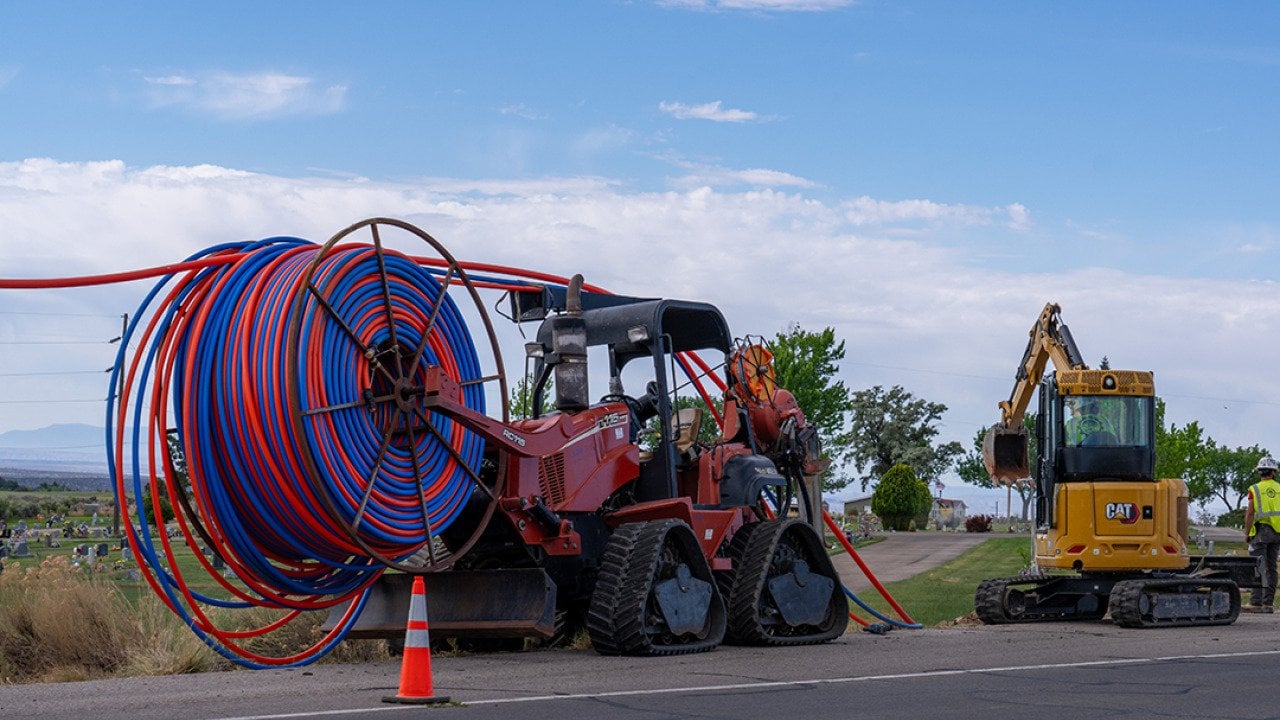
Machinery vehicles parked on roadside while installing internet fiber optic cables' plastic conduit underground in a rural area in Utah.

Jon G. Fuller // VW Pics / Universal Images Group via Getty Images


A bill filed in late November would claw back $21 billion allocated to state governments to address the digital divide, marking another moment in the debate over expanding broadband internet access in rural America.

The bill, sponsored by Republican Sen. Joni Ernst of Iowa, would limit the scope of the Broadband Equity, Access, and Deployment (BEAD) program. BEAD, created as part of the 2021 Infrastructure Investment and Jobs Act under the Biden administration, is a $42.45 billion federal grant program aimed at connecting every American to high-speed internet.

Of that $42.45 billion, about $21 billion is slotted for so-called nondeployment funds — essentially, anything other than infrastructure to expand internet access. Those other projects could include funding for permitting, telehealth, cybersecurity, preparedness for artificial intelligence, and more.

Ernst’s bill would claw back those nondeployment dollars, angering critics and lawmakers across multiple states.

In Missouri, Republican state Rep. Louis Riggs said BEAD funding, including the nondeployment dollars the bill would redirect to the federal government, was “intended to bridge the digital divide once and for all.”

“You’re punishing people in rural America, again, for being rural,” Riggs said in an interview with the Daily Yonder.

Ernst’s bill is co-cosponsored by Republican senators Ted Cruz of Texas, Mike Lee of Utah, and Cynthia Lummis of Wyoming. It’s unclear whether the bill would find enough support in Congress to pass. Ernst has long been critical of the BEAD program, claiming the amount of money allocated hasn’t produced results.

So far, the projects meant to be funded by BEAD haven’t broken ground. As of early December, 29 out of 56 states and territories have had their final proposals — their plans on how to deploy high-speed internet to unserved or underserved areas — approved by the National Telecommunications and Information Administration. California is the only state with its final proposal for approval still outstanding, according to the NTIA’s BEAD dashboard.

States have not yet received any of the BEAD money from the federal government to implement their plans.

Ernst has called the program a “boondoggle,” saying in a letter last year, “It’s time to pull the plug.”

Riggs, the state representative from Missouri, said states have been saddled with an immense amount of work to prepare for the money, making maps and plans that take time. They’ve had to do much of that work from the ground up, he said.

“Taking a sledgehammer to it isn’t helpful,” Riggs said.

Drew Garner, d

4 accessibility laws and standards every online business should know in 2026

Kraig Pakulski 0 50 Article rating: No rating

A vector illustration of a monitor with web accessibility graphics.

graphicwithart // Shutterstock


In 2026, digital accessibility is no longer optional. It’s a legal and business requirement for any organization that operates online, from government agencies and retailers to financial institutions and global brands.

Yet despite growing enforcement and rising awareness, many website owners still lack a full understanding of the legal framework behind accessibility. Which rules actually apply? Who is required to comply? And what does accessibility mean in practical, real-world terms?

To help clarify the landscape, AudioEye highlights four core laws and standards that shape digital accessibility enforcement in 2026, and how organizations can mitigate risk while creating more accessible online experiences.

1. The Americans with Disabilities Act (ADA): A Baseline For Accessibility

The ADA has long prohibited discrimination against people with disabilities, but for years its application to websites and mobile apps existed in a legal gray area. That ambiguity narrowed significantly when the U.S. Department of Justice finalized a rule clarifying that Title II of the ADA applies directly to digital services provided by state and local governments.

Beginning April 24, 2026, public sector websites and mobile applications must meet defined accessibility standards, with smaller public entities receiving additional time to comply. The rule marks one of the clearest federal statements to date that digital access is a civil rights issue, not a technical preference.

While the rule focuses on government entities, its implications extend well beyond the public sector. Private businesses, particularly those offering e-commerce, financial, healthcare, or consumer services online, continue to face ADA-related demand letters and lawsuits tied to inaccessible websites. Courts have increasingly treated digital access as essential to participation in modern life, reinforcing the expectation that websites work for everyone. Lawsuits in 2025 were up 102% from 2020, according to AudioEye research.

2. WCAG: The Technical Standard Behind Most Accessibility Laws

If the ADA defines who must provide access, the Web Content Accessibility Guidelines, commonly referred to as WCAG, define how that access should function in practice. Developed by the World Wide Web Consortium (W3C), WCAG serves as the technical foundation for most accessibility laws, regulations, and legal settlements worldwide.

In 2026, WCAG 2.1 Level AA remains the most widely referenced benchmark in legal and regulatory contexts, even as WCAG 2.2 introduces additional best practices. WCAG focuses on ensuring that digital content is perceivable, operable, understandable, and robust. These

Big Game food trends: DoorDash data reveals how America eats on game day

Kraig Pakulski 0 51 Article rating: No rating

A plate of buffalo chicken wings for a football game day.

Arina P Habich // Shutterstock


On the biggest Sunday of the year, the game is only half of the excitement. The other half? The spread. With over 5.7 million orders placed on its platform the day of the Big Game last year, DoorDash data shows what actually made it to watch parties, from restaurant favorites to the grocery items that fueled game-day menus.

Here’s how America ate on championship Sunday in 2025.

Key Highlights

  • Big Game Sunday was the #1 day of the year in 2025 for chicken wing orders at restaurants and guacamole orders at grocery stores.
  • DoorDash orders peaked during the pre-game last year with about 155 orders per second.
  • Chicken wings clinched the title for the most ordered dish on game day.
  • Grocery orders for Lit’l Smokies sausages skyrocketed over 3,600% compared to the daily average, making pigs in a blanket the undisputed DIY champion.

Clinching The #1 Most-Ordered Favorite

DoorDash crunched the numbers to see which fan favorite claimed the title for most ordered game day item.

  • The Wing King: Championship Sunday is the #1 day for restaurant chicken wings based on DoorDash orders for the year, up at least nearly 25% more than any other day. In fact, over 639,000 wing orders were placed. At an estimated six wings per order, that’s over 3.8 million wings, enough to give every resident of Buffalo, New York (the birthplace of Buffalo wings) about 14 wings each.
  • The Pizza Play: Pizza was the runner-up with over 637,000 pizza orders — enough pizza orders to feed a sold-out Levi’s Stadium crowd nearly 10 times.

The Great Wing Debate

One question has divided households and tailgates alike: bone-in or boneless? Based on orders of traditional wings (excluding tenders and nuggets), bone-in wins in a blowout. In fact, 44 of 50 states ordered more bone-in wings than boneless on the day of the Big Game. The outliers: Iowa, Idaho, New Hampshire, Nevada, and the Dakotas.

DoorDash also dug into regional flavor favorites to see which sauces and seasonings are each state’s go-to.

A data map graphic showing the most popular wing flavors across the US.

DoorDash


  • Bringing the Heat: The classic buffalo flavor dominated the map, ranking as the #1 choice in 39 states like New York, Hawai’i, Washington, Massachusetts, Alabama, and Louisiana.
  • Game Time Decision: Some prefer to control the sauce themselves, opting for plain wings across nine states, including California, Florida, Texas, and Alaska.
  • Hometown Hero: Georgia stayed true to its roots, opting for lemon pepper wings, proving Atlanta’s iconic flavor stil
RSS
First37233724372537263728373037313732Last