Click on the Manage Content for adding and managing content.
Click on the Rotator Settings and choose what and how it will be displayed.

7 moments of Asian American and Black American solidarity

Kraig Pakulski 0 112 Article rating: No rating

Frederick Douglass portrait; excerpt from speech; Lim Lip Hong Family Portrait from Chinese Exclusion Act investigative file

Photo illustration by Elizabeth Ciano // Stacker // MPI // Getty Images; NARA; Library of Congress


“Divide and conquer” is a maxim that has proven effective in numerous scenarios—such as negotiations and computer programming, for example. But, more insidiously, it has also been used to cement social hierarchies.

Wealthy colonial Americans used the perceived superiority of one race over another to disrupt the solidarity of those in lower income brackets and retain their hold on economic systems. During the early 1900s, labor groups of different ethnicities were often introduced on plantations to prevent strikes and maintain low wages, according to Ronald Takak, a pioneer of ethnic studies.

Fast forward a century to 2020, when the same tactic put Asian Americans and Black Americans on opposing sides of a fabricated struggle. In reality, however, interracial solidarity was the foundation for many freedoms taken for granted today.

Drawing on research from university history departments and local news publications, Stacker compiled a list of seven moments in history where Black and Asian solidarity in America made civil, labor, and economic freedoms possible.

That solidarity has fueled the urgency for those in power to sow dissent, just as it did in 2020. With the death of George Floyd and the prevalence of police brutality against the backdrop of the COVID-19 pandemic, videos of anti-Asian violence perpetuated by Black Americans began increasing on social media sites. Given the rise of violence and discrimination against Asian Americans during the pandemic, some called on police and city officials to get tougher on crime, just as protests calling for the opposite were happening.

But those videos didn’t show the bigger picture. Research indicates that the majority of hate crimes against Asian Americans are committed by white people. A study released by the National Council of Asian Pacific Americans found that fringe social media accounts were actively pushing media surrounding Black people committing hate crimes against Asians, spreading fear and division between two underrepresented groups, and manipulating the narrative surrounding hate crime statistics.

Disinformation like that contributes to the “model minority” myth, which paints Asian Americans as successful and contrasts their “progress” to minimize the role of racism in explaining the state of Black Americans, creating a wedge between the two communities. Since 2020,

Can an economic downturn actually boost healthy habits? 70% of Americans say yes: Here’s why

Kraig Pakulski 0 98 Article rating: No rating

A man walking through the city during autumn.

alexkich // Shutterstock


If the economy dips, healthy habits may actually rise. According to results of a new Hims study, 70% of Americans agree that an economic squeeze nudges them toward healthier habits that support lower spending. Think: outdoor exercise (fresh air is cheaper than a gym membership), fewer pricey cocktails, and a whole lot of home-cooked meals.

In addition to economic slumps inspiring people to look for ways to save money, 85% of respondents agree that these periods impact their health habits and routines — both for better and for worse.

Let’s start with what’s better. As mentioned, respondents are getting outside more, drinking less alcohol, and cooking more meals at home. They are also buying more nutrient-rich foods to get the most out of their money and being more intentional about what they eat.

However, while 70% of respondents associate economic slowdowns with positive personal health outcomes, 61% say that money being tight hurts their health. Specifically, they are eating less expensive foods, which tend to be less healthy; they don’t sleep as well and are stressed; and they’ve postponed or canceled doctor’s appointments.

Only 15% of Americans say the economy has had no impact on their health habits.

Economic Health

More Americans say there are more health benefits than drawbacks in a difficult economy. Here’s a look at what gets better, and what gets worse, according to the results.

Q: In what ways, if any, has the downturn in the economy impacted your health? Select all that apply.

Positive Impact on Health

  • 25% I’ve cut down on eating out at restaurants
  • 23% I’ve cut down on unessential foods, like dining out, alcohol, and treats
  • 19% I’ve had to plan meals more carefully, which has made me consider what I eat more
  • 18% I’ve focused more on buying nutrient-rich foods to get the most out of my money
  • 17% I’ve exercised outside more—fresh air is cheaper than a gym membership

Negative Impact on Health

  • 19% I’m eating less expensive foods, which tend to be less healthy
  • 19% I’m stressed, can’t sleep, or both
  • 16% My mental health has deteriorated
  • 15% I’m cutting corners on good health habits to save money
  • 12% I’ve had to cancel or postpone doctor’s appointments
  • 11% I’ve had to quit a gym membership or fitness classes to save money
  • 11% I’ve had to take a less comprehensive healthcare plan

Wellness Is (More) Recession-Proof

In an article published in the MIT Press Reader, Massachusetts Institute of Technology professor Mary Davis, Ph.D., outlines research that supports the idea that recessions spark healthier behaviors due to the sheer financial pressure. “The upside of a down economy is that you have less money to do bad things,” she writes.

People often cut alcohol, cigarettes, and excess food, just to name a few unhealthy habits. Financial constraints also incentivize people to walk more to avoid the cost of gasoline, and,

How to handle holiday stress and family pressure around food and body image

Kraig Pakulski 0 86 Article rating: No rating

A family praying over their holiday dinner.

LightField Studios // Shutterstock


The holidays are often portrayed as joyful and relaxing, but for many people, they’re anything but. From packed schedules and family expectations to endless conversations about food, weight and appearance, this time of year may bring emotional strain instead of comfort.

LifeStance Health explains why the holidays can be stressful and explores ways to set emotional and conversational boundaries that may support emotional well-being for some individuals during the season.

Why holidays can feel stressful

Even though the holidays are meant to bring people together, they often magnify existing stressors. Some of the most common reasons include:

  • Heightened expectations: Pressure to feel festive, give perfect gifts or host the ideal gathering can create anxiety and guilt.
  • Unresolved family dynamics: Being around relatives can bring up old conflicts or emotional triggers.
  • Financial and time stress: Travel, shopping and social obligations can overwhelm even the most organized person.
  • Food and body image sensitivity: When gatherings center around meals, people who struggle with disordered eating or body image concerns may feel anxious or exposed.

The combination of emotional expectations and sensory overload may activate the body’s stress response, leaving many people feeling drained or tense.

Why holiday food traditions can be emotionally challenging

In many families, food is a form of love and connection. But for individuals sensitive to body image or eating issues, being surrounded by abundant food, commentary about diet or pressure to “try a little of everything” may become distressing.

Common triggers include:

  • Unsolicited comments about weight or appearance
  • Conversations about dieting or “earning” indulgence
  • Social comparison or feeling watched while eating
  • Guilt or shame about breaking routine eating patterns
  • Family pressure to eat foods because they are traditional or homemade

Recognizing these experiences as valid is often the first step toward protecting your emotional well-being during the holidays.

How to handle holiday family gatherings without feeling overwhelmed

Anticipating uncomfortable or intrusive questions about your lifestyle, appearance or choices can create anxiety before events even begin. Preparing emotionally may help you feel centered and empowered. Consider these strategies:

  1. Acknowledge your emotions. It’s normal to feel uneasy before a family gathering. Recognize feelings of stress or vulnerability without judgment.
  2. Set boundaries. Identify topics you prefer to avoid, such as your body, relationships or career, and decide in advance how you’ll respond. Phrases like, “I’d rather not talk about that” may gently steer conversations elsew

What happens to an SR-22 when a driver moves to a non-SR-22 state?

Kraig Pakulski 0 145 Article rating: No rating

A U-Haul truck on a highway.

Around the World Photos // Shutterstock


A geographic fresh start often brings a welcome sense of relief, especially for drivers who have been fulfilling a required SR-22 insurance filing. For those obligated to carry this certificate of financial responsibility, relocation can seem like a convenient escape hatch from the requirements of their previous state. The question looms large: If a driver is required to maintain an SR-22 in their original state but moves to a new state that does not have an SR-22 program, does the obligation simply vanish?

The simple, perhaps disappointing, answer is no. The legal requirement for an SR-22 insurance filing is tied not to the driver’s current residence, but to the state that mandated the filing in the first place, usually due to a serious violation like a DUI or driving without insurance. This creates a fascinating bureaucratic tightrope walk known as an “out-of-state” or “cross-state” filing, which is essential to understand for anyone seeking affordable SR-22 insurance while navigating a move, Cheap Insurance reports.

The Non-Negotiable Nature of the Mandate

In grasping the interstate implications of the SR-22, it is necessary to first understand its function. The SR-22 is not an actual insurance policy; it is a Certificate of Financial Responsibility filed by an insurance company with the state’s Department of Motor Vehicles (DMV). It acts as a guarantee that the driver will maintain the state’s minimum required liability coverage, typically for three years.

The requirement is almost always mandated by the court or the DMV of the state where the serious violation occurred. Due to interstate agreements and the National Driver Register (NDR), every state honors the compliance requirements imposed by the mandating state.

  • The original state holds the key: The original state retains authority until the requirement is fulfilled. If the driver moves and the SR-22 insurance lapses, the original state’s DMV is immediately notified via an SR-26 form. This automatically re-suspends driving privileges in the original state, which is then reported across state lines. Oregon’s DMV, for instance, explicitly requires the SR-22 to be filed with them by an insurer licensed in Oregon, even if the driver lives out of state.
  • Reciprocity and licensing: The new state will generally not issue an unrestricted driver’s license or register the vehicle until the driver proves compliance with the original state’s terms. Furthermore, the duration is set by the mandating state; for example, Texas typically requires an SR-22 for two years.
  • Special state filings: While most states use the SR-22, Florida and Virginia use the FR-44 for serious offenses like DUI. This filing requires significantly higher liability limits, and that higher coverage requirement must be met regardless of the new state’s minimums.

Type of SR-22 required by state: Alabama, Read more

Why start a business? Here are 10 real founder answers

Kraig Pakulski 0 115 Article rating: No rating

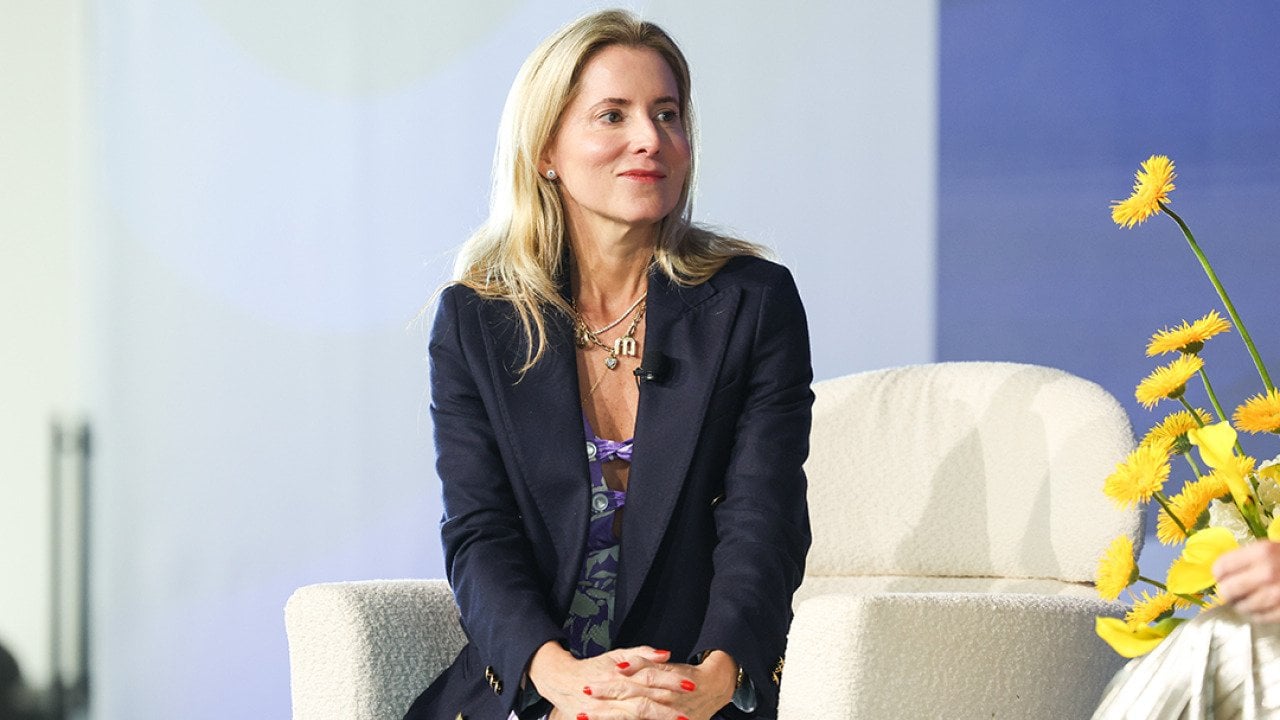
Larroudé Co-Founder and CCO, Marina Larroude at the Women in Power Forum held at the Glasshouse on September 08, 2025 in New York.

Katie Jones // WWD via Getty Images


Connecting to your “why” may be one of the most powerful things you do as an entrepreneur—especially if you’re just starting out. Building a business takes grit and perseverance, but having a clear motivation makes all that hard work worthwhile.

According to a 2025 Shopify survey, 77% of U.S. business founders strongly agree that they started their business to turn a passion into a reality, and for 70%, greater control over job security was a motivating factor.

Below, 10 founders share their own “why” behind their leap into entrepreneurship.

To monetize a passion

As a magazine art director in Toronto, Nicola Hamilton was always on the lookout for niche publications. The problem? There weren’t any local storefronts that sold the types of magazines that appealed to her.

“It’s something that I really wanted to exist in the city, and so I sort of built the space of my dreams,” Hamilton says on Shopify Masters. “I wanted a physical location; a place where I could go and actually flip through the things. I wanted people to experience that feeling that I experienced discovering a new title in a new city, in a physical space.”

She went on to launch Issues Magazine Shop through a mix of alternative lending programs, personal capital, and professional mentorship. These days, the space is a haven for creatives in Toronto.

Fashion entrepreneur Stephanie Ibbitson was working in advertising before launching her leather accessories brand Sonya Lee. After popping into a leather store on her way home from work one day, Ibbitson got the idea to make a handbag for herself.

“I’ve always been a self-starter, so I kind of just continued doing it, because it was the thing that I was most passionate about,” she says. “I gave my two weeks’ notice maybe a month or two after that.”

Ibbitson identified a sweet spot that catered to people who wanted luxury bags at a more affordable price and turned it into a profitable business.

To be your own boss

In 2010, Peter Dering took a leave of absence and spent a stretch of time traveling through Southeast Asia and India.

“That just spawned an incredible breadth of things I wanted to do in this world. Many of those things would eventually become Peak Design,” says Dering, who founded the travel gear company shortly after. “When I was traveling for four months, I was my own boss. I was in charge of my own time. There’s not much more that feels freeing than that feeling of being in charge of one’s own time.”

During his travels, Dering also learned firsthand just how difficult it was to be on the go with bulky photography equipment. That spark of an idea led him to quit his job and design a camera-carrying device that became Peak Design’s first product.

To create opportunity for underserved marke

RSS
First43684369437043714373437543764377Last