Click on the Manage Content for adding and managing content.
Click on the Rotator Settings and choose what and how it will be displayed.

Got the flu? Here’s how long you’re contagious

Kraig Pakulski 0 108 Article rating: No rating

A sick man at home wrapped in blanket sitting on a sofa and blowing his nose.

Cira123 // Shutterstoc


When the flu strikes, one of the biggest concerns is how long you might be contagious. Knowing this can help protect your family, friends, and coworkers from catching the virus. This guide from Doctronic.ai breaks down exactly how long you can spread the flu and what you can do to minimize the risk.

It is crucial to recognize that the contagious period can vary significantly among individuals, influenced by factors such as age, overall health, and the specific illness in question. For instance, while adults may follow a more standardized timeline, children often exhibit different patterns of contagion, sometimes remaining infectious even after their symptoms have resolved. This variability underscores the importance of vigilance and awareness, especially in communal settings like schools and daycare centers, where the risk of spreading infections can be heightened.

Maintaining good hygiene practices is not just about personal health; it is a collective responsibility that can significantly impact public health. Simple actions such as frequent handwashing, using hand sanitizers, and wearing masks in crowded places can create a protective barrier against the spread of infections. Educating those around you about the importance of these practices can foster a culture of health awareness, ultimately leading to healthier communities. By prioritizing these measures, we can work together to minimize the impact of contagious diseases and protect the most vulnerable among us.

Key Takeaways

  • You are typically contagious one day before symptoms start and up to seven days after becoming sick.
  • Children and people with weakened immune systems may be contagious for longer periods.
  • Early diagnosis and care, including telehealth visits, can help manage symptoms and reduce the spread.
  • Good hygiene and isolation during contagious periods are essential to prevent transmission.
  • Understanding the contagious timeline helps you make informed decisions about when to return to work or school.

Understanding Flu Contagiousness

When Does Flu Contagiousness Begin?

You can start spreading the flu virus to others about one day before you even notice symptoms. This means you might feel perfectly fine but still be contagious. This early contagious period is one reason flu spreads so quickly in communities and workplaces. In crowded environments, such as schools and offices, the potential for transmission increases significantly, as people often share spaces and interact closely. The flu virus can survive on surfaces for several hours, further facilitating its spread. Regular handwashing and sanitizing common areas can help mitigate this risk.

How Long Are You Contagious After Symptoms Appear?

Once symptoms like fever, cough, and body aches begin, you remain contagious for about five to seven days. The most infectious period is usually the first three to four days after symptoms start. During this time, the viru

What is the discovery process in a truck accident case?

Kraig Pakulski 0 107 Article rating: No rating

Two trucks collided on the highway in Albuquerque, New Mexico.

Kirkam // Shutterstock


When you file a lawsuit to pursue a truck accident claim, discovery is one of the stages your case must go through during the litigation process.

You might ask, “What is the discovery process?” In this story, The Callahan Law Firm explains discovery, a pre-trial process that involves the exchange of information and documents and the questioning of witnesses to identify relevant facts and legal issues so that the case can be resolved either through settlement or trial.

What Evidence Can Be Uncovered During Discovery in a Truck Accident Case?

During discovery, the parties will request and exchange various kinds of information to help determine the facts of the case, including what happened, why it happened, how it happened, and what could have been done to prevent the crash.

Common examples of key evidence involved in discovery in a truck accident case include:

  • Hours of service logs
  • Cargo manifests
  • Truck inspection records
  • Medical records
  • Vehicle repair records
  • Police accident reports
  • Event data recorder (black box) logs
  • Eyewitness statements
  • The truck driver’s employment and driving records
  • Accident scene photos and videos
  • Surveillance, traffic camera, and dashcam footage
  • Truck maintenance and repair records

Attorneys use this kind of evidence to build a comprehensive picture of what happened in a truck accident. In many cases, a firm will work with accident reconstruction experts who use their engineering and scientific knowledge to help determine the sequence of events leading up to, at the time of, and in the moments after a crash. These experts can help to recreate and explain what happened in a truck accident based on the evidence uncovered during investigation and discovery.

Key Steps in the Discovery Process

The discovery process in a truck accident case involves multiple steps, such as:

  • Interrogatories – Interrogatories allow parties to ask each other in writing for information relevant to the case or that could lead to the discovery of pertinent information.
  • Requests for production of documents – Parties in a truck accident lawsuit can serve written requests for production, asking the opposing side to produce copies of specific categories of documents, photographs, data, and other evidence relevant or reasonably calculated to lead to the discovery of admissible evidence.
  • Requests for admission of facts – A party may send the opposing side written requests for admission, asking the opposing party to admit or deny specific facts or the genuineness of documents or other evidence.
  • Depositions – Parties through their attorneys will conduct depositions of witnesses such as the drivers involved in the accident, eyewitnesses to the crash, trucking company representatives, healthcare providers, experts, and potentially others. Depositions of witnesses are taken with the witness unde

Voting by mail faces uncertain moment ahead of midterm elections

Kraig Pakulski 0 90 Article rating: No rating

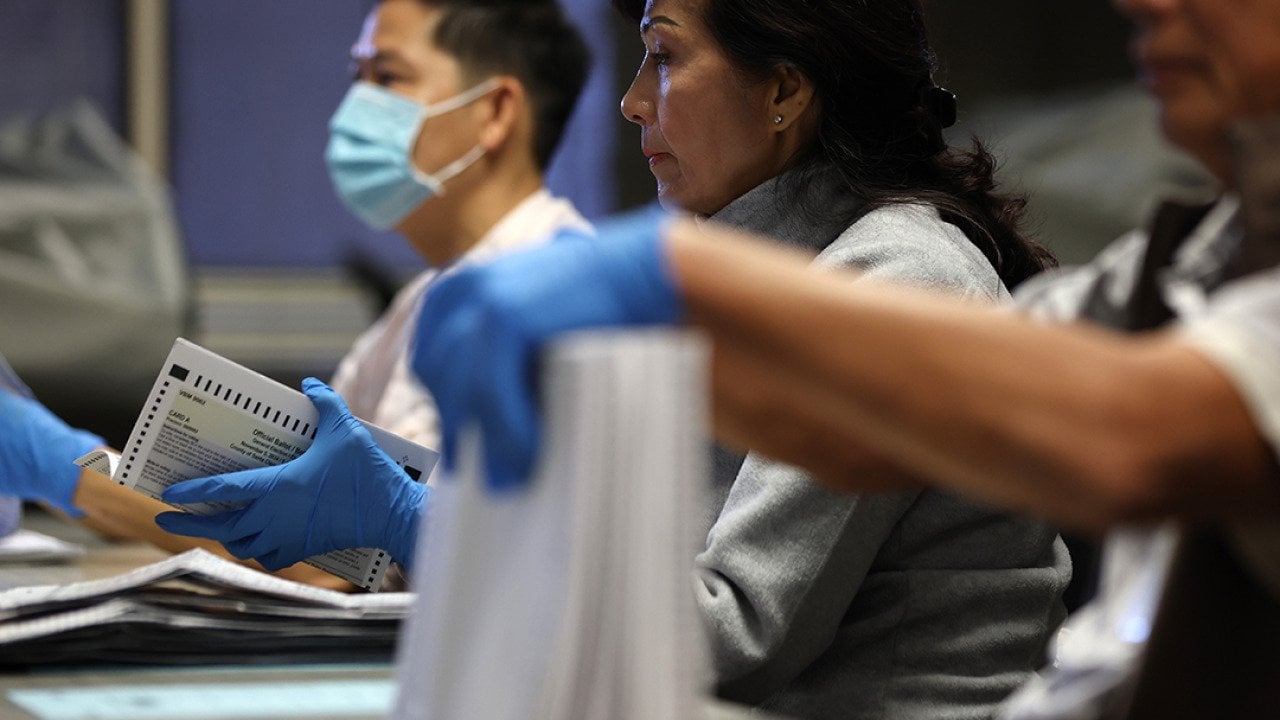
Election workers sorting mail-in ballots at the Santa Clara County registrar of voters office on October 21, 2024 in San Jose, California.

Justin Sullivan // Getty Images


Derrin Robinson has worked in Oregon elections for more than 30 years, long enough to remember when voters in the state cast their ballots at physical polling sites instead of by mail.

As the nonpartisan clerk of Harney County, a vast, rural expanse larger than Massachusetts, Robinson oversees elections with about 6,000 registered voters. Oregon has exclusively conducted elections by mail since 2000, a system he thinks works well, requires fewer staff and doesn’t force voters to travel through treacherous weather to reach a polling place.

“As you can tell, I’m not an advocate for going back,” Robinson told Stateline.

Not everyone agrees. An Oregon Republican lawmaker has introduced legislation to end the state’s mail voting law, and organizers of a ballot measure campaign seeking to ban mail-in voting say they have gathered thousands of signatures.

Across the United States, voting by mail faces a moment of uncertainty ahead of the midterm elections next year.

President Donald Trump has assailed mail-in voting and vowed this summer to lead a movement to eliminate the practice, promoting baseless claims that mailed ballots are linked to widespread fraud. Some states are also reevaluating their mail-in voting laws, including shortening or ending grace periods that now require election officials to count mailed ballots that arrive after Election Day.

The U.S. Supreme Court in November agreed to take a case that could end ballot grace periods nationwide. A decision by the justices late next spring or early summer striking them down could affect 16 states and the District of Columbia, potentially upending the rules of elections as states prepare to hold primaries ahead of the November midterm elections that will determine control of Congress.

Mail-in voting surged in 2020 amid the COVID-19 pandemic, when 43% of voters cast their votes by mail. The percentage of voters mailing their ballots has fallen from that peak but remains above pre-pandemic levels. About 30% of voters cast mail ballots in 2024, according to data gathered by the U.S. Election Assistance Commission.

That’s 46.8 million voters, underscoring the electoral and political stakes involved in any major change to mail-in voting.

“THE MAIL-IN BALLOT HOAX, USING VOTING MACHINES THAT ARE A COMPLETE AND TOTAL DISASTER, MUST END, NOW!!!” Trump posted in August on his social media site, Truth Social.

Trump promised in the post to issue an executive order that would bring “HONESTY” to the midterm elections, but none has been forthcoming. In response to questions, the White House referred Stateline back to the president’s post.

Robinson, the president of the Oregon Association of County Clerks, emphasized the security of mail-in ballots but acknowledged that the message has become a “hard sell.”

“We’ve done everything in our power to try to squash the myths and disinformation that it’s wrought with fraud, because it is not,” he said.

Ballot deadlines targeted

Amid

How local governments are partnering with crime scene cleanup companies

Kraig Pakulski 0 109 Article rating: No rating

A pressure wash cleaner working on a dirty brick wall.

Virrage Images // Shutterstock


The morning after her grandson was gunned down just steps from her front door, Addie Dempsey stepped outside and saw the blood still there, dark and unmoving. Raheem Hargust was 36. He had died the night before on a South Philadelphia sidewalk.

In the quiet that followed, no officials came to clean the scene. No city crew arrived. So Dempsey, 76, filled a bucket with bleach and water and began to scrub.

She was not alone. A doctor from across the street came out to help, and neighbors followed. Together they worked in low voices, wiping away the carnage and sweeping the blood toward the gutter like storm debris.

It was not the first time Dempsey had done this. On her block, too many families carry the same unspoken burden, cleaning after tragedy with no help, no resources, and no official response.

That reality reached Philadelphia’s chief public safety director, Adam Geer. “We were horrified, frankly, that our citizens were doing this work,” he said. A grandmother should not be on her knees scrubbing the sidewalk where her grandson died.

In response, the city launched a pilot program with $500,000 of funding to send professional biohazard teams to public crime scenes in the districts most affected. Officers remain until the cleanup crew arrives, and teams respond within 90 minutes so the work is done with urgency and care.

“No one should have to bear this responsibility other than us, the city,” Geer said. This is more than municipal housekeeping. It’s a public health decision that shields families from hazardous cleanup and tells residents they won’t face tragedy alone.

That shift raises urgent questions: Who pays when violence leaves biological contamination behind? How quickly should help arrive? And if one city can turn neglect into care, what would it take to make that promise everywhere? Trauma Services examines how municipalities are addressing crime scene cleanup as a public health issue.

Why Governments Step In

The story of Addie Dempsey is not an isolated one. Across the country, families like hers have faced the same quiet, hazardous work: cleaning what violence leaves behind with no protective gear, training, or support. This practice has gone largely unseen, but the risks are not invisible.

Blood and other biological materials can carry serious pathogens such as hepatitis B and C. Improper disposal can expose neighbors, sanitation workers, and even children playing nearby to dangerous contamination. Left unaddressed, what begins as a crime scene can quickly become a community health hazard.

Trauma That Doesn’t End

These dangers are not only biological. Survivors of homicide are more than three times as likely as the general population to develop post-traumatic stress disorder, and research shows that repeated traumatic experiences increase the severity and complexity of mental health symptoms.

Having to scrub a loved on

America's house-poor metros: Where mortgage owners stretch the 30% rule

Kraig Pakulski 0 111 Article rating: No rating

An aerial view of homes in a neighborhood in San Fransisco, California.

Justin Sullivan // Getty Images


Homeownership has long been considered one of the pillars of financial security in America. Still, for many households, the cost of maintaining that dream increasingly comes at the expense of daily financial stability. The commonly referenced 30% rule, which recommends that households not spend more than 30% of their income on housing, has become significantly harder to achieve as mortgage rates, insurance premiums, and property taxes rise.

Splitero leveraged data from the United States Census American Community Survey (ACS) to understand where residents are the most house-poor, meaning their housing costs make up 30% or more of their income, broken down by city. Using the most recent ACS release from 2024, this story reveals the top 10 and bottom 10 most house-poor cities, among cities with at least 40,000 owner occupied housing units.

These values were then compared to those in 2019 to highlight the stark differences in each city 5 years apart. These findings show sharp geographic divides and rapid affordability deterioration across the Sun Belt and coastal markets, despite some Midwest and Southern metros remaining relatively insulated.

Key Takeaways

  • The most house-poor metros are dominated by California and Florida, led by Los Angeles, where 47.6% of mortgage owners spend at least 30% of their income on housing.
  • The least house-poor metros are concentrated in the Midwest and Southeast, with places like Huntsville (19.4%), Chandler (20.0%), and Chattanooga (21.9%) keeping a much smaller share of owners above the 30% threshold.
  • Affordability is deteriorating fastest in emerging hot spots such as Cape Coral and North Las Vegas, where the share of cost-burdened homeowners has surged from roughly 27% to more than 42% since 2019.
  • California stands out statewide: across its 20 largest owner-occupied cities, 39.4% of mortgage owners now exceed the 30% rule (up from 37.5% in 2019).

Metros with the highest and lowest share of homeowners spending above 30% of their income

The nation’s most house-poor metros overwhelmingly cluster in California, Florida, and major urban coastal markets, according to data from 2024:

1. Los Angeles, California: 47.6%

2. Chula Vista, California: 45.2%

3. Cape Coral, Florida: 44.3%

4. Fort Lauderdale, Florida: 44.2%

T-5. Miami, Florida: 44%

T-5. New York, New York: 44%

T-7. Honolulu, Hawai’i: 43%

T-7. New Orleans, Louisiana: 43%

9. North Las Vegas, Nevada: 42.9%

10. Irvine, California: 42.8%

There are a myriad of reasons why these metros have seen mortgage owners spending more than the recommended 30% of their income on housing, but price changes on homes in these markets are a major factor. Limited supply amid increased demand, higher costs of capital, and wage adjustments mean the

RSS
First43744375437643774379438143824383Last