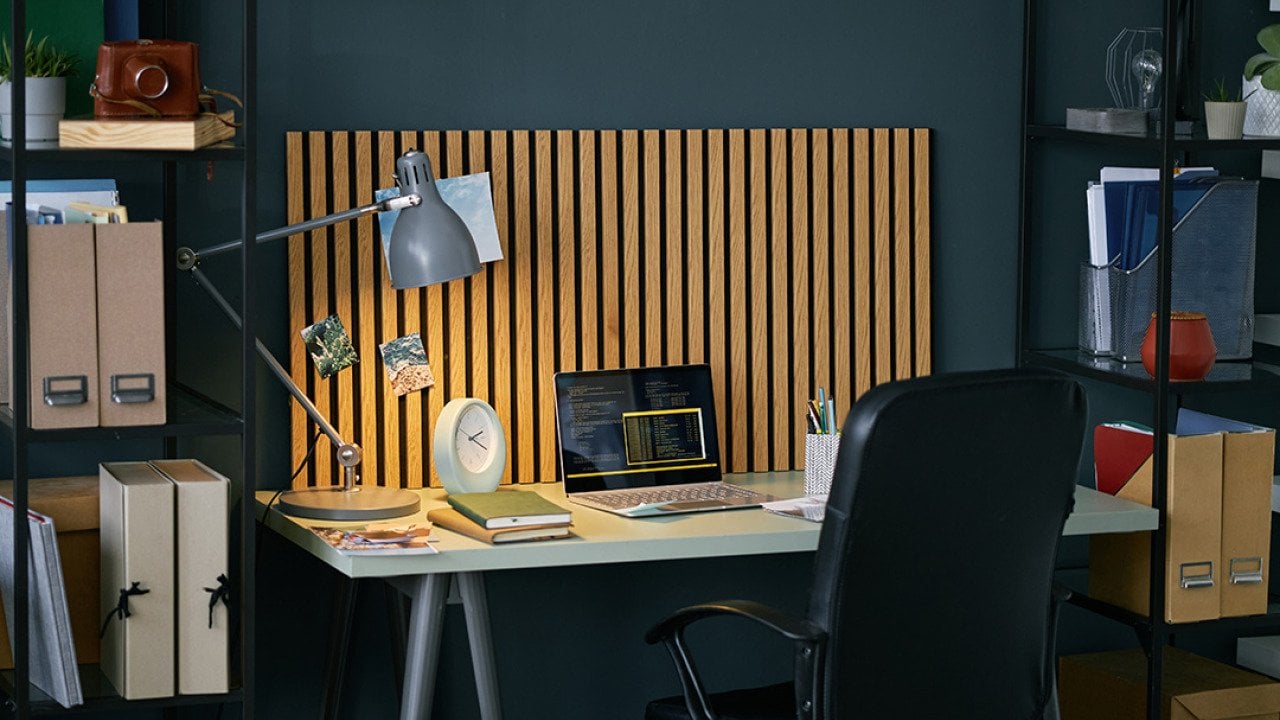
SeventyFour // Shutterstock
As the year winds down, many may feel a natural pull towards resetting their spaces. End-of-year decluttering has almost become a ritual, serving as a way to clear both mental and physical clutter before stepping into a new chapter. Closets, spare rooms, and underused corners are the first targets because they quietly accumulate disorder throughout the course of the year.
At the same time, the way people use their homes has fundamentally changed in recent years. Remote and hybrid work are no longer temporary arrangements. Between 2019 and 2023, the four-year period studied by the U.S. Census Bureau, remote workers more than doubled from 9 million to over 22 million. While some companies have mandated return-to-office policies in the years since, it’s clear that millions will remain at home.
Despite the growth in working from home, many household workspaces are improvised from the pandemic years and are not designed intentionally. Desks are squeezed into bedrooms, paperwork is piled into closets, cords are snaking across the floor, and chaos generally prevails. This is where customizable workspace systems can come in handy—when thoughtfully designed, modular and customizable storage solutions can transform a workspace from a source of stress to something calming.
Lazzoni has taken a look at various decor data from sources including Angie’s Roost, Instagram, Simply Enough, and more to assemble this guide to walk you through a three-step approach to designing an ideal home workspace.
What is a customizable workspace?
A customizable workspace is a work environment that is designed to adapt to how you actually use the space, as opposed to forcing you to adapt to fixed furniture or a one-size-fits-all layout. Instead of static desks, shelves, or cabinets, customizable systems use modular components that can be adjusted, expanded, and reconfigured over time.
At its core, a customizable workspace prioritizes function, flexibility, and longevity. For example, shelving height can change as storage needs evolve, and work surfaces can be repositioned to accommodate new equipment. This approach acknowledges a simple reality: The way you work today is unlikely to be the same way you will work years from now.
Clutter is often a symptom of misaligned storage as opposed to too many belongings. When a workspace is customizable, every item can have a designated place that reflects how frequently it is used. Daily tools stay within arm’s reach, occasional items move higher and visual noise decreases as a result. A sense of calm is one reason customizable systems are increasingly recommended.
In the context of a new year reset, a customizable workplace becomes more than a design choice. Rather, it’s a practical framework for maintaining order, focus, and flexibility in your life as priorities shift and routines evolve.
The 3-step system for designing a home workspace
Designing an ideal home workspace using customizable systems won’t be easy, but it will be more than worth the effort. These three steps will hit upon the foll