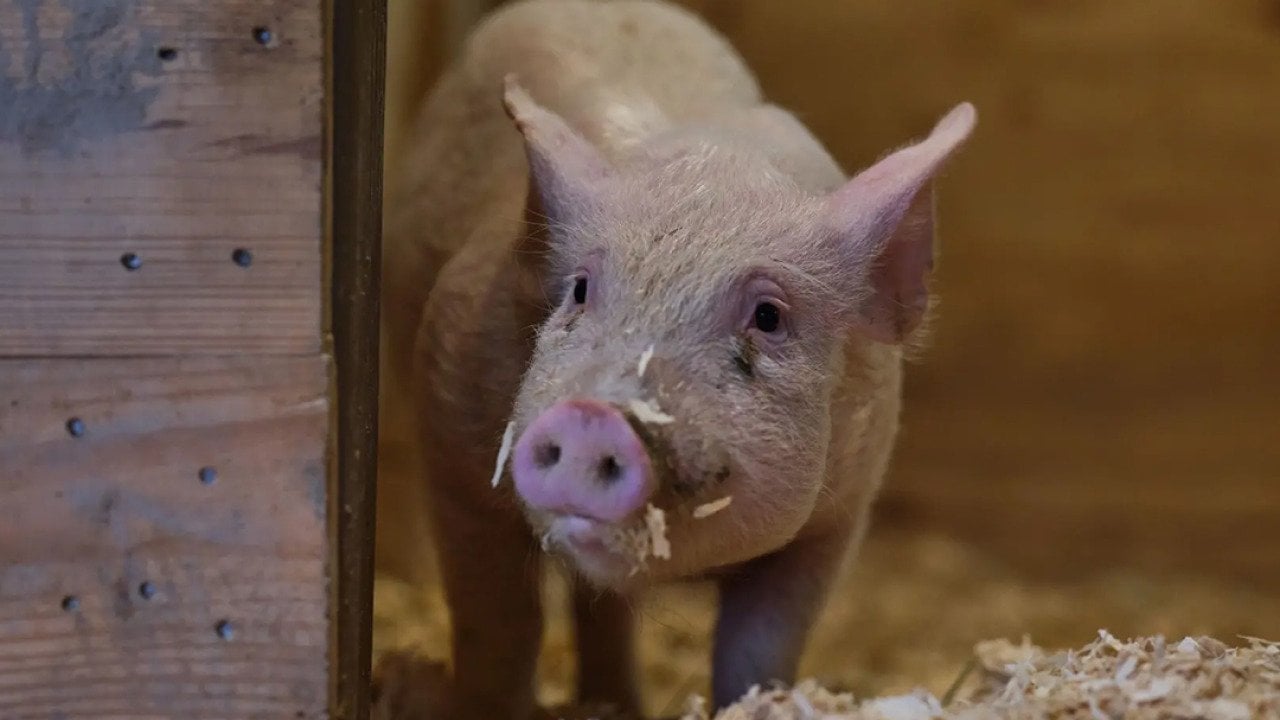
Courtesy of Mission Barns
Dawn, the Yorkshire pig, is quite tasty. But don’t worry. She’s doing perfectly fine, traipsing around a sanctuary in upstate New York. (Word is that she appreciates belly rubs and sunshine.)
Across the country in San Francisco, at an Italian joint just south of Golden Gate Park, diners are enjoying meatballs and bacon not made of meat in the traditional sense but of plants mixed with “cultivated” pork fat. Dawn, you see, donated a small sample of fat, which a company called Mission Barns got to proliferate in devices called bioreactors by providing nutrients like carbohydrates, amino acids, and vitamins — essentially replicating the conditions in her body. Because so much of the flavor of pork and other meats comes from the animal’s fat, Mission Barns can create products like sausages and salami with plants but make them taste darn near like sausages and salami.
It’s like diet meat. Just as Diet Coke is an approximation of the real thing, so too are cultivated meatballs. Some say they simply taste a bit less meaty, which is understandable, as the only animal product in this food is the bioreactor-grown fat.
This story from Grist examines the newest entrant in the effort to rethink meat: cultivated pork. For years, plant-based offerings have been mimicking burgers, chicken, and fish with evermore convincing blends of proteins and fats. Mission Barns is one of a handful of startups taking the next step: growing real animal fat outside the animal, then marrying it with plants to create hybrids that look, cook, and taste more like what consumers have always eaten, easing the environmental and ethical costs of industrial livestock. The company says it’s starting with pork because it’s a large market and products like bacon are fat-rich, but its technology is “cell-agnostic,” meaning it could create beef and chicken, too.
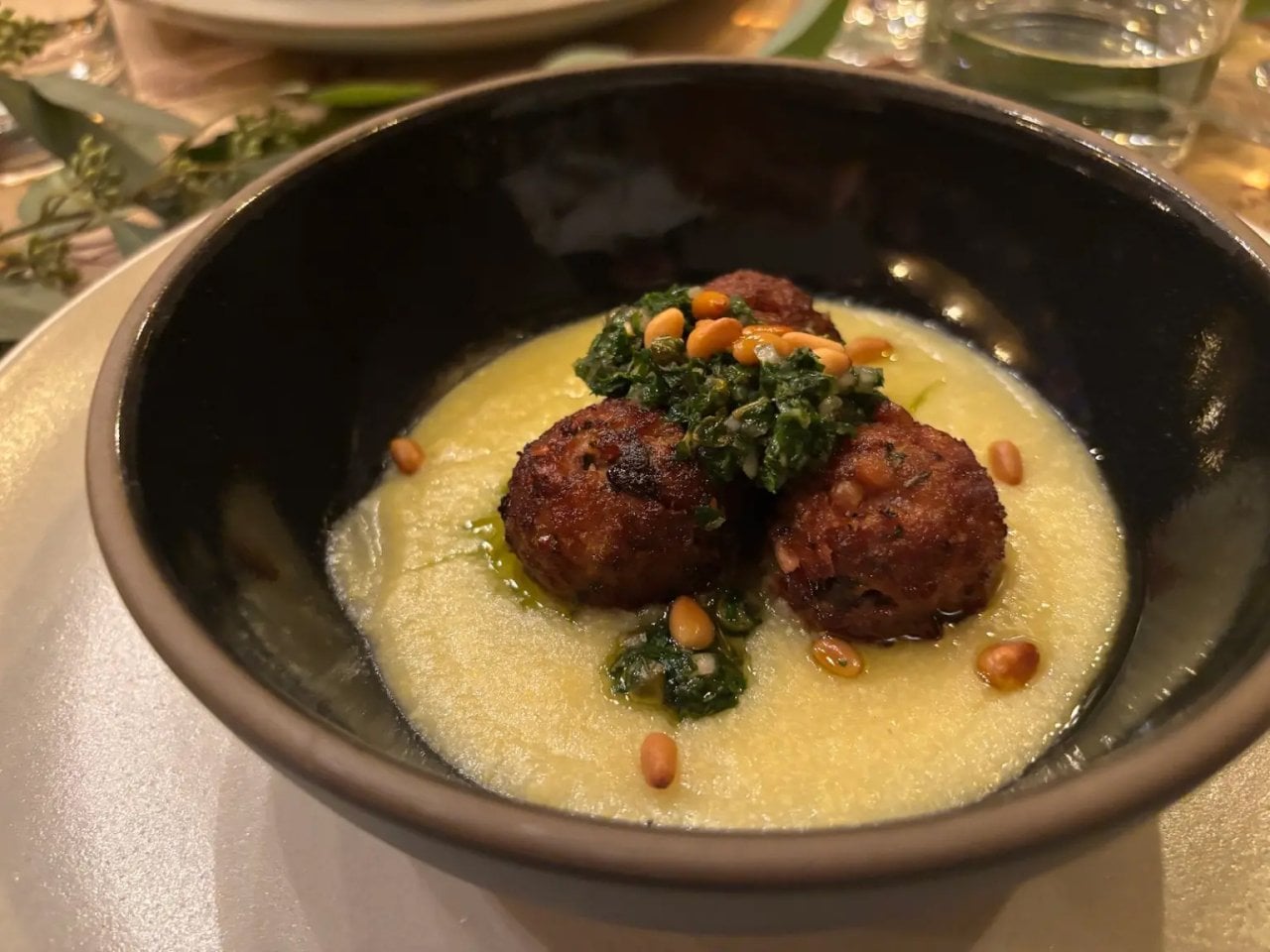
Matt Simon // Grist
Honestly, Mission Barns’ creations taste great, in part because they’re “unstructured,” in the parlance of the industry. A pork loin is a complicated tangle of fat, muscle cells, and connective tissues that is very difficult — and expensive — to replicate, but a meatball, salami, or sausage incorporates other ingredients. That allows Mission Barns to experiment with what plant to use as a base, to which they add spices to accentuate the flavors. It’s a technology that they can iterate, basically, crafting ever-better meats by toying with ingredients in different ratios.
The bacon tasted for the purpose of this story, for instance, had a nice applewood smoke to it. The meatballs had the springiness you’d expect. A later visit to Mission Barns’ headquarters across town revealed two prototypes of its salami as well — both were spic