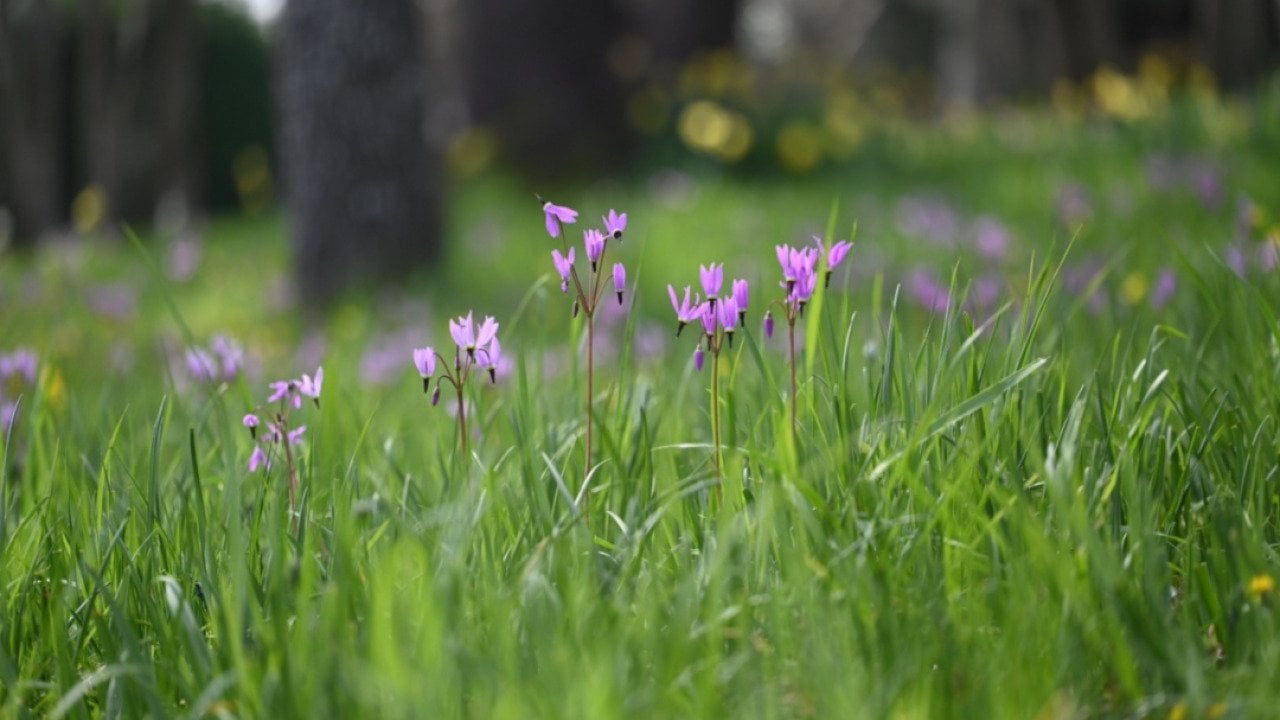
WhisperingOaksPhotography // Shutterstock
The Gulf Islands around Vancouver Island are beautiful — full of lakes and sheltered bays, and dotted with meadows and deer grazing along the road.
At first glance, most walking through these islands would believe what they see is natural and healthy — but the environment is actually “highly degraded,” Tara Martin, professor in the department of forest and conservation sciences at the University of British Columbia, explained to The Narwhal.
Those meadows were once filled with food and medicine plants and trees. But since the 1970s, the deer population on these islands has exploded and many native plants and trees can’t thrive. Native black-tailed deer, along with invasive fallow deer, have grazed these ecosystems into decline, one nibble at a time.
“[It’s a] very slow, gradual loss — so slow that most people don’t even recognize it,” Martin says.
Martin has been investigating the issue for 15 years. She co-authored a study published in November in People and Nature, which concludes Indigenous hunting is the most cost-effective and efficient solution to reduce “hyperabundant deer” — a population that has grown so large as to be environmentally unsustainable — on the Southern Gulf and San Juan Islands, bringing balance to a stressed ecosystem and benefiting human well-being.
University researchers worked with First Nations knowledge-holders and provincial and federal scientists on this study to create models of a range of solutions and their costs, and predicted success and uptake. They also predicted Indigenous hunting would have the highest chance of achieving objectives within 10 years on bigger islands.
“At the moment, what we’re seeing is we are putting a higher value on deer than everything else. And so we are losing hundreds of incredible plants — plants that pollinators, bumblebees, rely on,” Martin says.
“We’re losing Garry oaks, these amazing trees. We’re losing arbutus. … Ultimately, we’re heading towards an ecosystem that is much more simple and uninteresting and less biodiverse.”
To Tsawout Hereditary Chief W̱IĆKINEM Eric Pelkey, a co-author, the findings reaffirm the W̱SÁNEĆ goals to revitalize the Garry oak ecosystem — unique, highly biodiverse and critically endangered — and promote food sovereignty. Garry oak woodlands, which in Canada are found only in southwest B.C. and are one of the rarest ecosystems in the province, are crucial habitats for many native plants and animals, but have been threatened by urban development and invasive species.
“This is for the benefit of everyone. We’re trying to save our ecosystem,” Pelkey told The Narwhal.
Even as a child on Salt Spring Island in the 1970s, Martin recalls walking through fields “almost shoulder-deep in wild flowers” like camas, biscuit root, desert parsley and chocolate lilies. It was a “kaleidoscope of colour,” she remembers.
Hyperabundan