Click on the Manage Content for adding and managing content.
Click on the Rotator Settings and choose what and how it will be displayed.

How to support someone who has an eating disorder

Kraig Pakulski 0 29 Article rating: No rating

A group of friends having a dinner party.

Gorgev // Shutterstock


If someone close to you is dealing with an eating disorder, it’s possible they won’t tell you. That’s because eating disorders usually isolate the person who has them. This can make it even more difficult to recognize the condition.

Knowing they have support from even just one person in their life who cares about them can make a huge difference. This support can be essential for your loved one to seek out help for an eating disorder.

While the stakes are high, know that recovery is possible and you may have more influence than you think, Rula reports. In fact, some therapy approaches for treating eating disorders include the person’s inner circle.

Key takeaways

  • Having a strong support network that includes family, friends, and mental health professionals is often the crucial difference for someone recovering from an eating disorder.
  • There are many types of eating disorders, and they all have different signs.
  • Recovery from an eating disorder isn’t always a straight line. Relapses can be common, so make sure you’re taking care of yourself as you offer ongoing support to your loved one.

Recognizing the signs of an eating disorder

People with eating disorders often go to great lengths to hide them. That’s why it’s so important to be equipped with knowledge to see the signs. Different eating disorders manifest differently, so it’s helpful to know what to look for with each. That said, some signs may overlap.

Anorexia nervosa

People with anorexia nervosa restrict the amount they eat or don’t eat and may look underweight. Keep an eye out for these signs in your loved one’s behavior:

  • Fearing weight gain
  • Thinking they’re overweight even though they’re underweight
  • Restricting the amount of food they eat
  • Refusing to eat
  • Losing extreme amounts of weight
  • Experiencing dizziness or fainting
  • Teeth wearing away
  • Having stomach aches
  • Binge eating and then purging food (anorexia can look like bulimia)
  • Exercising excessively
  • Increasing anxiety around food, meal time, and body image

Bulimia nervosa

People with bulimia nervosa consume a lot of food and then get rid of the food, typically by vomiting or using laxatives. Signs of bulimia can include:

  • Eating large amounts of food at once
  • Vomiting after eating
  • Having extreme mood swings
  • Worrying about eating and/or their weight
  • Misuse of laxatives, diuretics, or other medications
  • Exercising excessively
  • Having damaged teeth and gums
  • Fluctua

Should I pay off my mortgage before I retire?

Kraig Pakulski 0 33 Article rating: No rating

A senior couple reading a document and checking information online together.

Miljan Zivkovic // Shutterstock


If you’re approaching retirement and still carrying a mortgage, it can be tempting to prioritize eliminating it as soon as possible. But deciding whether to pay off your mortgage before retirement isn’t always clear-cut. It involves balancing several factors to see what’s right for your situation.

In this guide, Splitero walks through five key factors: your monthly budget, your savings, market risk (sequence of returns), tax implications, and alternatives.

Key Takeaways

  • It’s important to consider your monthly retirement budget and how much cash you need to have available to you. A lower mortgage payment can reduce the income you need each month, but you want to be sure you still have enough accessible funds for surprises.
  • A mortgage payment can increase the amount you need to withdraw during market downturns, especially early in retirement, when withdrawals can have an outsized impact.
  • Funding a payoff from tax-deferred accounts can create a one-year income spike and may affect Medicare premiums later, so timing and tax planning are part of the decision.
  • If a full payoff doesn’t fit cleanly, alternatives like a recast, extra principal payments, or equity-access options that avoid a new monthly payment can help you balance lower housing costs with flexibility.

1. Your retirement budget

If the mortgage is a large part of what you spend each month, paying it down or paying it off could reduce the income you need to reliably bring in each month. That can also reduce how much you may need to withdraw from savings in the early retirement years.

If the payment is already easily covered by a steady income (for example, Social Security plus a pension), or if your interest rate is low and the payment does not strain your budget, the monthly benefit of paying it off may be smaller. In that case, the decision may come down more to what you would give up to make a payoff happen.

It’s also important to note that paying off the mortgage does not eliminate housing costs. Property taxes, insurance, and maintenance still remain, so you are evaluating the impact of removing the principal-and-interest payment, not the full cost of owning a home.

Questions to consider

  1. How much of your monthly income is going towards your mortgage payment?
  2. If you removed that payment, would you feel meaningfully more confident about your retirement budget?
  3. If you keep the mortgage, does your plan still work in months when expenses run higher than expected?

2. How much cash you have available

Cash in a bank account or a brokerage account is easy to use. But retirement accounts can have tax consequences for withdrawals, annuities and pensions may be fixed, and other assets like a rental property or a small business can take time (and paperwork) to turn into cash. With that in mind, it’s important to ask yourself if, after any mortgage payoff,

Everything you need to know about advertising on AI search engines

Kraig Pakulski 0 31 Article rating: No rating

Search engine display on phone, against a background of paragraphs of information.

Tero Vesalainen // Shutterstock


In a world where AI-powered search experiences are redefining how people find answers, AI search engine advertising gives marketers a new frontier for pay-per-click reach. Instead of relying solely on traditional search results, brands can place ads within AI assistants and answer engines such as Microsoft Copilot, Google AI Overviews and Perplexity — landing ad placements inside the conversation, not just above it.

Instead of using AI to manage ads, marketers can now place them directly within AI-driven search experiences. This guide by WebFX explores these emerging paid-search opportunities.

What is AI search engine advertising?

AI search engine advertising is the use of pay-per-click (PPC) ads in AI-powered experiences, like Microsoft’s Copilot or AI Overviews in Google Search. This type of advertising is not the use of artificial intelligence to generate or manage ads.

Why advertise on AI search engines?

An infographic listing reasons on why advertise on AI search engines.

WebFX

Advertising on AI search engines offers a few benefits, including the following:

  • Get the first-mover advantage: Becoming one of the earliest companies to advertise on AI answer or search engines gives your organization a competitive edge in the marketplace. You get to own that advertising real estate versus sharing it with competitors.
  • Improve paid performance: According to Microsoft, ads within AI-powered search experiences perform better. Copilot ads, for example, have a 69% higher click-through rate and 76% higher conversion rate than traditional search.
  • Reach users across search experiences: From using Perplexity to asking ChatGPT, how people search is changing. With multiple advertising outlets, you make it possible to reach users no matter how they search online.
  • Scale marketing efforts: Like other paid advertising efforts, ads in AI engines can support other marketing efforts. For example, you could use ads in AI Overviews to achieve micro-conversions like growing an email list via a downloadable resource.
  • Expand revenue streams: Investing in new ad placements can create new revenue streams. For example, advertising on Perplexity (a brand-new ad network) could help your organization reach specific audience subsets.
  • Offset decreased performance: With search preferences changing, businesses can expect decreased performance, whether in organic traffic or ad conversions. Adapting

Do you want to be like Mike? A look at Michael Jordan’s Gulfstream fleet

Kraig Pakulski 0 44 Article rating: No rating

Former NBA Player Michael Jordan onboarding his custom plane N236MJ at Juan Santamaria International Airport in Costa Rica.

juanpabloms // Shutterstock


Most people look at Michael Jordan’s jets and see a high-end brand. But behind the signature “Jumpman” paint jobs, Jordan’s flight department runs on a cold, disciplined asset management strategy. In the world of high-stakes aviation, global mobility has stopped being about prestige. It’s now about pinning down predictable operating economics and maximizing range.

The FAA registry and reporting from Simple Flying recently caught a major tail number swap in late 2024. Jordan moved into a state-of-the-art Gulfstream G650ER (N236MJ, serial number 6579), shelving his 2006 G550 in the process. This wasn’t an upgrade for the sake of a new toy. It was a calculated move to sunset an aging airframe before it hit a multimillion-dollar heavy maintenance wall.

It was essentially a math problem. Jettly, a private jet charter broker, looks at how by ditching legacy hardware for modern performance, Jordan’s “MJ Air” team solved a headache every corporate flight department eventually faces: the exact moment a plane becomes a liability rather than a tool. For anyone managing a seven-figure travel budget, this is about smart capital. It’s about ensuring an aircraft can actually sustain a global schedule without the constant downtime risks that come with an aging fleet.

A data graphic showing overview of Michael Jordan's Gulfstream fleet strategy.

Jettly

Why the G650ER Represents a Financially Rational Upgrade

The Gulfstream G550 was a proven industry workhorse for nearly two decades, but the technological floor of the market has shifted. Long-range operational requirements and fuel-burn efficiencies now favor newer platforms like the G650ER.

Its extended range enables it to connect cities such as New York to Hong Kong or Miami to Dubai without refueling, which significantly reduces repositioning costs and crew idle hours. For travelers conducting high-frequency transoceanic missions, range directly translates into utilization efficiency.

Business Insider estimates the G650ER acquisition range at roughly $65-$70 million, depending on specifications and year of manufacture. While the capital requirement is substantial, its economic justification lies in reduced flight time, lower operating hours per mission, and enhanced residual value relative to aging legacy platforms.

The G650ER remains one of the most in-demand business jets globally, which cushions depreciation compared to older large‑cabin models.

How Jordan’s Former G550 Fits Into His Fleet

Jordan’s

Unfiltered water, expensive problems: The cost of ignoring water quality

Kraig Pakulski 0 27 Article rating: No rating

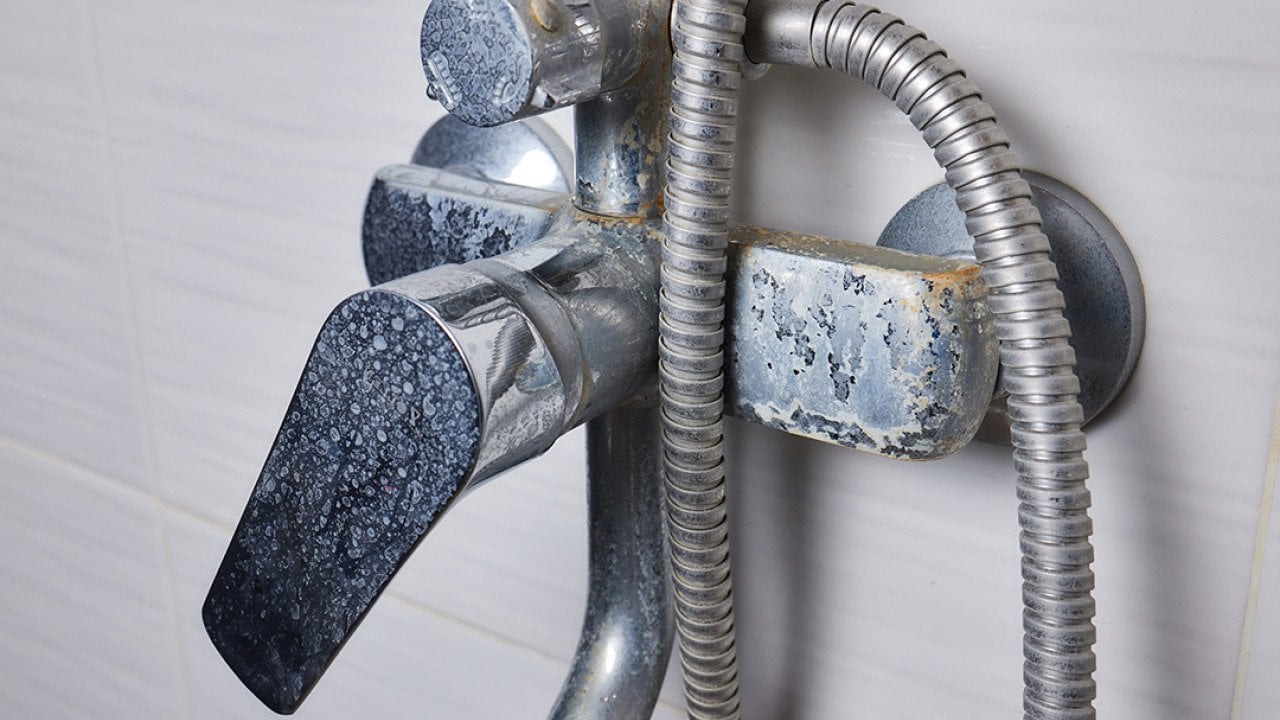
An old tap aerator with marks of hard water.

Vershinin89 // Shutterstock


Ever notice white spots on your dishes, soap that won’t lather, or your hair feeling dull no matter how much shampoo you use? These are common signs of hard water. The minerals in unfiltered water don’t just make cleaning harder; they gradually wear down appliances, clog pipes, stain fixtures, and drive up energy costs. Over time, these hidden costs can add up, leading to expensive repairs and replacements that homeowners often don’t see coming.

In this guide, Leaf Home breaks down four major ways unfiltered hard water wreaks havoc on your home—and how to help prevent it.

Key Takeaways

  • Hard water shortens appliance lifespans, leading to costly repairs and replacements, with water heater failures averaging $4,400 per incident.
  • Mineral buildup clogs pipes and corrodes plumbing, resulting in leaks, plumbing failures, and repiping costs of up to $15,000.
  • Unfiltered water increases energy bills, with scale buildup reducing water heater efficiency by up to 48%, driving up utility costs.

1. Appliance Breakdown and Replacement Costs

Hard water isn’t just a nuisance—it’s rough on your appliances, too. The minerals in unfiltered water build up over time, forcing your appliances to work harder and wear out faster. Water heaters take the biggest hit, with 75% failing by year 12 due to mineral buildup and corrosion, according to IBHS. When that happens, homeowners face an average replacement cost of $1,500-3,000.

Dishwashers and washing machines also struggle with hard water. The scale buildup inside these appliances reduces efficiency, leads to frequent repairs, and eventually causes them to break down (USGS). That means more unexpected costs, with replacements running between $500 and $1,500 per unit, according to the NAHB Repair Cost Report. Over time, these expenses add up, making hard water a costly problem for any home (Fig. 1).
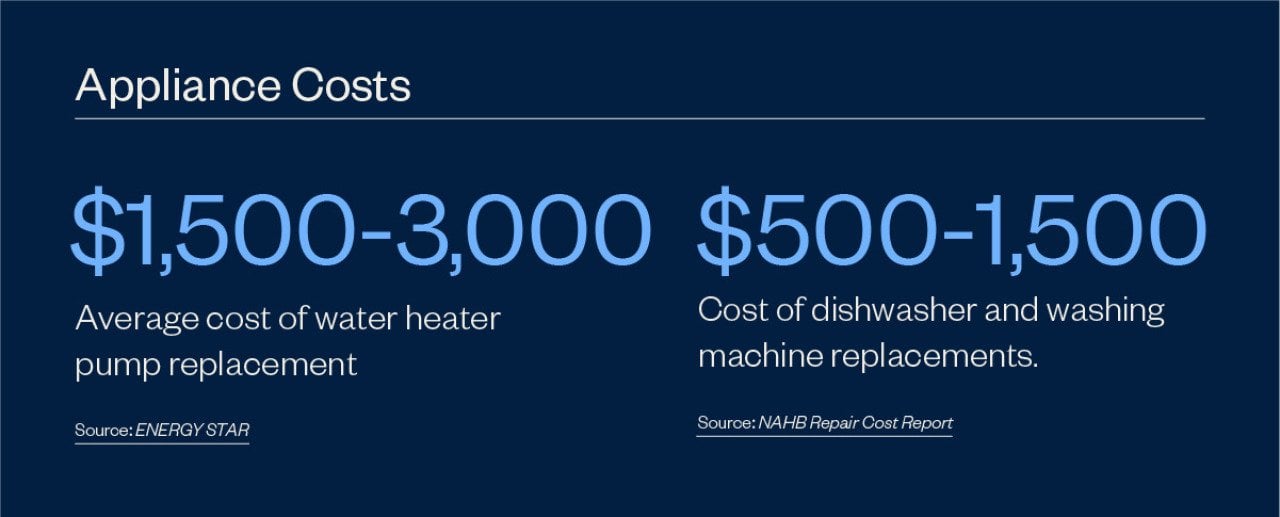
Infographic indicating data on average appliance costs.

Leaf Home

2. Plumbing Repairs and Water Damage Costs

Hard water doesn’t just affect appliances—it also takes a serious toll on your plumbing. Over time, mineral deposits build up inside pipes, restricting water flow and increasing pressure. This leads to clogged pipes, corrosion, and, eventually, leaks or even major plumbing failures. When pipes start to fail, the repair costs can be steep. On average, homeowners pay $5,000 per insurance claim for plumbing failures caused by hard wa

RSS
First28592860286128622864286628672868Last