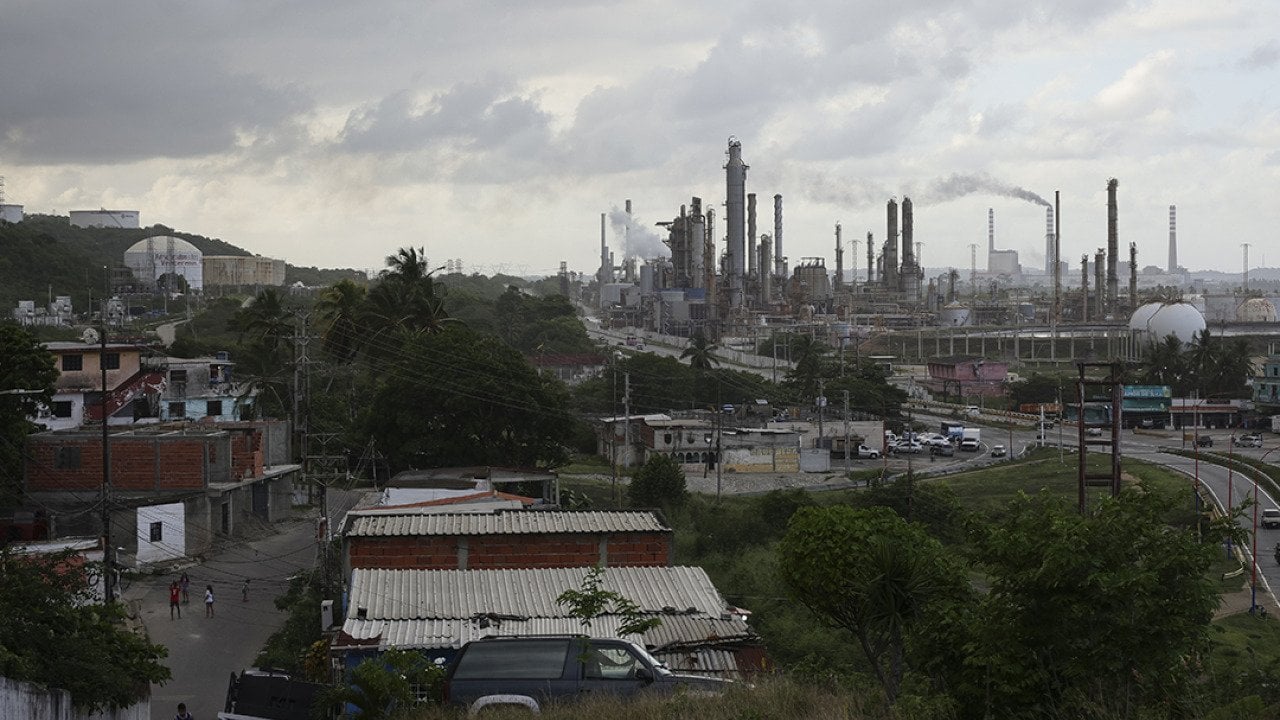
Jesus Vargas // picture alliance via Getty Images
Politicians in Alberta like to claim credit, or cast blame, when it comes to the price of a barrel of oil. Low prices are Ottawa’s fault, or the previous government’s — its regulations or policy or ideology or some mishmash of all three. High prices are the result of prudent governance, of course.
In reality, Canada, and Alberta in particular, are at the mercy of global markets and global powers that are largely outside either’s control — stock markets, political upheaval, election cycles and war all impact the price. Not to mention the fundamentals of supply and demand.
It’s why the U.S. attack on Venezuela, and assertion of control over its oil, is turning heads here in the north, and raising all sorts of questions about the future of Canada’s oil industry. Venezuela has the largest reserves in the world.
The Narwhal looks at how global oil markets work, and why Venezuela, in particular, is causing so much concern in Canada.
Real quick — how much oil do Canada and Venezuela produce?
As mentioned, Venezuela has the largest oil reserves in the world: estimated at 300 billion barrels.
By comparison, Alberta has 159 billion barrels.
But Venezuela’s rulers nationalized the oil and gas industry, kicking out all but one of the remaining U.S. firms in 2007 (Chevron remained under a special deal and ships small amounts to the U.S.) and drove it into the ground, leaving its infrastructure in tatters and driving away its specialists.
Meanwhile, Venezuela has been the subject of U.S. sanctions since 2019.
So it hasn’t been as big of a player as it could have been in recent years — and Alberta has been increasing production.
Supply and demand is the short answer here. If there’s a lot of demand for oil and not enough supply, the price goes up, or if there’s plenty of supply and not enough demand, the price goes down.
What’s supply? Well, say an oil-rich country like Saudi Arabia decides to flood the market. Prices go down. Remember the start of the COVID-19 pandemic, when a barrel of oil was worth less than a bottle of maple syrup? Saudi Arabia had flooded the market and demand was down as people stayed home.
Too much supply is about where the global markets are now, even before Venezuela was a factor. Prices have been depressed, although not dramatically, with an oversupply of oil that’s only expected to increase — simply due to supply outpacing demand.
Demand is also