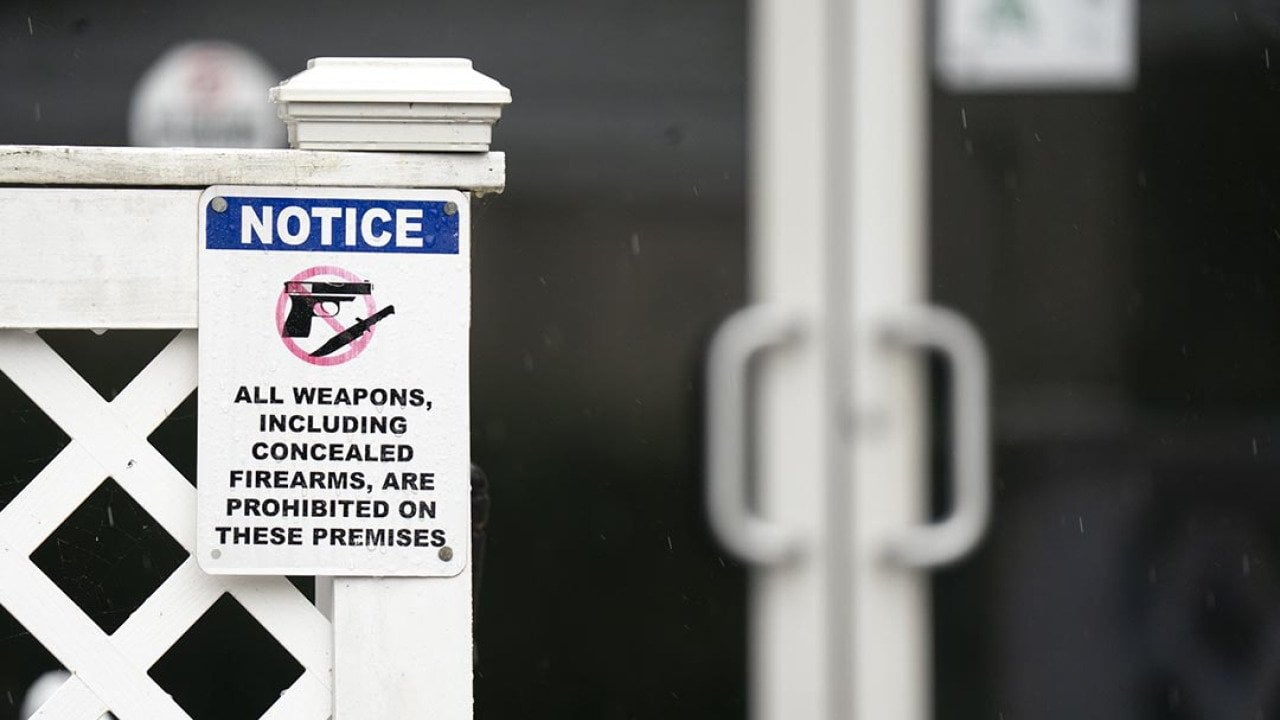
Sean Rayford // Getty Images
Over the last three decades, carrying concealed guns in public in the United States has become easier and easier. First, in the 1990s, states began to guarantee permits to anyone who could legally own a firearm. Then, beginning in the mid-2000s, states started removing permit requirements altogether.
Now, a majority of states — 29 as of 2025 — require no license to carry a loaded gun in public, a policy known as permitless carry. But what happens when a resident of one of those states wants to carry their handgun in one of the 21 states that does require a permit?
That led a reader to send in a question concerning concealed carry reciprocity, or when one state recognizes the concealed carry permits of another. The reader asked:
“If your state has decent laws, which Michigan where I live has (ok) gun laws, the constituents of my state still have to follow our state’s laws. But could someone from Louisiana come here and have the very lax laws of their state apply to them while visiting Michigan? Is it a race to the bottom?”
It’s a timely question. Congress may vote as soon as this month on a bill that would require national concealed carry reciprocity, effectively allowing the residents of those 29 permitless carry states to carry guns nationwide without a license. The Trace dives into the specifics of concealed carry reciprocity, and what a nationwide law — a longtime gun rights goal — would look like.
What is concealed carry reciprocity?
Concealed carry reciprocity refers to the patchwork of state laws, policies, and agreements that determine whether one state honors concealed carry permits from another state, allowing permittees to travel across state lines with their guns.
Importantly, “reciprocity” is often not mutual: Recognition of out-of-state permits varies widely, and many arrangements are unilateral rather than formal two-way agreements.
Some states adopt broad recognition — for example, North Carolina and the reader’s home state of Michigan recognize permits from any state.
Others condition recognition on comparable standards, including fingerprint-based background checks, mental health disqualifiers, age requirements, or live-fire training. For instance, Minnesota recognizes permits from 33 states whose requirements its attorney general has deemed similar to Minnesota’s.
From there, it can get even more complicated. Washington state — which won’t recognize other states’ permits if they don’t require mental health background checks, or if they issue permits to people under 21 — only recognizes 10 states’ permits, and of those, sometimes only honors enhanced permits that have stricter eligibility requirements like live-fire training.
At least 10 states, including California, Oregon, and New York, and the District of Columbia, do not honor any out-of-state permi