10 popular statin medications

Kraig Pakulski 0 116 Article rating: No rating

A clipboard with written prescription for 'statins'.

Vitalii Vodolazskyi // Shutterstock


Statins are among the most commonly prescribed medications for reducing high cholesterol and lowering the risk of heart attack and stroke. People searching for popular statin medications are often trying to understand the differences between the drugs, how they work, and which one might be the best fit for their health needs. They may also be curious about side effects, cost comparisons, alternatives, and long-term benefits.

This guide from SaveHealth, a prescription discount/savings card website, breaks down 10 of the most widely used statins, how they compare, and what to consider when discussing options with a healthcare provider.

How Statins Work

Statins reduce cholesterol by blocking an enzyme in the liver called HMG CoA reductase. This mechanism helps lower LDL cholesterol, often referred to as bad cholesterol, and can also modestly increase HDL, often referred to as good cholesterol. Statins can also help lower triglyceride formation, often referred to as fatty cholesterol, by reducing the fat in the blood. Lastly, statins slow the growth of fatty plaque formation, thus stabilizing the arteries, which helps to prevent heart attacks and strokes. Due to their dynamic effects on the body, statins are the gold standard for better cholesterol.

Core benefits of statins

  • Lower LDL cholesterol
  • Reduce triglycerides
  • Increase HDL cholesterol
  • Lower the risk of plaque buildup in the arteries
  • Reduce the risk of heart attack and stroke

Top 10 Popular Statin Medications

Below is a list of the most frequently prescribed statins, including both brand name and generic options.

1. Atorvastatin: Atorvastatin, the generic for Lipitor, is one of the most widely prescribed cholesterol medications. It is known for its potency and strong LDL-lowering ability.

2. Rosuvastatin: Rosuvastatin, the generic version of Crestor, is another high-intensity statin. It may be more effective for people needing substantial LDL reduction.

3. Simvastatin: Simvastatin, the generic for Zocor, is widely used due to its affordability and long history. It is usually prescribed for moderate cholesterol lowering.

4. Pravastatin: Pravastatin, the generic for Pravachol, is often chosen for people who are sensitive to stronger statins. It has fewer drug interactions and fewer muscle-related side effects, making it a good option for beginners.

5. Lovastatin: Lovastatin, the generic for Mevacor, is one of the earliest statins and remains popular today. It is often taken with food to improve absorption.

6. Pitavastatin: Pitavastatin, the generic for Livalo, is known for having fewer drug interactions and may be suitable for people who cannot tolerate other statins.

7. Fluvastatin: Fluvastatin, the generic for Lescol, is considered one of the milder statins and is another good option for those with muscle-related side effects.

8. Ezetimibe and Simvastatin Combination: This combination, often known by the brand Vytorin, pairs simvastati

Holiday cheer turning hostile in restaurants

Kraig Pakulski 0 67 Article rating: No rating

An angry couple disputing a complaint with a cafe waitress.

fizkes // Shutterstock


Every year, millions of Americans head into stores and restaurants expecting warmth, efficiency, and holiday magic. But behind the counters, another reality is unfolding—one marked by rising stress, intensifying customer aggression, and a workforce pushed beyond its limits.

CaterCow reports that 2025 holiday season is shaping up to be one of the most stressful in recent memory for retail and restaurant staff. Customer behavior is deteriorating, and the people who make the holidays possible are bearing the weight.

Customer Rudeness Has Become a Daily Experience

Workers across retail and food service have reported growing incivility for years—and 2025 continues the trend. The Workplace Incivility Institute found a 48% rise in verbal aggression toward customer-facing workers since before 2020. In 2025, a survey of restaurant workers from Steer revealed that 41% report customer incivility has increased since last year.

This is not a handful of bad days. It’s the lived reality of an entire profession.

The Holidays Intensify the Crisis

The holidays are often framed as a time of joy, but for retail workers, they also bring a predictable surge in stress and confrontation.

“Hospitality professionals are often the recipients of guests’ frustrations and outsized reactions to situations that frequently have less to do with an actual issue and more to do with what is going on in the guests’ lives outside of the restaurant,” notes SA Hospitality Group Director of Operations Abigail Khaishgi.

A 2024 American Psychological Association poll found 65% of Americans feel more stressed during the holidays, often resulting in misplaced frustration toward service workers. Cornell University’s 2025 hospitality research showed restaurant workers experience a 30% rise in emotional exhaustion during November and December, corroborating the Steer survey which showed 53% of workers say customer rudeness increases during Nov–Dec.

As one worker put it, “The same customer who was polite in October will scream at you in December for being out of peppermint syrup.”

Violence, Threats Now Shockingly Common

While national headlines often spotlight isolated incidents, data shows that workplace aggression is becoming an everyday risk.

The U.S. Bureau of Labor Statistics reported a 17% increase in violent incidents in retail in 2024. A 2025 Service Workers Safety Coalition report found 20% of workers faced physical intimidation last year.

When food and hunger are involved, the stakes are heightened. Steer’s data suggests 40% of restaurant workers were physically assaulted by customers during the year.

One worker reported: “A customer threatened to come back with a gun because we ran out of chicken.”

Most common forms of aggression include items violently pulled from restaurant workers’ hands (17%), objects thrown at workers (15%), and pushed, shoved, or grabbed (12%)

Sexual Harassment Is a Reality for Nearly 4 in 10 Workers

Sexual misconduct is another layer of risk that disprop

Cheapest gas stations in every state Dec. 23, 2025

Kraig Pakulski 0 75 Article rating: No rating

jittawit21 // Shutterstock


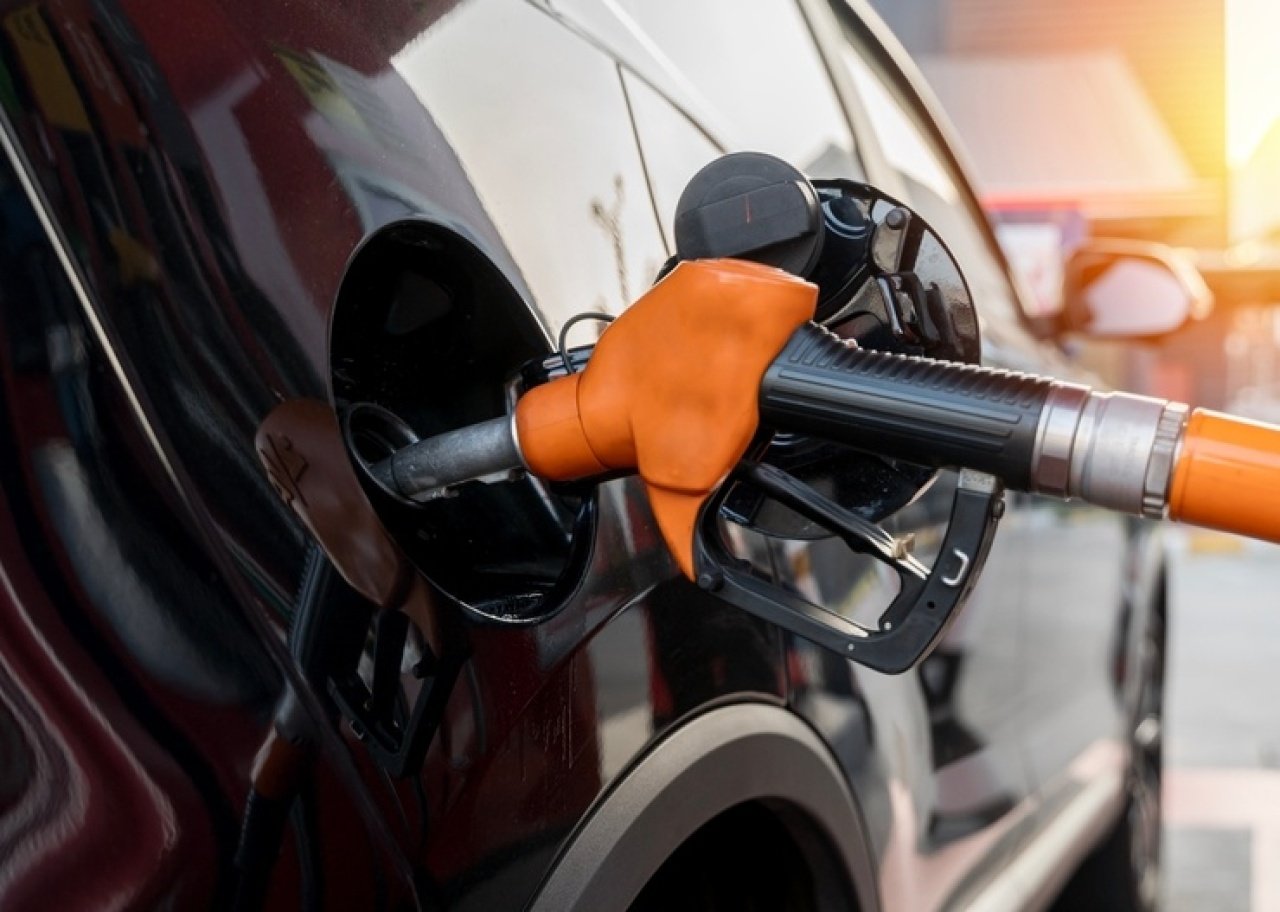
Anyone who drives a car understands the sting of having to fill up their tank and pulling into the gas station, only to discover that gas prices have skyrocketed. Paying extra for gas means you have less to spend on other things, which, over time, can really put a crimp in your budget.

Cheap Insurance explored some of the reasons behind major changes in gas prices, and compiled a list of the cheapest gas stations in every state using data from Gas Buddy.

Gas prices fluctuate based on several factors, including the cost of the key ingredient, crude oil, as well as the available supply and demand for gasoline. If the price of oil rises, a major refinery goes offline, or more drivers are hitting the road, for example, then the cost will increase.

In the first half of 2022, a unique confluence of events led to a surge in gas prices. The increased demand stemming from the COVID-19 pandemic, Russia’s invasion of Ukraine, and a slowdown in oil production all contributed to a national all-time high of $4.93 per gallon on average in June 2022.

Seasons also affect gas prices. Demand tends to drop in winter, but the cost also falls because gas stations switch to a different blend of gasoline that’s optimal for lower temperatures—and has cheaper ingredients.

Location also matters. The South and Midwest tend to have the lowest gas prices, while the West, including Hawai’i, has the highest. Californians, in particular, pay more for gas on average than any other state. That’s because of its high state excise taxes; its isolation from the country’s major pipelines, which causes supply issues; and its requirements that mandate a more environmentally friendly blend of gas that costs more to produce and adds to the price per gallon.

No matter where you live, read on to see if you can get a deal on gas near you.

Alabama
#1. Chevron (4426 Higgins Rd, Mobile): $2.09
#2. Circle K (2317 6th Ave SE, Decatur): $2.14
#3. Buc-ee’s (6900 Buc-ee’s Blvd (along Coosa Ave), Leeds): $2.15

Alaska
#1. Airport Gas & Oil (4480 Dale Rd, Fairbanks): $3.00
#2. Fred Meyer (2191 East Sun Mountain Ave, Wasilla): $3.32
#2. Speedway Express (7172 W Parks Hwy, Wasilla): $3.32

Arizona
#1. TA Express (3225 E Rincon Road, Littlefield): $2.19
#2. Shell (405 W Speedway Blvd, Tucson): $2.23
#2. ARCO (802 W Speedway Blvd, Tucson): $2.23

Arkansas
#1. Brookshire’s (1310 Constitution Ave, Ashdown): $2.06
#2. Sam’s Club (7700 Rogers Ave, Fort Smith): $2.07
#2. Fast Mart (4920 Baseline Rd, Little Rock): $2.07

California
#1. Feather Falls Mini Mart (6032 Lower Wyandotte Rd, Oroville): $2.69
#2. Big Valley Market and Fuel (1119 Napo Way, Lakeport): $2.99
#2. Sinclair (12045 Bryant St, Yucaipa): $2.99

Colorado
#1. Murphy Express (4085 Beverly St, Colorado Springs

Why shoppers around the world abandon carts and what they expect from international checkout in 2026

Kraig Pakulski 0 97 Article rating: No rating

Person using a laptop to shop for men's blazer online.

RSplaneta // Shutterstock


Global e-commerce has crossed the $6 trillion mark and according to Shopify, cross-border commerce is now growing faster than domestic sales in many regions. As more shoppers buy from brands outside their home country, the opportunity for global sales continues to accelerate.

But, as Passport discusses here, international demand alone doesn’t guarantee conversion. The final moments before checkout are a critical turning point and as global e-commerce scales toward 2026, even small points of friction in pricing, duties, taxes, or currency can quietly derail purchases. The cost of a confusing or inconsistent checkout experience is becoming harder to ignore.

International Transactions Amplify Cart Abandonment

Cart abandonment remains one of the most persistent challenges in e-commerce. Based on UX research analyzed by the Baymard Institute, roughly 70% of online shopping carts are abandoned on average, highlighting how often shoppers leave before completing a purchase.

That challenge becomes more pronounced in cross-border transactions. International checkouts introduce additional layers of complexity — including pricing considerations tied to duties and taxes, delivery timelines affected by customs requirements, and payment preferences that vary across regions — all of which can increase hesitation during the purchase process.

As international e-commerce continues to grow, these challenges carry greater weight. What may once have been tolerated as a minor inconvenience is increasingly shaping whether global interest converts into revenue or ends in an abandoned cart heading into 2026.

Top Reasons Global Shoppers Abandon Carts

Online shoppers often don’t complete a transaction, not because they lose interest, but because something at checkout gives them pause. Data from the Baymard Institute shows that unexpected extra costs, including shipping fees, taxes, and duties, are the most common reason shoppers abandon carts. When those unexpected charges appear late in the purchase process, they undermine confidence at the moment a shopper is deciding whether to proceed.

For international customers, there are even more barriers beyond surprise expenses. Limited or unfamiliar payment options, delivery uncertainty driven by long transit times or vague estimates, currency confusion, lack of localization, and unclear return or refund policies all contribute to a higher perceived risk at the final step. As shoppers compare options across borders more frequently, even small gaps in clarity can derail an otherwise strong intent to buy.

Why These Issues Are Becoming Harder to Ignore

Cart abandonment has long challenged e-commerce brands, but its impact is intensifying as m

El jefe del Ejército de Libia muere en accidente aéreo en Turquía

Kraig Pakulski 0 52 Article rating: No rating

Por Gul Tuysuz y Mohammed Tawfeeq, CNN

El jefe del Ejército de Libia murió en un accidente aéreo mientras regresaba a Trípoli tras una visita oficial a Turquía, informó el primer ministro Abdulhamid al-Dbeibah.

El teniente general Mohamed al-Haddad falleció junto a cuatro acompañantes en un “trágico accidente” durante el vuelo de regreso desde Ankara, según el comunicado del primer ministro, quien encabeza el Gobierno de Unidad Nacional respaldado por la ONU. Al-Dbeibah expresó sus condolencias a las familias de las víctimas y calificó la pérdida como una tragedia para la nación y la institución militar.

Los otros fallecidos fueron: el jefe del Estado Mayor de las Fuerzas Terrestres, general de división al-Fitouri Ghreibel; el director de la Autoridad de Fabricación Militar, general de brigada Mahmoud al-Qatioui; el asesor del jefe del Estado Mayor del Ejército libio, Mohamed al-Asawi Diab; y el fotógrafo de la oficina de prensa, Mohamed Omar Ahmed Mahjoub.

La cadena turca CNNTurk informó que la tripulación estaba compuesta por tres ciudadanos franceses.

Las autoridades turcas reportaron que perdieron contacto con el jet ejecutivo que transportaba a al-Haddad y su comitiva poco después de despegar de Ankara este martes por la noche.

El ministro del Interior de Turquía, Ali Yerlikaya, indicó que el contacto se perdió a las 8:52 p.m., hora local, con un jet Falcon 50, matrícula 9H-DFJ, que había despegado del aeropuerto Esenboga de Ankara a las 8:10 p.m. rumbo a Trípoli.

“Se recibió una notificación de aterrizaje de emergencia cerca de Haymana; sin embargo, no se pudo restablecer el contacto con la aeronave”, dijo Yerlikaya. Haymana está ubicada a unos 81 kilómetros al suroeste de Ankara.

Posteriormente, Yerlikaya informó que los restos de la aeronave fueron localizados por las fuerzas armadas turcas a unos 2 kilómetros al sur de la aldea de Kesikkavak, en el distrito de Haymana.

CNNTurk reportó que el jet declaró una emergencia eléctrica y solicitó regresar al aeropuerto antes de perder comunicación.

El ministro de Justicia turco, Yilmaz Tunc, anunció que se abrió una investigación para esclarecer todos los aspectos del accidente.

Más temprano, las Fuerzas Armadas de Turquía informaron que al-Haddad fue recibido oficialmente en Ankara con una ceremonia militar y sostuvo reuniones bilaterales con el jefe del Estado Mayor de Turquía, general Selcuk Bayraktaroglu.

The-CNN-Wire
™ & © 2025 Cable News Network, Inc., a Warner Bros. Discovery Company. All rights reserved.

The post El jefe del Ejército de Libia muere en accidente aéreo en Turquía appeared first on News Channel 3-12.

RSS
First41354136413741384140414241434144Last