Click on the Manage Content for adding and managing content.
Click on the Rotator Settings and choose what and how it will be displayed.

The prestige code: How area codes shape culture and influence in 2025

Kraig Pakulski 0 103 Article rating: No rating

Woman signaling for a cab in New York City.

photoiva // Shutterstock


In the modern era, where phone numbers are portable and geography is less tied to a person’s culture, area codes still hold a surprising amount of social weight. While the seven digits following an area code will likely be forgotten by anyone besides your friends and family, the first three digits tell a story of prestige, belonging, and influence.

The area code of one’s phone number has become a shorthand for culture, status, and even success in some cases. As the world continues to grow ever more connected, PeopleWin analyzed various research to show how deeply these identifiers continue to influence people’s personal and professional lives.

The psychology behind area code prestige

Something as simple as an area code may not seem like it would carry much weight on the surface, but the truth may surprise you. An area code still holds cultural anchors as they indicate where someone is from, much like accents.

Social persona and geographic attachment

As outlined by Ask.com, area codes function as a market of regional loyalty. This goes so far as to even influence how people are perceived in business or social spheres. As unlikely as it may seem, this attachment impacts people in both an emotional and psychological manner as these three little digits can encapsulate the essence of a place.

Take 212 or 310 as examples. Most people likely recognize those as the area codes for New York and Los Angeles, respectively. With that recognition comes thoughts of bustling streets or glamorous studio sets. This completely unconscious association goes to show the regional influence and prestige that area codes can carry.

With smartphones, messaging apps, and social media dominating the internet today, many people may think area codes have become irrelevant. However, they still are a status symbol the same way a luxury handbag or high-end car are signals of social standing. The difference is more subtle with area codes, though. Much like a limited-edition product, desirable area codes are finite and, once exhausted, newer codes are introduced that carry less social importance.

America’s prestigious area codes in 2025

Whether or not you realize it already, there are likely a few area codes throughout the U.S. that you already recognize. Taking a look at the most prominent can help draw the connection between their location and the associations that they bring about:

The elite tier: 212, 310, 415

There are some area codes in the United States that carry a certain prowess not just in the U.S.but also globally. The three most influential include:

  1. 212: The beating heart of New York City, a 212 area code is a signal of power, finance, and cultural gravitas.
  2. 310: Synonymous with the entertainment capital of the world, wealth, and influence, the Hollywood 310 area code stands out.
  3. 415: Finally, the 415 area code stemming from San Francisco is associated with tech-forwardness and is linked to innovation, startups, and Silicon Valley as a

One way to empower people fleeing domestic violence? Make shelter locations public.

Kraig Pakulski 0 85 Article rating: No rating

A view of the newly-opened shelter One Safe Place building.

Courtesy of Houston Area Women’s Center


When the Houston Area Women’s Center (HAWC) began exploring the idea of an open domestic violence shelter — a shelter with a publicly listed address — no one was more wary than the person put in charge of leading the effort.

“I was probably the perfect person to do the research, because I was not for it,” says Sonia Corrales, interim president and CEO at HAWC. What if an abuser showed up and hurt someone? How do you ensure survivors’ safety and confidentiality?

“I was like, this is not going to happen, there’s just no way,” Corrales told Next City.

But after a few months, she found reason to believe. Research shows that survivors feel more empowered when they don’t have to stay hidden in shelters. Traditional domestic violence shelters are isolating and can feel oppressive to survivors, in some cases recreating the dynamics that existed in the abusive relationship.

That’s because traditional shelters have strict rules that are supposed to ensure the safety of residents. If survivors don’t follow them, they risk getting kicked out. As a result, traditional shelters often cut survivors off from their support networks. The isolation that results from this, and the secrecy of their living situation, can result in survivors feeling more shame about their situation.

In March, after years of research and coordination, HAWC opened One Safe Place, an expansion of their 5.5-acre campus in South Houston supported by a $16 million injection from the city. Here, survivors can leave campus to visit friends and family without penalty. And if survivors share where they live with their support network, they don’t risk being asked to leave the shelter.

These open shelters go by different names — disclosed, unconcealed, listed — but the idea is the same. It’s a model slowly gaining popularity across the United States. Similar shelters exist in Fort Bend, Texas; Bozeman, Montana; and Park City, Utah.

More than a third of women and a quarter of all men in the United States experience intimate partner violence in their lifetimes. In Texas, domestic violence has steadily risen since 2017. Out of 205 intimate partner homicides in 2023, 38 took place in Harris County, where Houston is. Thirty-five of those people were women.

At One Safe Place, survivors walk outside with their children in tow and enjoy the butterfly garden, or the playground and basketball court. Residents can get their hair done at the salon on site, talk to an attorney or access health care on their own time.

One Safe Place has space for 360 adults and children. For families, there are 90 emergency one-bedroom apartments, and about 90 beds for single people seeking shelter. Each guest receives thr

The LLC generation: How modern entrepreneurs are rewriting the rules of business formation

Kraig Pakulski 0 77 Article rating: No rating

A group of three female professionals in a coworking space.

Gorgev // Shutterstock


One in four Americans ages 18 to 24 now runs a business, according to the Global Entrepreneurship Monitor. That marks a historic shift in who starts companies and when. For over two decades, entrepreneurial activity peaked among people in their 30s and 40s. Today, it’s the youngest adults leading the charge.

And they’re moving faster than any generation before them. Instead of treating formation as a distant milestone or waiting on investor rounds and MBA credentials, Gen Z founders are forming LLCs before earning their first dollar.

This isn’t just paperwork. It signals a cultural redefinition of business ownership. Side hustles that once stayed informal are becoming incorporated ventures, and content creators are stepping into CEO roles before turning 25.

Together, these shifts are blurring the boundaries between gig work, small business ownership, and startup culture.

InCorp discusses the LLC Generation: a movement where young entrepreneurs view business formation as the first real step toward financial independence. And their approach to risk, legitimacy, and long-term planning is reshaping entrepreneurship from the ground up.

Why are Gen Z and Millennials forming LLCs earlier than previous generations?

The answer starts with access. Digital platforms have removed traditional barriers that once kept entrepreneurship out of reach for young adults.

Today, a 21-year-old can launch an e-commerce brand from a laptop, build a six-figure content business through TikTok, or offer freelance services on Fiverr without corporate backing or inherited capital.

According to Grand View Research, the creator economy reached $205 billion in 2024 and is projected to surpass $1.3 trillion by 2033.

Business formation, tax strategy, and legal structuring now live on YouTube and social media, not just in law offices. That democratization of knowledge has made LLC registration feel less like an advanced business move and more like a logical first step.

It has also made financial boundaries nonnegotiable. Nearly 70% of Gen Z workers are either freelancing or planning to, according to a Fiverr and Censuswide study conducted in January 2024.

For those juggling multiple clients and income streams, separating personal assets from business liability is not a future consideration. It is an immediate priority. “I talk to people my age every day who are already thinking three steps ahead,” says Xochitl Gutierrez, an orders team lead at InCorp. “They’re not calling because someone told them to. They’ve done the research, watched the YouTube breakdowns, and now they want to make sure they’re doing it right. There’s this real sense of ‘I’m building something, and I want it to last.’”

And that knowledge has made younger founders more aware of what can go wrong. They have wa

What to look for in a bra as you age

Kraig Pakulski 0 68 Article rating: No rating

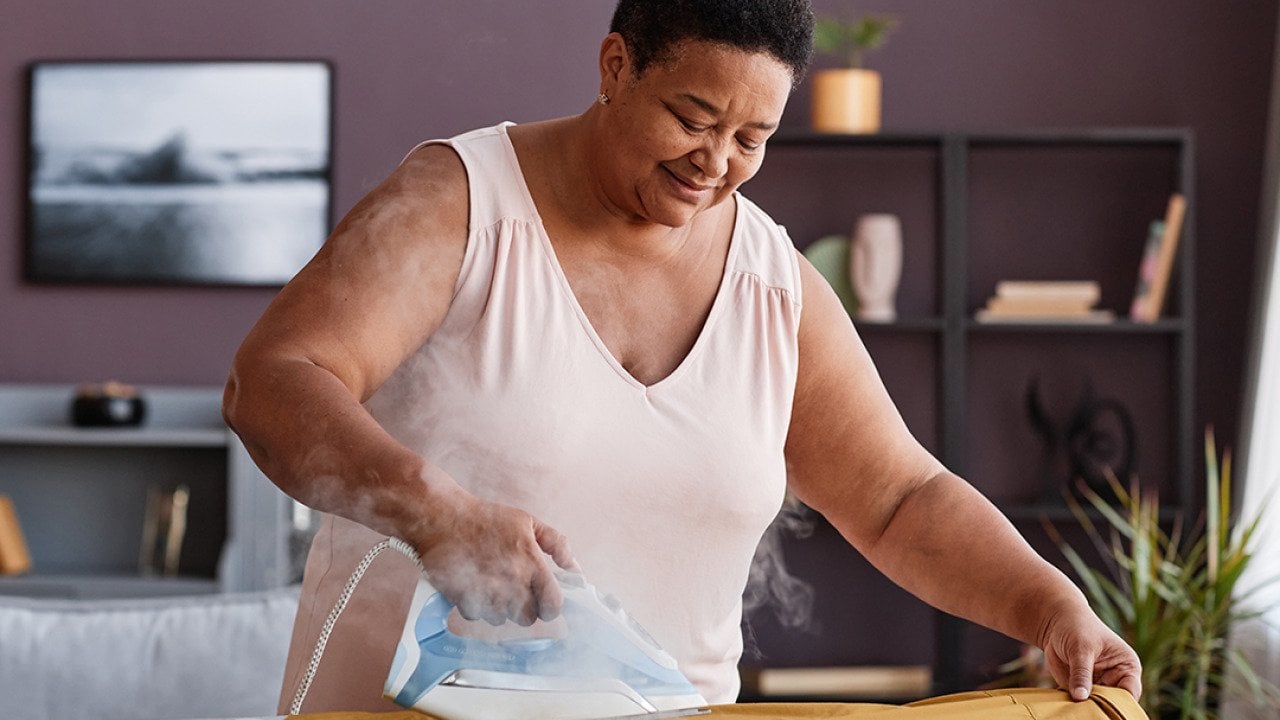
A senior woman happily ironing clothes at home.

SeventyFour // Shutterstock


Finding bras that offer both comfort and support becomes more important as women age. Your body naturally changes over time, and what worked in your 20s may not offer enough support and structure to meet your needs today. A good bra for mature women combines smart design, high-quality materials, comfortable support, and sturdy shaping.

As women age, breast tissue changes in density and position. The skin becomes more sensitive, and issues like arthritis or shoulder injuries can make traditional back-closing bras hard to manage. Good bras address these needs with features that work with your body.

Below, Honeylove offers guidance on bra selection for mature women.

What makes a bra comfortable and supportive as we age?

Comfort starts with proper support. Wide, cushioned straps spread weight evenly across your shoulders without digging in. The band should be firm but comfortable. After all, the band provides about 80% of your bra’s support, so getting this right matters a lot.

Thoughtful design features boost comfort significantly. Look for seamless construction that prevents chafing and creates a smooth, line-free appearance under clothes. Adjustable features like multiple hook positions and straps handle daily comfort changes. Light padding gives shape without bulk, and smooth edges prevent irritation from rough seams or sharp elastic.

Wire-free vs. underwire options

Today’s wireless bras use clever paneling, supportive fabrics, and innovative construction to lift without metal underwires. These work well for everyday comfort, sensitive skin, post-surgery recovery, and relaxing at home. Wireless support technology has improved a lot, making these bras good options for almost all breast sizes.

If you like the lift and separation from underwires, look for cushioned underwire channels that keep the wire from digging into your skin. Wires surrounded by foam rather than just fabric feel much better. The right wire width should follow your natural breast shape, and flexible underwires move with your body.

Front-closure bras for easier dressing

Front-closing bras solve many common dressing problems. Whether you have limited shoulder mobility, arthritis, or just prefer the convenience, front closures make getting dressed easier and more comfortable.

Different front closures offer various benefits. Traditional hooks in the front provide security with easier access. Magnetic closures almost close themselves, which is great if you have dexterity issues. Zipper fronts work well for compression needs, while snap closures are easy to manage with limited hand mobility.

Besides convenience, front-closure bras often have racerback or convertible straps that distribute weight better across the chest. They eliminate back bulges from traditional closures and let you adjust straps more easily from the front, which helps if you have limited shoulder mobility.

Finding your perfect fit and style

Bodies change over time, and so do bra siz

7 email address practices that say more about you than you think

Kraig Pakulski 0 71 Article rating: No rating

Logos of mail apps on a phone.

Tada Images // Shutterstock


At first glance, your email address might seem like a completely neutral piece of contact information. However, it conveys subtle social cues that can shape how others perceive you. From a hiring manager’s first impression to a client’s quiet assumptions, your inbox handle can offer up hints about your age, digital habits, and even how seriously you take your profession. Spokeo has compiled seven hidden messages your email handle might inadvertently be revealing about you.

Handle habits

Avoid unintentionally giving away too much information about yourself with your email handle by learning the following seven tells:

1. Including your birth year: An unintentional age disclosure

Many people opt to include their birth year following their first name when the combination of their first and last name is unavailable as an address. This happens to be one of the most common (and revealing) email quirks. It may seem harmless, but it unintentionally discloses your age to employers, clients, or acquaintances who may subconsciously judge you based on the generation you are a part of.

As Seltzer Fontaine, a top legal search and recruiting firm, points out, hiring managers will often use subtle cues like your email address to assess professionalism. Adding your birth year can signal that you’ve been using the same address since it was created.

2. The AOL address: From stigma to accidental status symbol

Interestingly, using an AOL address has evolved in recent years. Historically, this address suggested that a person was technologically behind since more modern platforms like Gmail and Outlook have been released. Cultural perception today, though, has turned, and an AOL handle can evoke feelings of nostalgia or even a retro charm. If you’re applying to jobs or networking, however, it’s still best to use a modern domain to avoid seeming outdated.

3. Nickname handles: When ‘cutesy’ kills credibility

There’s a major difference between having a fun screen name among friends and a professional email address. Having interests is to be expected when applying to jobs, but including references to sports, video games, or other common tags can undermine your credibility. Even if your email nickname has sentimental value, it’s best to save it for personal use only.

4. Random number strings: The spam flag

Similar to the first item on this list, when a person’s first and last name combination is taken, they will sometimes resort to a string of numbers that only have meaning to them. These numeric strings can often resemble spam or bot accounts to strangers, though. In certain cases, this can cause your email to be filtered out of a person’s inbox entirely. To avoid this, the social media marketing platform HubSpot recommends adding a middle initial, dots, or a short location tag instead of random digits.

5. Yahoo and Hotmail: The ‘out-of-touch’ domain dilemma

Similar to AOL but without the nostalgic charm, Yahoo and Hotmail te

RSS
First41964197419841994201420342044205Last