Santa Barbara County News and Events

Mild weekend, warming next week

Kraig Pakulski 0 21 Article rating: No rating

SANTA BARBARA COUNTY, Calif. - Temperatures will be in the mid 60s this weekend as we clear out from storm clouds.

Fog and drizzle is possible Saturday morning for the southern end of our region.

We will clear Sunday through Tuesday thanks to offshore winds.

High pressure is making a return to the west coast helping us to warm up into the high 60s and low 70s late next week.

The only outlier is a cool and wet system coming to northern California on Wednesday and Thursday that may increase our clouds, cause cooling or drizzle.

After that, a stronger warmup is likely for the weekend of Jan 31-Feb 1 with 80s possible.

The post Mild weekend, warming next week appeared first on News Channel 3-12.

Where is flu, COVID surging? Here’s where people are filling prescriptions for Tamiflu, Paxlovid, and more

Kraig Pakulski 0 19 Article rating: No rating

A pharmacist holding a basket to fill out a prescription.

i viewfinder // Shutterstock


GoodRx, a platform for medication savings, is tracking prescription fills for medications that treat seasonal viral respiratory infections. The tracker includes fills for:

Key takeaways:

  • These fills give insight into rates of infections and how they’re being treated.
  • Tamiflu fills typically peak between December and February. A jump in fills before December may indicate an early flu season. High fills in late spring could signal an extended flu season.
  • Paxlovid and molnupiravir fills may spike during the late summer and winter, mirroring the back-to-school season’s impact on COVID-19 transmission.
  • Fills for pediatric antibiotics associated with respiratory syncytial virus (RSV) and whooping cough typically peak during the fall and winter, with return-to-school schedules.
  • Coverage for COVID-19, flu, and RSV vaccines remains high across insurance types but varies by channel. Commercial plans generally have more people lacking coverage than Medicare and Medicaid, which offer broader, no-cost access. Cash prices also vary for those paying out of pocket, highlighting ongoing affordability challenges.

Why track treatment fills?

Fall and winter are the height of cold and flu season. During these months, the viruses that cause common respiratory infections, such as influenza, coronavirus, and RSV, spread widely. In many cases, these infections don’t cause serious illness. But they can be deadly for children, older adults, and people with weakened immune systems.

Typically, the CDC actively monitors these viruses through tools such as the FluView for influenza, the COVID-19 Data Tracker, and the Respiratory Syncytial Virus Surveillance system. These tools help Americans understand the risk of contracting these viruses. But they don’t indicate how people are treating these infections.

To this end, GoodRx Research has developed several tracking tools to monitor prescription fills for medications that treat these respiratory infections and provide insights into:

  • Whether Americans are taking (or not taking) FDA-approved treatments for the flu, COVID-19, or secondary bacterial infections associated with RSV and whooping cough
  • Whether healthcare professionals are prescribing these medications at r

Remote job market still strong despite return-to-office mandates

Kraig Pakulski 0 20 Article rating: No rating

A woman using a laptop working from home.

Branislav Nenin // Shutterstock


High-profile return-to-office mandates at companies like JPMorgan Chase and Microsoft dominated headlines in 2025, but a new job report shows that remote work continues to play an important role in the modern labor market. Toptal’s High-Skilled Job Report for Q4 2025 found that demand for experienced remote and hybrid technology and professional services personnel is actually slightly stronger than that for comparable in-office positions.

The report found that global demand for these remote and hybrid professionals increased by 19.8% in Q4 2025 versus Q4 2024. Looking at the entire year, demand increased 10.9% in 2025 versus 2024. Meanwhile, demand for similar professionals across all work models, including remote, hybrid, and in-office roles, increased by slightly smaller magnitudes (19.4% for Q4 2025 versus Q4 2024 and 10.4% for full-year 2025 versus 2024).

The difference in the trends is very small, but still worth noting, according to the report. For remote and hybrid roles to exceed the blended average, in-office roles must be lagging behind, pulling down the overall figure.

Graphic showing that demand for experienced tech and professional services experts increased nearly 20% year over year in Q4 2025.

Toptal

Quarter-over-quarter data tells a similar story. Demand for remote and hybrid talent declined by 4%, a typical late-year contraction; however, the broader experienced market, which includes in-office roles, showed a slightly larger decline of 4.7%.

Remote Work Is Finding Its Level

Five years after the height of COVID-19 pandemic disruption, data suggests that distributed work has settled into a more stable phase. The report notes that office occupancy in major U.S. markets has recovered from its pandemic lows but remains well below 2019 levels. This points to an emerging equilibrium between remote, hybrid, and in-office work in which companies have begun to pinpoint when in-person collaboration is essential and when work can be done remotely.

This shift mirrors the adoption of AI, in which companies’ early experiments have evolved into strategic combinations of technology and human insight. Together, these changes point to a more deliberate approach to the future of work. Having tested remote policies and AI tools for several years, companies are now making clearer choices about where work happens and how technology supports it. They are increasingly implementing AI-driven tools and in-person work into the parts of the workflow where they add the most value.

Progress fighting pancreatic cancer, one of the deadliest malignancies

Kraig Pakulski 0 26 Article rating: No rating

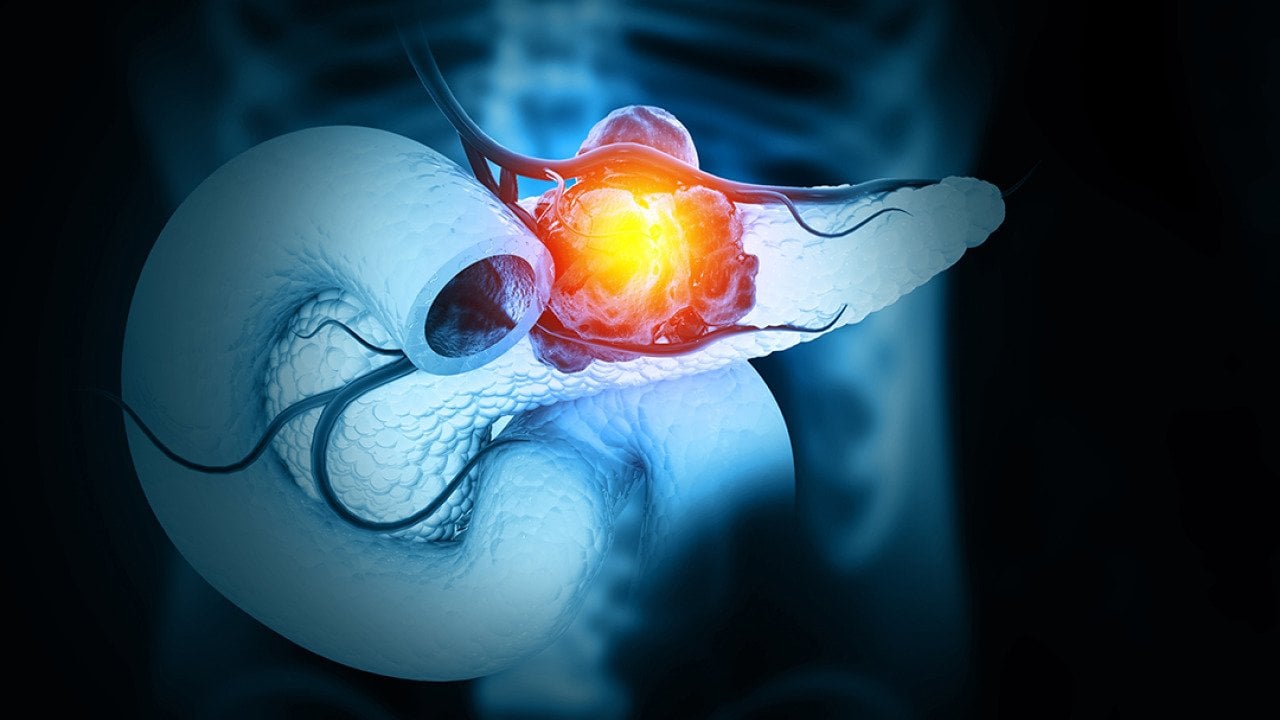
A 3D illustration of cancer forming in the pancreas.

crystal light // Shutterstock


A diagnosis of pancreatic cancer is devastating news. Though it makes up only about 3% of cancers in the United States, it’s one of the deadliest, and on track for a dark achievement: By 2030, it’s expected to kill more people in the United States than any cancer except for lung cancer. This apparent paradox is rising because screening and treatments for other cancers have surged ahead, while pancreatic cancer has remained tricky both to identify and to treat, Knowable Magazine reports.

Nonetheless, there’s reason for hope, says Anna Berkenblit, chief scientific and medical officer for the Pancreatic Cancer Action Network in El Segundo, California, which supports research and helps patients. Scientists are testing new medicines that disable drivers of cancer that were once considered undruggable. They’re training patients’ immune systems to attack tumors once thought to be invisible to the body’s defenses. And they’re harnessing artificial intelligence to catch pancreatic cancer in early, vulnerable stages.

“The goal is to transform pancreatic cancer into a curable disease,” says Andrew Rakeman, vice president of research for the Lustgarten Foundation on Long Island, New York, which supports science on pancreatic cancer. Or, at least, “something that’s survivable, and livable, and can become more of a chronic condition.”

The five-year survival rate for pancreatic cancer is a dismal 13%. That’s partly because pancreatic tumors surround themselves in dense, scar-like tissue, blocking medicines and immune cells. Small tumors advance quickly but often go unnoticed until they’ve spread, making it too late for surgeons to remove all the cancer.

One of the biggest hopes right now is medicines that target a protein called KRAS, which is part of a cell’s growth-control machinery. In more than 90% of pancreatic cancers, mutated versions of KRAS get stuck in the “on” position, so cells divide uncontrollably.

Cancer biologists would love to shove a stick into the machinery of KRAS, but they’ve struggled to find a place to jam that stick. “People have described it to me as like a small, greasy ball … there’s no kind of pocket to stick an inhibitor in,” says cancer biologist Paige Ferguson of the Cold Spring Harbor Laboratory in New York, who cowrote an article about the challenges of treating pancreatic cancer in the 2025 Annual Review of Cancer Biology.

So researchers took a different tack: They were able to design a drug that attaches to a different cell protein. That drug/protein duo then grabs KRAS, stifling its dirty work. In an early trial, 38 people with pancreatic cancer receiving the drug, daraxonrasib, survived for more than eight months, on average, wit

RSS
First35463547354835493551355335543555Last