Santa Barbara County News and Events

Planning life after high school isn’t easy: 4 tips for students and their families

Kraig Pakulski 0 24 Article rating: No rating

An illustration of a graduation concept, with a five students outside a school with a lightbulb and three arrows pointing in different paths.

Turn_around_around // Shutterstock


Many high school seniors are now focusing on what they will do once they graduate — or on the fact that they don’t at all know what is to come.

Families trying to guide and support these students at the juncture of a major life transition likely also feel nervous about the open-ended possibilities, including starting at a standard four-year college or not attending college at all.

Writing in The Conversation, Purdue University psychology professor Shannon Pickett, a mental health counselor, shares four tips to help make deciding what comes after high school a little easier for everyone involved.

1. Shadow someone with a job you might want

Many college students are interested in a particular career path, but are not familiar with the job’s day-to-day workings.

A parent, teacher or another adult in this student’s life could connect them with someone they shadow at work, even for a day, so the student can better understand what the job entails.

High school students may also find that interviewing someone who works in a particular field is another helpful way to narrow down career path options or finalize their college decisions.

Research published in 2025 shows that high school students who complete an internship are better able to decide whether certain careers are a good fit for them.

2. Look at the numbers

Full-time students can pay anywhere from about $4,000 for in-state tuition at a public state school per semester to just shy of $50,000 per semester at a private college or university. The average annual cost of tuition alone at a public college or university in 2025 is $10,340, while the average tuition cost at a private school is $39,307.

Tuition continues to rise, though the rate of growth has slowed in the past few years.

About 56% of 2024 college graduates had taken out loans to pay for college.

Concerns about affording college often come up with clients who are deciding on whether or not to get a degree. Research has shown that financial stress and debt load are leading to an increase in students dropping out of college.

It can be helpful for some students to look at tuition costs and project what their monthly student loan payments would be like after graduation, given the expected salary range in particular careers. Financial planning could also help students c

How Dolly Parton’s ‘Light of a Clear Blue Morning’ reminds us why hope matters

Kraig Pakulski 0 18 Article rating: No rating

Dolly Parton during a 1978 concert in Théâtre Mogador in Paris, France.

Christian Rose // Roger Viollet via Getty Images


Hope is more than just a feeling. It serves as a psychological anchor, provides a way to cope and acts as a force that influences how we move through difficult chapters. In the spirit of renewed optimism, Dolly Parton rereleased her beloved classic “Light of a Clear Blue Morning” in 2026, describing it as a song she originally wrote when she was “searching for hope.” A message, she says, “still feels just as true” 50 years later.

LifeStance Health reports how Parton’s message resonates with the core of positive psychology: Hope is a tool that helps us believe in possibilities beyond the present moment. Whether individuals are rebuilding after loss, navigating uncertainty or simply trying to make sense of the world, hope and optimism may fundamentally shift the emotional landscape of our lives.

Why hope is psychologically powerful

When Parton wrote “Light of a Clear Blue Morning” in 1976, she was emerging from a painful professional rupture and needed reassurance that things would get better. She has called the song her “song of deliverance,” a reflection of finally seeing the metaphorical sun after a long, dark night.

Some modern mental health research supports what Parton captured emotionally.

1. Hope reduces feelings of helplessness

People who maintain hope during difficult circumstances experience lower levels of anxiety and depression. Hope helps individuals feel more capable of facing challenges.

2. Optimism strengthens emotional resilience

Optimistic people aren’t blindly positive; they believe they can influence outcomes. That belief improves coping strategies and stress tolerance.

3. Hope encourages forward movement

Parton herself described the new version as her way of “shining a little light forward.” When individuals Read more

Federal transportation funding, CDL enforcement, and capacity signals are reshaping the freight market for 2026

Kraig Pakulski 0 23 Article rating: No rating

An empty transport semi truck going through a bridge.

Vitpho // Shutterstock


While many supply chain leaders focused on the peak shopping season, holiday sales, and returns, transportation policy and freight market dynamics continued to move quickly. Over the past month, a series of announcements from the U.S. Department of Transportation (DOT), along with emerging capacity signals in the trucking market, point to a more regulated, infrastructure-heavy, and less forgiving freight environment for 2026.

Looking at the whole picture, these recent developments highlight a clear reality for shippers: Transportation planning is becoming more complex, and the margin for error is narrowing.

On Dec. 30, 2025, the DOT announced more than $118 million in grant funding through the Federal Motor Carrier Safety Administration (FMCSA) to strengthen Commercial Driver’s License (CDL) oversight, enforcement, and training. The initiative, announced by Transportation Secretary Sean P. Duffy, focuses on keeping unqualified drivers off the road while improving nationwide safety outcomes.

The implications for shippers are mixed. While stronger enforcement and improved training support long-term safety and stability, tighter oversight can restrict driver availability in certain regions or corridors, especially where compliance gaps already exist.

“This investment reinforces that compliance and safety are no longer optional variables in freight planning but are foundational to capacity availability,” said David Stone, director of transportation at WSI. “As enforcement tightens, shippers need to understand where capacity may thin and plan accordingly.” WSI examines what is impacting the freight market this year.

CDL compliance disputes could disrupt driver supply

In addition to the new funding, the DOT has also indicated continued scrutiny of state-level CDL programs. Public statements made around potential funding withdrawals tied to CDL issuance standards create an ongoing regulatory wildcard for the trucking industry.

Freight stakeholders are less concerned about a single enforcement action and more about uneven implementation across states. Differences in how CDL standards are enforced can create regional imbalances in driver availability, especially when legal challenges or policy reversals delay clarity.

Freight brokers will play a critical role in monitoring these developments and adjusting carrier strategies in real time, something that is increasingly difficult for shippers to manage internally as regulatory signals shift.

Nearly $1B in roadway safety funding aims to accelerate infrastructure upgrades

Just days before the CDL announcement, the DOT announced nearly $1 billion in funding for roadway safety improvements through the Safe Streets and Roads for All (SS4A) program. The funding supports 521 projects across 48 states, tribal communities, and Puerto Rico, with a focus on reducing serious injuries and fatalities.

The projects in

Trump’s vow to arrest immigrants lifted private prison stocks. Then why did they tank?

Kraig Pakulski 0 18 Article rating: No rating

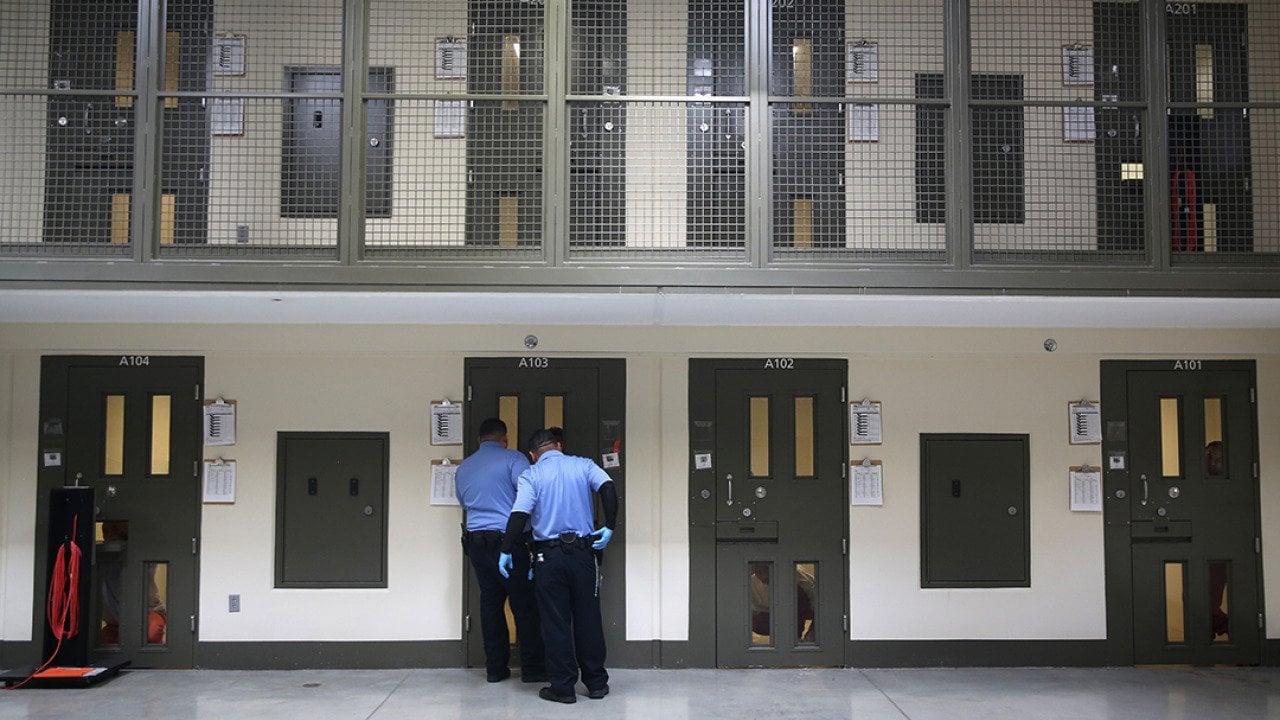
Guards prepare to escort an immigrant detainee from his 'segregation cell' back into the general population at the Adelanto Detention Facility on November 15, 2013 in Adelanto, California.

John Moore // Getty Images


The GEO Group and CoreCivic, the largest companies that provide detention space for Immigration and Customs Enforcement, seemed likely to reap a windfall after their stocks soared in the weeks leading up to last year’s inauguration of President Donald Trump.

But while Trump’s deportation machine had explosive growth, its reach hasn’t lived up to Wall Street expectations. Stock prices for both companies slumped. Despite a series of immigration blitzes and high-profile raids, the government didn’t use as much detention space as investors expected.

Detention industry experts and other observers believe all that could change this year, with the immigration system — and privately run holding facilities — expected to grow even larger.

“Once Trump was elected, there was a rush and belief that all this was going to occur at the snap of a finger,” said Joe Gomes, an equity analyst for Noble Capital Markets, an investment bank. “It’s just taken a little longer than many investors thought to see these numbers really jump up,” he told The Marshall Project.

On his first day in office, Trump reversed an executive order from former President Joe Biden to curb the use of private companies to operate federal prisons for the Justice Department — though they continued to be used for immigration detention. Contractors like GEO Group and its primary competitor, CoreCivic, welcomed the news. Days later, the first piece of legislation Trump signed into law, the Laken Riley Act, made it easier to detain undocumented immigrants accused of low-level crimes.

At the beginning of 2025, the companies had about a dozen prison facilities sitting empty, ready to be reactivated. GEO Group, based near Mar-a-Lago, Trump’s home in Florida, seemed particularly well-suited.

“This is a unique moment in our company’s history, and we believe we are well-positioned to scale up our diversified segments — in secure housing, transportation, electronic monitoring — to meet the changing needs of this new administration, and to continue to enhance value for our shareholders,” George Zoley, the Greek-born founder of GEO Group, said during a quarterly earnings call in February.

By summer, Trump’s “One Big Beautiful Bill Act” was signed into law, approving $170 billion in new funding for immigration enforcement.

Oddly enough, the price of GEO Group’s stock, which had nearly tripled between the waning months of the presidential campaign and Inauguration Day, then plummeted. At the end of 2025, GEO Group’s stock was trading around $16 per share, down from a high of $36.46 on Trump’s second day in office. Stock prices also fell for CoreCivic,

How to build a simple mental health routine this winter (no overhaul needed)

Kraig Pakulski 0 22 Article rating: No rating

People along a walkway during wintertime.

juancsanchezherrera // Shutterstock


Winter isn’t just a change in scenery. It’s also a shift in routine and a shock to your physiology. Short days and long nights naturally reduce access to natural light, which can influence mood and circadian rhythms. For some, this contributes to seasonal affective disorder, a form of depression linked to seasonal shifts.

Even those without clinical symptoms can still experience the famous “winter blues,” which cause a drop in motivation and an increase in stress. Here are six tips from April Health to keep your spirits up this winter.

1. Take 10‑minute outdoor light and movement breaks

Exposure to natural daylight can help regulate the circadian rhythm and counteract low winter light levels. Light therapy is one of the key treatment methods for seasonal affective disorder, according to the nonprofit academic medical center Mayo Clinic. Combining light with gentle movement, such as taking a walk around the block, can add cardiovascular benefits and a small dopamine lift to your daily life. This exercise isn’t about breaking a sweat. Rather, it’s a way to signal wakefulness to the brain through motion and daylight.

If a stroll outside isn’t possible, light therapy boxes can be a potential alternative. For most people, though, taking just 10 minutes to walk around the neighborhood can make a major difference.

2. Keep a gratitude or daily-wins journal

Gratitude journaling is a well-documented way to reduce stress and support cognitive reframing, which can lead to a more positive outlook. During the wintertime, this small reframing can matter even more. Taking the time to write three things you’re grateful for or three small wins you had every day doesn’t force toxic positivity, but instead balances the brain’s bias toward threats and stress. The American Psychological Association notes this practice is a key part of cognitive behavioral therapy, an effective method for transforming thoughts for the better.

3. Take a 5‑minute mindful breathing or a body scan

Mindfulness practices, such as breathing exercises and body scans, can help downshift the nervous system from fight-or-flight to rest-and-digest. Organizations that produce mental health resources for the winter season frequently recommend mindful breathing as a tool for coping with stress and overwhelming feelings related to the holidays. A five-minute body scan or guided breath session can help clear mental static and reduce rumination, two things that often spike during the darker months.

4. Have a simple weekly social check‑in

Social withdrawal is common in wintertime, especially when the weather limits spontaneous interaction. Providers who work with seasonal affective disorder often emphasize that structured social touchpoints, like a weekly coffee with friends or a hobby group, can help to counteract isolation. Even just brief social contact can help maintain emotional regulation, reduce loneliness, and reinforce a

RSS
First35483549355035513553355535563557Last