Anna Averianova // Shutterstock
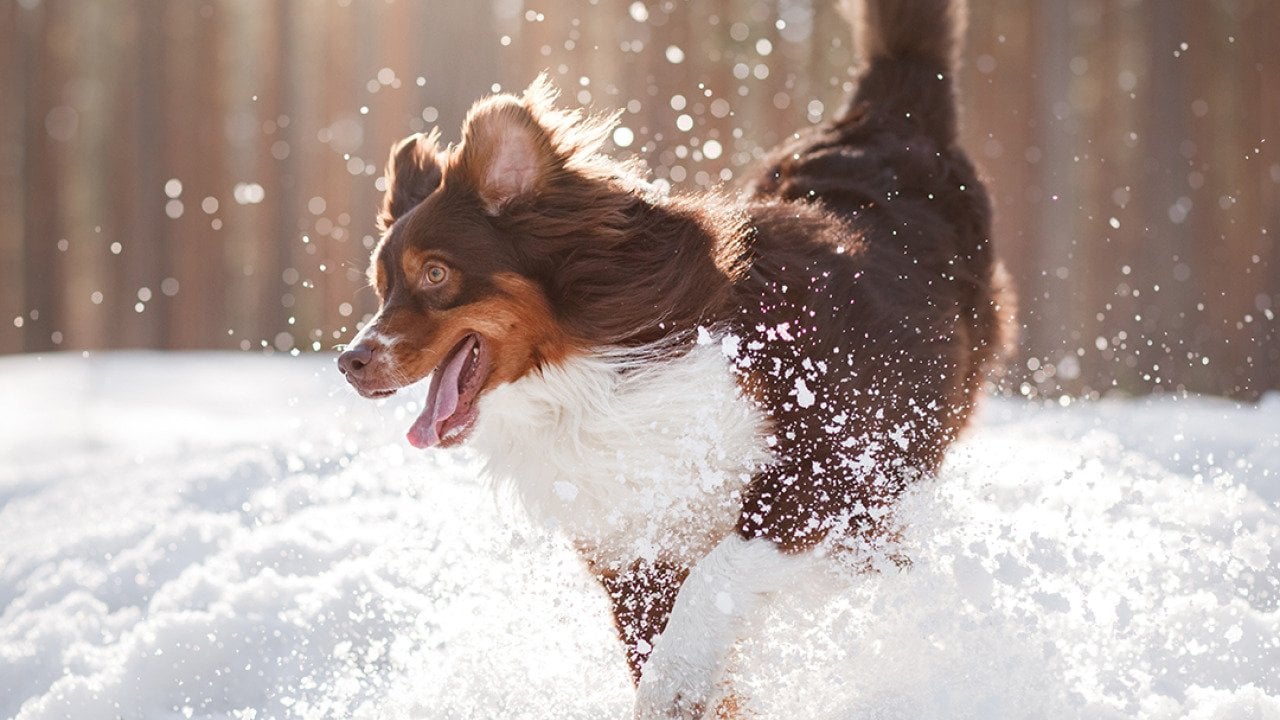
It’s a delightful scene: The first snow of the year falls, and you get your dog all suited up to venture outside for a walk. The second they lay eyes on the winter wonderland, their ears perk up. Setting that first paw print into the snow, their snout goes into overdrive, and the seemingly endless zoomies start.
You may have wondered: What is it exactly about snow that gets them going? Is it the look of it? The texture on their paws? The cold sensation? Does it do something to the scent landscape that entices their olfactory senses?
Of course, not every dog responds eagerly to snow days; some positively hate the cold, can’t stand wearing booties, and go on walk strike during inclement weather. But there are those who go bananas for the white stuff. Pet advice website Kinship talked to a couple of veterinarians about what makes snowfall so appealing, plus, the safety tips you need to know to keep your abominable snowdog safe in freezing temps.
They like the sensory experience.
“Many dogs love anything that feels different from their daily routine,” says Dr. Ashly Smith, regional medical director for Small Door Veterinary.
Dr. Smith points to the texture of snow under their paws, cool air on their skin, and the visual brightness as “sensory newness triggers” that dogs find stimulating. “Some even stomp or dig simply to recreate the crunchy sound of fresh snow underfoot because the feedback is so satisfying,” she explains.
A cold dip in temperature can also cause a burst of energy in dogs, though some can get sleepier. (Just picture your dog’s activity level on a hot and humid summer day, compared to a wintery 35 degrees, and this is pretty evident.) The natural boost encourages activity like zoomies, digging, and jumping. Plus, “the buoyancy and softness of snow can make some dogs feel momentarily ‘lighter,’” she explains. If your pup transforms into a bouncy rabbit on a snowy day, you may have noticed this.
They have a genetic predisposition for cold temps.
Compared to a Retriever or Samoyed, your average eight-pound Chihuahua may act less than thrilled stepping outside for a snowy walk, likely cowering and beginning to shake. That’s because there is a genetic predisposition to a dog’s affinity for snow, according to Dr. Mondrian Contreras, veterinary expert for Pumpkin Pet Insurance.
Dr. Contreras says breeds like Siberian Huskies, Alaskan Malamutes, and Bernese Mountain Dogs are especially fond of the snow due to their thick fur coats and a history of working in cold environments as sled dogs, hunting dogs, or search-and-rescue dogs. These breeds typi