Santa Barbara County News and Events

Movies and TV shows casting across the US

Kraig Pakulski 0 32 Article rating: No rating

Media_Photos // Shutterstock


The glitz and glam of Hollywood captures the attention of Americans starting from an early age. Beyond celebrities’ Instagram Stories and red carpet poses, there are actors out there paying their dues and honing their craft in pursuit of a sustainable career or a fulfilling sideline. Submitting to casting calls is a big part of that journey.

Whether you’re a working actor or an aspiring one, you might be curious to know which movies and TV shows are casting roles near you. Backstage compiled a list of projects casting right now across the U.S., and which roles they’re looking to fill.

Media_Photos // Shutterstock

‘Asherah: A Love Odyssey – Episode One – Flashbacks’

– Project type: feature film
– Roles:
— Ariel: Age-19 (supporting, female, 18-23)
— Miguel: Age-20 (lead, male, 18-24)
— Asherah: Age-18 (lead, female, 18-23)
– Average hourly rate: $125
– Casting locations: West Palm Beach, Florida; Savannah, Georgia; Augusta, Georgia; Fort Lauderdale, Florida; Atlanta, Georgia
– Learn more about the feature film here

Grusho Anna // Shutterstock

‘The Seam’

– Project type: scripted show
– Roles:
— Heather (lead, female, 21-28)
— Isaac (lead, male, 21-28)
— Ben (lead, male, 45-65)
– Average hourly rate: $15
– Casting locations: Princeton Junction, New Jersey; Philadelphia, Pennsylvania; New York City, New York
– Learn more about the scripted show here

KinoMasterskaya // Shutterstock

’72 Hours’

– Project type: feature film
– Roles:
— Club Goers (background extra, 18-35)
– Average hourly rate: $18
– Casting locations: New York City, New York; Newark, New Jersey; Brooklyn, New York; Morristown, New Jersey; Hoboken, New Jersey
– Learn more about the feature film here

Read more

Yard-core! Superfans show team spirit through lawn art

Kraig Pakulski 0 24 Article rating: No rating

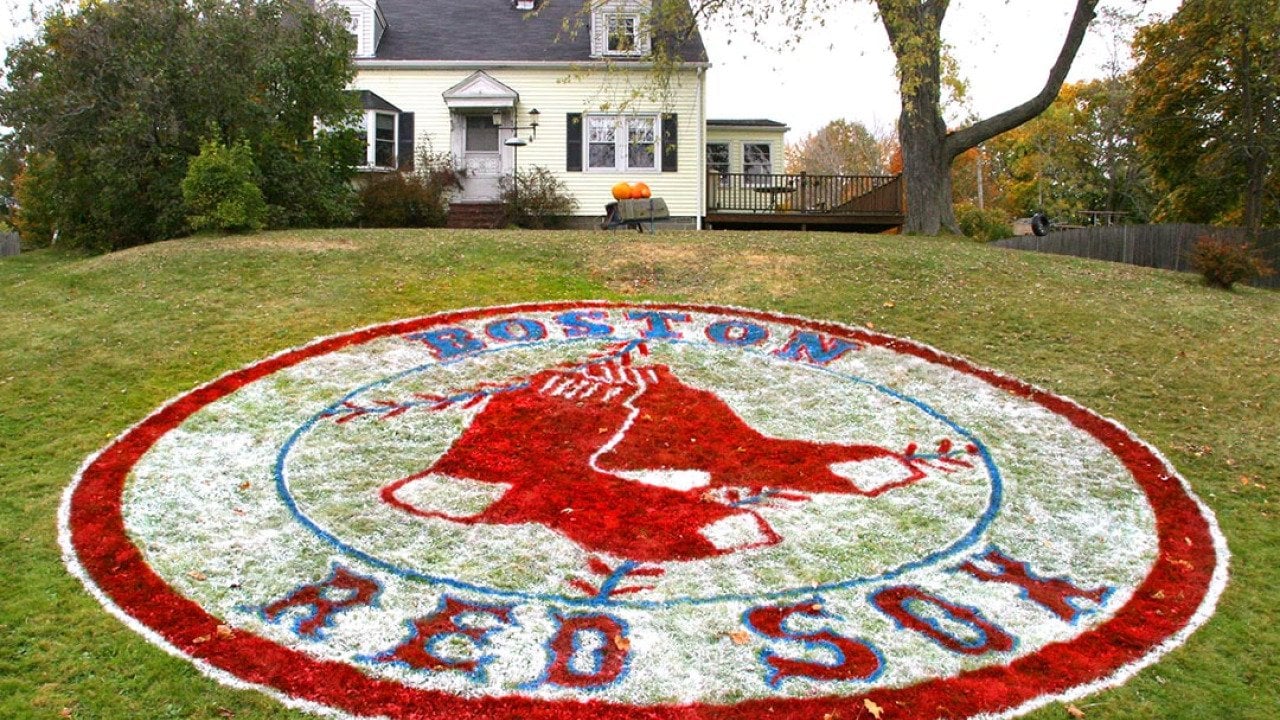
The Red Sox emblem painted on the front lawn of a home at 21 Pine Haven Terrace in South Portland.

Herb Swanson // Portland Press Herald via Getty Images


You may think that a lawn is just grass that needs regular mowing and maintenance. But for superfans of the Buffalo Bills, Philadelphia Eagles, and other favorite teams, a lawn is something used as a billboard for loyalty, team rivalry, and plain old fun.

With the sports team lawn logo trend, homeowners take fandom to a whole new level, LawnStarter reports. According to Luke Lorick, president of Tailgating Challenge and founder of National Tailgating Day, the fan experience has steadily intensified over the years.

“It started with flags and now … (fans even) decorate their lawn to ensure everyone knows the team they support.” That’s the energy fans are channeling today. And it has taken root not just in tailgate-heavy college towns but also in suburban neighborhoods.

Lawn Art for Superfans of All Ages

At Heathwood Assisted Living, on days when the Buffalo Bills are playing, you’ll hear the clapping and cheering of its decked-out residents and staff as they support their team.

That excitement is even more intense with the Bills in the AFC playoffs for the seventh consecutive season.

Tabitha Kennedy, activities director at Heathwood, said the residents have been watching the Bills’ games “for many, many years.”

Aged between 70 and 100, most are lifelong Bills superfans and are likely among the oldest members — you might even say godfathers — of the Bills Mafia.

The residents’ celebratory energy is so infectious that even the younger-generation staff loves watching Bills games with them.

“We just get together and watch it together. They all have their Bills gear on,” Kennedy said.

During the playoffs, Kennedy (who grew up as a Bills fan herself) holds special events for the residents of the assisted living facility.

“We have the Bills’ Billieve banner that we hang. Residents love to take pictures of (our life-size) Josh Allen” in the hallway.

So when they celebrated Assisted Living Week in September 2025, which coincided with the Bills’ season opener, Kennedy took their superfandom a step further.

She hired Brian Koperski, owner of Bricks Lawn Art and fellow diehard fan of the Buffalo Bills, to paint a giant Bills logo on the lawn.

It was a complete surprise for the residents. And when word got out, “Even families were coming here to take pictures with their loved ones, so that meant a lot,” Kennedy added.

The Art and Science Behind Lawn Logo Painting

Commercial sponsorship logos have been painted on college football fields for at least a few decades in postseason play. And while no one knows for sure when fans started painting logos on their lawns, the idea has gained popularity in recent years as the internet and social media have helped make it a trend.

David Daud, owner of Destyn Designs in Philadelphia, witnessed how the sports team lawn logo trend took off. In 2022, before the Eagles went to the Super Bowl, he also started creating lawn “jawns” (Philly slang for any person

What we lose when we spend to feel better

Kraig Pakulski 0 23 Article rating: No rating

Woman facing a glass display while window shopping.

Kinga // Shutterstock


For Emily Mester, compulsive shopping was the norm growing up. Trips to the mall were routine, packages arrived at the door almost daily, and impulse buys were rarely questioned. It was what prompted her last year to write her book, American Bulk: Essays on Excess, which examines how the things we buy, amass, and discard become an intimate part of our lives—and central to our understanding of fulfillment and joy.

After years of researching consumer culture and behavioral psychology, Mester decided to embark on a three-month, no-buy period in 2024. The rules she set for herself were as straightforward as they were severe: She wasn’t allowed to buy anything online, nor was she permitted to make spontaneous purchases in stores—habits, she realized, that had once offered a reliable dose of anticipation and emotional lift. “It felt similar to when you have a crush and suddenly the crush goes away and you’re like, well, who do I dress for and who am I hoping to see when I go to this place?” Mester told Atmos. “It felt like my life lacked a carrot; it lacked something to aim towards.”

Mester’s relationship to shopping is far from unique—it’s a reflection of a culture that’s long equated consumption with contentment. People have been told for years by advertisers that money can buy happiness. Spend on travel, not things, the headlines say. Invest in memories. Treat yourself—you deserve it. But whether it’s a designer handbag or a getaway to a warmer climate, the underlying assumption remains the same: that joy is something we can purchase. Is that true?

New research suggests money can, to a certain degree, buy happiness depending on where and how a person lives, according to a study by the University of British Columbia. Experts found that people in wealthier countries said they gained more happiness from gifts and time-saving services, while those in lower-income nations said spending on essentials like housing and debt relief had a bigger impact. Only certain types of purchases—such as donations, experiences, and investments in personal care—consistently boosted happiness across all regions and cultures.

These findings are far from straightforward, in part because happiness is notoriously difficult to measure. It’s subjective, situational, and shaped by cultural expectations as much as by material conditions. And yet, some patterns do emerge. Professors at Harvard, the University of Virginia, and the University of British Columbia determined that happiness depends less on how much money we have and more on how wisely we use it in alignment with human psychology. Though buying experiences over things, helping others, savoring small pleasures can make for happier spending, the “relationship between money and happiness is surprisingly weak,” they concluded.

Happiness, it turns out, is less about what’s in our shopping cart and more about whether we spend in ways that nurture our long-term well-being.

The Spending-Happiness Paradox

So, how did

‘You shouldn’t come to the temple drunk’: The ever-changing rules and rituals of LDS temple worship

Kraig Pakulski 0 25 Article rating: No rating

A view outside of the St. George Temple at night.

Trent Nelson // The Salt Lake Tribune


For much of its history, The Church of Jesus Christ of Latter-day Saints was a faith centered around meetinghouses, which were a buzz of activity throughout the week.

That is far less the case today. Leaders have reoriented the 17.5 million-member church — outside of the home, at least — around a new focus: temples.

Go as often as circumstances allow has been the mantra poured from the pulpit at General Conference and repeated in Sunday worship services. And even if members cannot go, they are urged to prepare to do so by living the standards — pay a full tithe and no extramarital sex, tea, coffee, alcohol or tobacco — required of temple attendees.

But as Jonathan Stapley, author of the newly released “Holiness to the Lord: Latter-day Saint Temple Worship,” explained in a recent episode of The Salt Lake Tribune’s “Mormon Land” podcast, the approach to these sacred sites and the liturgies housed there would come as a surprise to many Latter-day Saints of previous generations.

Here are lightly edited excerpts from that show about that shift, as well as a look at other evolutions in meaning and practice in Latter-day Saint temple worship over time.

Not all of the rituals that faith founder Joseph Smith introduced stuck. What are some of the ones that came and went? And what does it tell us that Latter-day Saints no longer perform them today?

From the beginning, the temple was viewed by church leaders and members as a special site for physical healing. People would be immersed in the temple fonts, and there was a special baptismal prayer that was offered. They had both male and female temple healers. These are people whose job it was to take the sick who came to the temple and anoint and bless them. The temples were viewed in some ways as a site of pilgrimage for healing up until the 1920s.

There’s a lot of aspirational resonance with scripture. Jesus healed at the temple, and it’s a place that’s holy.

In the modern era, we understand that it’s probably not wise to bring sick people and immerse them in water that other people are using or to have people touch them. So there’s a pragmatic element. But, ultimately, the decision to move away from that sort of healing in the temple was based largely on the emphasis of doing proxy work for the dead. Latter-day Saints have baptism, confirmation and their temple ceremonies — an endowment, washing and anointing and Read more

Is your factory making people sick? The importance of controlling industrial air emissions

Kraig Pakulski 0 31 Article rating: No rating

A view of a large industrial oil refinery and chemical plant during sunset.

ABCDstock // Shutterstock


For years, it’s been widely known that industrial air emissions pose an environmental hazard. But what is less discussed is how these emissions can negatively impact our health. The damage doesn’t stop there — it can also affect the business’s staff, costs and potential revenue.

How do you know if your factory is making people sick, and what can you do about it? MACH Engineering has created this guide to help factories control their air emissions.

What Is Factory Air Pollution?

Factory air pollution occurs when harmful gases are emitted as a result of factory operations. These gases can cause several harmful effects on the environment, local people and, ultimately, the business. The most common factory air pollutants are:

  • Particulate matter (PM), which is any droplet suspended in the air. PM10 and PM2.5, which are particles smaller than 10 and 2.5 micrometers, respectively, can enter the body and cause health problems.
  • Volatile organic compounds (VOCs), which are various chemical compounds that contain carbon. These compounds can easily evaporate at room temperature and dissolve in water. While 90% of the world’s VOCs are produced by plants and play an important role in regulating our atmosphere, human-made VOCs are usually more toxic.
  • Nitrogen oxides, which are emitted by burning fossil fuels. These highly reactive gases can react with sunlight and oxygen to create smog, and with water to create acid rain.
  • Sulfur oxides, which are emitted by burning coal, diesel and oil. These chemicals can also cause smog and acid rain.
  • Lead, which is emitted by burning coal, oil and waste products containing lead. Lead particles can enter the human body and cause several health problems.

An infographic on factory air pollution elements and definition.

MACH Engineering

What Are the Impacts of Factory Air Pollution?

Factory air pollution can have many widespread effects, often seen in the following areas.

1. Health Impact

Air pollution can affect almost every part of your body, such as your heart, lungs and brain. There are many health risks associated with factory air pollution when it’s inhaled, such as cell mutations, immunosuppression, oxidative stress and inflammation. If the particles are small enough to enter the bloodstream via the lungs, they can cause inflammation and carcinogenicity throughout the entire body.

Factory air pollution can Read more

RSS
First37213722372337243726372837293730Last