
jittawit21 // Shutterstock
Anyone who drives a car understands the sting of having to fill up their tank and pulling into the gas station, only to discover that gas prices have skyrocketed. Paying extra for gas means you have less to spend on other things, which, over time, can really put a crimp in your budget.
Cheap Insurance explored some of the reasons behind major changes in gas prices, and compiled a list of the cheapest gas stations in every state using data from Gas Buddy.
Gas prices fluctuate based on several factors, including the cost of the key ingredient, crude oil, as well as the available supply and demand for gasoline. If the price of oil rises, a major refinery goes offline, or more drivers are hitting the road, for example, then the cost will increase.
In the first half of 2022, a unique confluence of events led to a surge in gas prices. The increased demand stemming from the COVID-19 pandemic, Russia’s invasion of Ukraine, and a slowdown in oil production all contributed to a national all-time high of $4.93 per gallon on average in June 2022.
Seasons also affect gas prices. Demand tends to drop in winter, but the cost also falls because gas stations switch to a different blend of gasoline that’s optimal for lower temperatures—and has cheaper ingredients.
Location also matters. The South and Midwest tend to have the lowest gas prices, while the West, including Hawai’i, has the highest. Californians, in particular, pay more for gas on average than any other state. That’s because of its high state excise taxes; its isolation from the country’s major pipelines, which causes supply issues; and its requirements that mandate a more environmentally friendly blend of gas that costs more to produce and adds to the price per gallon.
No matter where you live, read on to see if you can get a deal on gas near you.
Alabama
#1. Chevron (4426 Higgins Rd, Mobile): $2.09
#2. Clark (7413 Old Pascagoula Rd, Theodore): $2.15
#3. Chevron (101 Saraland Blvd N, Saraland): $2.18
Alaska
#1. Costco (48 College Rd, Fairbanks): $3.06
#2. Grizzly Ridge (18280 Sterling Hwy, Cooper Landing): $3.11
#3. Speedway Express (3679 College Rd, Fairbanks): $3.14
Arizona
#1. Shell (405 W Speedway Blvd, Tucson): $2.19
#1. ARCO (802 W Speedway Blvd, Tucson): $2.19
#3. Costco (1650 E Tucson Marketplace Blvd, Tucson): $2.25
Arkansas
#1. Valero (8110 Sheridan Rd , White Hall): $1.99
#2. Sam’s Club (7700 Rogers Ave, Fort Smith): $2.08
#3. Valero (9225 US-270, White Hall): $2.09
California
#1. EZ Trip (1451 S Madera Ave, Madera): $3.19
#1. Texaco (1434 W Yosemite Ave, Manteca): $3.19
#3. Yokut Gas Station (17051 Jersey Ave, Lemoore): $3.20
Colorado
#1. Shell (4075 Austin Bluffs Pkwy, Colorado Springs): $1.67
#2. Murphy Express (4010 Lee Vance Dr., Colorado Springs): $1.69

fizkes // Shutterstock
When Americans think about retirement, they tend to focus on housing, travel, and daily living expenses. What often gets overlooked is healthcare, which is one of the highest and most unpredictable costs retirees face.
According to Fidelity, the average 65-year-old retiring today needs about $172,500 to cover their own healthcare expenses in retirement. That estimate excludes long-term care and can be significantly higher for people with complex medical needs. As healthcare costs rise faster than inflation and Americans live longer, the financial impact of medical care in retirement is difficult to ignore.
Yet despite the size of the expense, many retirees fail to plan for healthcare until it’s too late.
Why healthcare costs catch retirees off guard
Healthcare spending in retirement is difficult to estimate. Premiums increase, medical needs change, and coverage options are complex. American retirees are faced with thousands of different Medicare plan options, and comparing them is overwhelming. Mistakes are common and can cost people thousands of dollars each year.
The good news: Retirees who plan ahead and make smart choices can significantly reduce their healthcare costs. Below, My OTC by Chapter shares important steps you can take to offset the cost of healthcare in retirement.
Build healthcare into your retirement budget
If you’re not yet retired, make sure healthcare is a dedicated line item in your retirement budget. While it’s impossible to predict exactly how much you’ll spend—due to changing premiums, inflation, and unexpected health needs—using an average estimate like the $172,500 figure quoted by Fidelity can provide a helpful baseline.
Planning for healthcare early helps prevent surprises and reduces the likelihood of having to cut back on other retirement goals.
Use health savings accounts strategically
Health savings accounts (HSAs) remain one of the most tax-efficient ways to pay for healthcare in retirement. Funds can be used tax-free for qualified medical expenses, including Medicare Part B premiums.
If you’re still contributing, maximizing HSA savings before retirement can provide a dedicated pool of healthcare funds for later in life.
Make smart Medicare decisions
Medicare provides tremendous value to U.S. retirees. Unfortunately, many people are overwhelmed by the number of Medicare options available, and making the wrong choice can cost you thousands of dollars every year. As a result, many retirees seek guidance from licensed Medicare agents to make sense of the system and choose the right coverage.
Choose the right coverage for your needs
Choosing between Original Medicare and

Savion Washington // FilmMagic
The Grailed Marketplace Report has arrived. 2025 saw the dethroning of perennial giants by luxury powerhouses, the return of loudness in streetwear and a shift toward razor-sharp aesthetics that prioritize craft over passing trends. From the ubiquity of Gothic fonts to the ongoing tension between maximalism and minimalism, this is how the world dressed in 2025 and what might be on the horizon for 2026.

Grailed
The top three spots for 2025 were occupied exclusively by luxury houses with decidedly dark points of view, signaling collective interest in a more brooding tone of style. Chrome Hearts retained the crown at #1, but its dominance shifted from a cult flex to a global standard. Close behind, Balenciaga (#2) and Rick Owens (#3) cemented their status as the new uniform, pushing Nike down to #5 as Supreme nudged its way up to #4.
Elsewhere, Saint Laurent Paris (+5) and Dior (+2) surged on a wave of Hedi Slimane nostalgia, balancing 2010s “indie sleaze” with a renewed appetite for Anthony Vaccarello’s relaxed tailoring and the impending revival of the Kris Van Assche era. Archive Japanese streetwear and avant-garde designers also saw renewed interest, evidenced by Undercover’s 12-spot jump, Yohji Yamamoto’s nine-spot increase and Hysteric Glamour’s seven-spot gain.
Maison Margiela (+1) capitalized on a shift toward unbranded storytelling—fueled by the enduring legacy of the Tabi silhouette and reemergence of the Future sneaker—while Gucci found new life in Tom Ford-era classics coinciding with Demna’s highly anticipated debut. With Enfants Riches Déprimés (+14) also skyrocketing, the data proves the community is investing in deep narrative and provenance over fleeting hype.

Grailed
The rising class of 2025 defined itself by extreme polarization. On one end, a new streetwear vanguard arrived with aggressive energy, seizing the torch from 2024’s breakouts like Hellstar. Godspeed exploded with a staggering +1097% surge, leading a pack of future staples like Vale (+650%) and The GV Gallery (+214%). On the other, the appetite for anonymity deepened, with sales for relaxed, craft-focused minimalists like The Row (+95%), Auralee (+83%),
Proxima Studio // Shutterstock
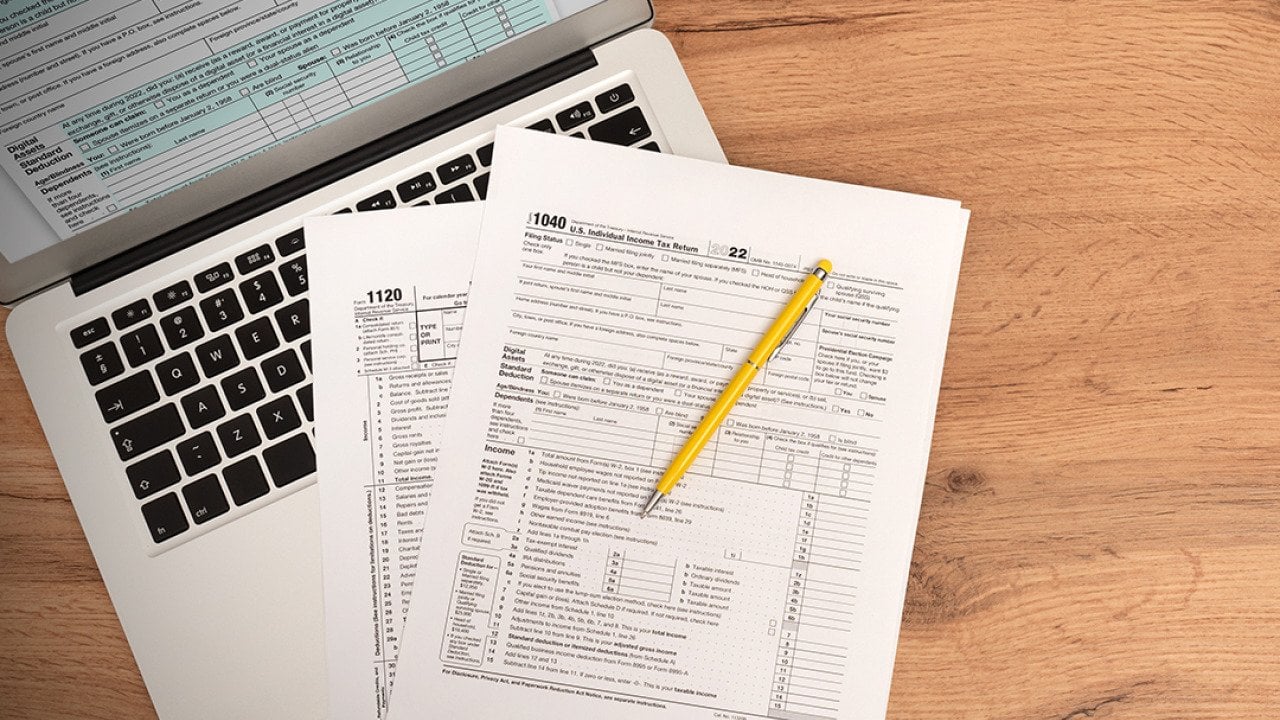
The 2025 tax legislation signed into law by President Donald Trump, commonly referred to as the One Big Beautiful Bill Act, largely preserves the existing capital gains tax framework. Long-term capital gains rates remain set at 0%, 15% and 20%, with no changes to the underlying brackets. While the law leaves capital gains taxation intact, it introduces the “Trump Account,” a new tax-advantaged savings vehicle designed for children. Enacted as part of a broader extension of provisions from the Tax Cuts and Jobs Act, the legislation maintains continuity in how investment gains are taxed while adding targeted savings incentives, which SmartAsset examines in this story.
Does the Trump Tax Plan Affect Capital Gains Tax Rates?
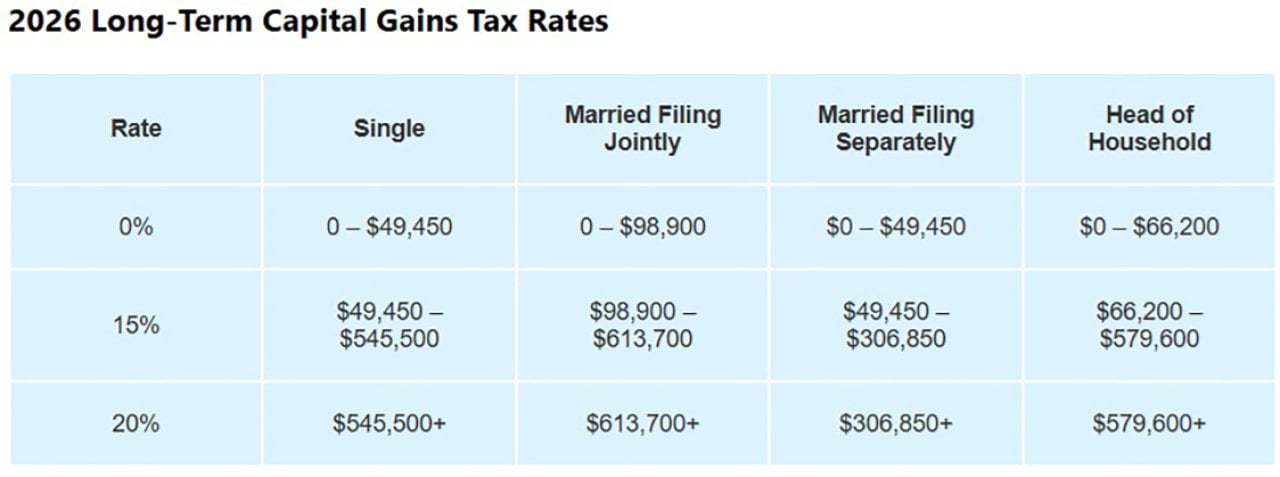
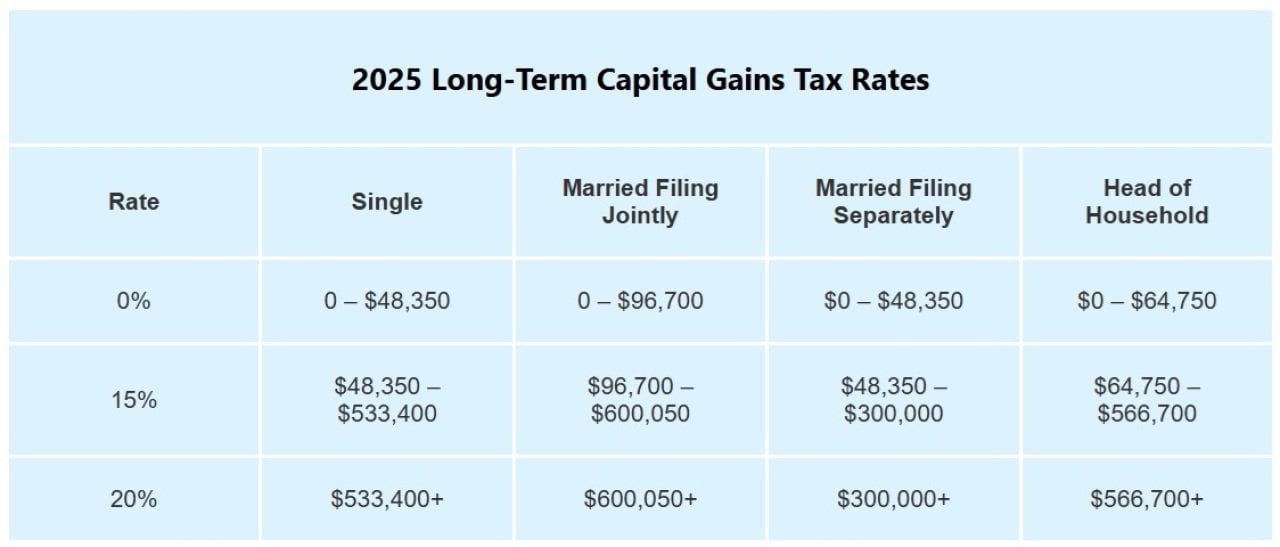
Trump’s tax law leaves existing capital gains tax rates and income tax brackets unchanged. Capital gains remain a key consideration for investors, especially those with taxable brokerage accounts, real estate holdings or long-term investment portfolios.
Under current rules, profits from selling assets held for more than one year (long-term capital gains), are taxed at preferential rates of 0%, 15% or 20%, depending on a taxpayer’s income. The income thresholds for these brackets are adjusted annually for inflation.
SmartAsset
SmartAsset
Capital gains tax rates remain unchanged under the One Big Beautiful Bill Act. However, Project 2025, a policy blueprint developed by the Heritage Foundation, outlined several potential changes to capital gains taxation, including:
- Reducing the top long-term capital gains rate to 15%, from the current 20%.
- Indexing capital gains to inflation, allowing investors to adjust cost basis to account for price changes over time.
Although these proposals were discussed during the policy development process, they were not incorporated into the final legislation.
Still, they provide insight into the types of capital gains reforms that could be considered in future policy debates. Such changes would primarily benefit hi

PeopleImages // Shutterstock
Consider your last frustrating day as a spa operator. Maybe you double-booked a treatment room due to a scheduling mix-up. Perhaps a valued client walked away because they couldn’t book their appointment at 10 p.m., as your staff are rightfully out of the office. These problems can be resolved with booking software for spa operations that automates repetitive work, captures after-hours bookings, and reveals insights that fuel growth.
Meevo details what features to look for when evaluating spa appointment booking systems for building efficiency, revenue, and client loyalty.
Enhanced Client Convenience and Accessibility
Clients expect booking flexibility, so they appreciate the ability to book with an online system.
Think about a person who decides that, at 9 p.m. on a Sunday, they need a self-care day this week, or parents who want to schedule treatments during their kids’ activities. They look for a spa at that moment of thought and pick the option that’s online and easy to book. Without online booking, you’re invisible during these crucial decision moments.
Clients also expect to be able to book from any device at any time. They research options on their phones, compare availability across providers, and make fast decisions. A responsive booking interface that works seamlessly across devices meets these expectations while reducing phone tag frustration.
Increased Booking Volume and Revenue
An always-available booking portal changes your revenue potential. While you sleep or attend to other matters, your booking system works overtime, converting interest into confirmed appointments. This passive income generation transforms your business economics for the better.
Beyond capturing after-hours bookings, your software can increase transaction values. Strategic upselling happens through intelligent booking flows. When someone books a facial, your system suggests complementary services like eyebrow shaping or a neck and shoulder massage.
Reduced Administrative Burden and Cost
Manual scheduling is incredibly time-consuming. Your front desk staff handles numerous tasks, including:
- Answering booking inquiries
- Checking multiple calendars for availability
- Calling clients for confirmations
- Managing cancellation logistics
- Processing rescheduling requests
- Coordinating therapist schedules
- Tracking room availability
Automation eliminates these repetitive tasks. Look for an online appointment booking system that handles routine communications, freeing staff to focus on revenue-generating activities, as well as handle intake forms digitally, process payments automatically, and manage wait lists without human intervention.
Minimized No-Shows and Scheduling Errors
No-shows affect your spa’s profitability. An empty treatment room or chair represents lost revenue you can’t cover. An online booking system for your spa can combat this problem through multiple strategies.